
The EV transition Pakistan urgently needs is no longer just a policy document, it became a live conversation on August 3, 2026, when government officials, bankers, engineers, and electric-vehicle startups gathered at the National University of Sciences and Technology in Islamabad to figure out how to actually make it happen.
What Happened at the NUST EV Conference
A national conference titled “Driving the EV Transition: Synergising Policy, Grid, and Green Financing” concluded at the main campus of NUST in Islamabad. It was organised by the US-Pakistan Center for Advanced Studies in Energy, USPCAS-E NUST, in collaboration with the Indus Consortium.
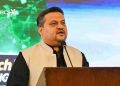
The conference brought together key stakeholders from government, industry, academia, financial institutions, and civil society, including the Planning Commission, State Bank of Pakistan, NEECA, Atlas Honda, ezBike, YES Electromotive, SDPI, FPCCI, PAAPAM, LUMS, UOL, and UET Peshawar. That is a rare combination, the regulator that controls bank lending, the country’s largest motorcycle maker, energy-efficiency officials, and lean EV startups all in the same room.
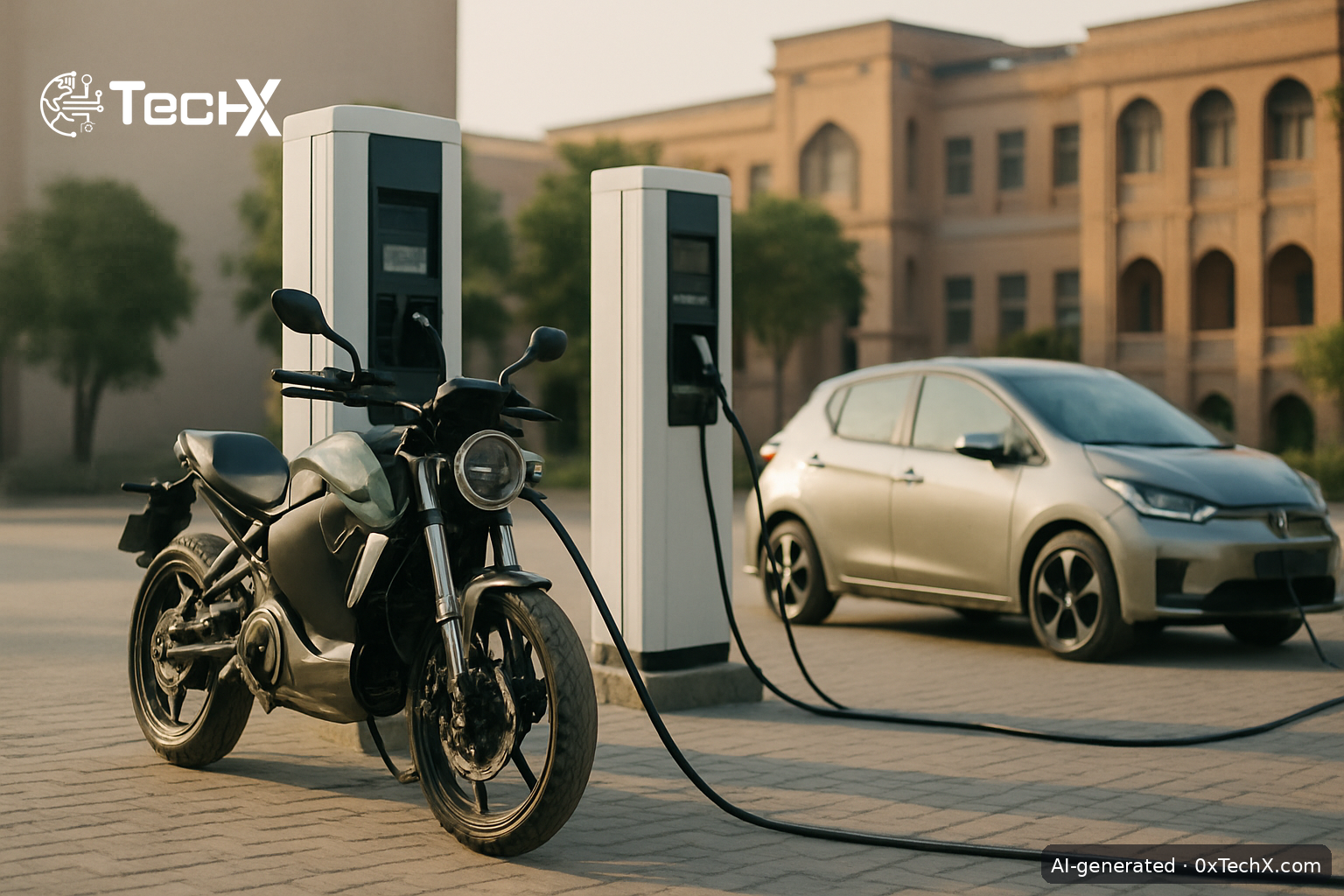
Industry pioneers and EV manufacturers showcased their products alongside research-based prototypes by academia. The exhibition displayed locally designed electric cars, high-efficiency motorcycles, fast-charging stations, battery-swapping hardware, custom battery management systems, drive motors, retrofitting conversion kits, and research-based prototypes of EV components. Visitors could see Pakistan-made tech in the flesh, not just hear about it in presentations.
Why This Conference Matters for the EV Transition Pakistan Is Chasing
Pakistan has real, ambitious targets on paper. The country grew from just 567 EVs in 2021 to over 80,000 in 2025, with a 2030 goal of 30% of all new vehicle sales being electric, powered by 3,000 charging stations. But experts say the gap between those targets and ground reality is wide.
The success of Pakistan’s EV transition will not be judged by the number of policies announced. It will be measured by whether Pakistanis can afford EVs, whether they can charge them reliably, whether local industry can manufacture and service them, and whether the transition genuinely reduces petroleum imports and urban pollution. Until the government clearly demonstrates how those outcomes will be financed, Pakistan’s electric-mobility ambitions will remain stronger on paper than on the road, experts say.
That is precisely the gap the NUST conference tried to close. The three pillars in the event’s own title, policy, grid, and green financing, map directly onto the three biggest obstacles the country faces right now.
The Financing Problem and Why SBP’s Presence Was Significant
Cost is a big barrier. A major challenge in adopting EVs is their higher upfront cost. EV prices for end users are higher than petrol vehicles by approximately 47-100% for two-wheelers, 123% for three-wheelers, and 20-65% for four-wheelers and LCVs.
However, the running cost picture flips completely. EVs cost PKR 840 per 100 km compared to PKR 2,600 per 100 km for petrol vehicles. A rider who covers 50 km a day can recover the price gap over time, but only if they can get financing to buy the vehicle in the first place.
That is why having the State Bank of Pakistan at the table was so important. The NEV Policy itself called for a review of the State Bank of Pakistan’s conservative auto-finance policies and guidelines to better support EV adoption. SBP’s presence at the NUST conference signals that the banking regulator is now actively part of the conversation, not just a body to lobby from the outside.
Under the NEV Policy framework, all Pakistani banks have green banking targets and will be encouraged to include EV financing in their portfolios. The question is how quickly those targets translate into actual loan products that a teacher in Lahore or a delivery rider in Karachi can use.
For more on how Pakistan is opening its financial system to new digital tools, see our earlier coverage on Pakistan’s digital finance reforms and the push to attract fintech investors.
Local Manufacturing and the Grid Challenge
The NEV Policy’s ambition goes beyond getting people into EVs, it wants Pakistan to make them too. The NEV Policy aims to empower manufacturers, assemblers, and charging infrastructure developers, and 61 licences have already been issued for two- and three-wheeler EV manufacturers.
By replacing imported fuel with locally produced energy, the policy is projected to save Rs 538 billion and cut 4.5 million tonnes of carbon emissions. It will also open new industries in battery production, EV assembly, and charging technology, creating thousands of green jobs and attracting foreign investment.
The grid side is harder. Pakistan’s electricity network is under heavy stress, and adding millions of new charging loads without planning could make blackouts worse, not better. The policy encourages distribution companies (DISCOs) to regularly study the future growth of EVs and include that in their medium-term load forecasts to guide investment planning and infrastructure expansion. That kind of grid planning was very likely a key discussion point at the NUST event, given NEECA’s role in national energy efficiency.
The policy targets 3,000 charging stations across Pakistan by 2030, including Level 3 fast chargers and Level 2 chargers. Right now, that network barely exists in most cities outside Islamabad and Lahore.
The Government’s Spending Commitment
In its first phase, the government has committed Rs 9 billion in FY 2025-26 to accelerate EV adoption under the Pakistan Accelerated Vehicle Electrification (PAVE) programme, supporting 2.2 million EVs through Rs 100 billion in financing.
This includes initiatives such as free e-bikes for top-performing students and the distribution of 116,000 e-bikes and 3,100 e-rickshaws, with a quarter reserved for women under the Gender Empowerment and Mobility Drive. These are not just nice-to-have extras, they are the fastest way to build demand and prove that EVs work in Pakistani conditions.
The EV transition Pakistan needs will only succeed if the policy, the money, the grid capacity, and local manufacturing all move together. The NUST conference on August 3 was a rare moment where the people responsible for each of those pieces sat in the same room. What comes out of those conversations in the weeks ahead will matter far more than the conference itself.
For background on Pakistan’s broader infrastructure push, read our piece on the national connectivity plan aiming to push Pakistan into the global top 50 for broadband, another sector where policy ambition and execution are being tested at the same time.
For technical reference, the USPCAS-E at NUST is the research centre that organised this conference, and the official Ministry of Industries and Production oversees the NEV Policy framework.
Frequently Asked Questions
What was the NUST EV conference about?
It was a national conference held on August 3, 2026, at NUST Islamabad, organised by USPCAS-E and the Indus Consortium. It brought together the State Bank of Pakistan, Planning Commission, NEECA, Atlas Honda, EV startups, and universities to align on green financing, charging infrastructure, and local EV manufacturing under Pakistan’s NEV Policy 2025-30.
How many EVs does Pakistan have and what is the 2030 target?
Pakistan grew from 567 EVs in 2021 to over 80,000 by 2025. The government’s 2030 target is for 30% of all new vehicle sales to be electric, backed by a network of 3,000 public charging stations across the country.
Why is EV financing a problem in Pakistan?
EVs cost 47-100% more upfront than petrol bikes and 20-65% more for cars. The NEV Policy itself flagged the State Bank of Pakistan’s conservative auto-finance rules as a barrier to EV adoption. That is why SBP’s attendance at the NUST conference was significant, the regulator needs to loosen lending conditions so buyers can afford the higher purchase price, even though running costs are much lower.
What did the conference exhibition display?
The exhibition showed locally designed electric cars, high-efficiency motorcycles, fast-charging stations, battery-swapping hardware, custom battery management systems, drive motors, retrofitting conversion kits, and academic prototypes of EV parts, all developed or assembled inside Pakistan.