
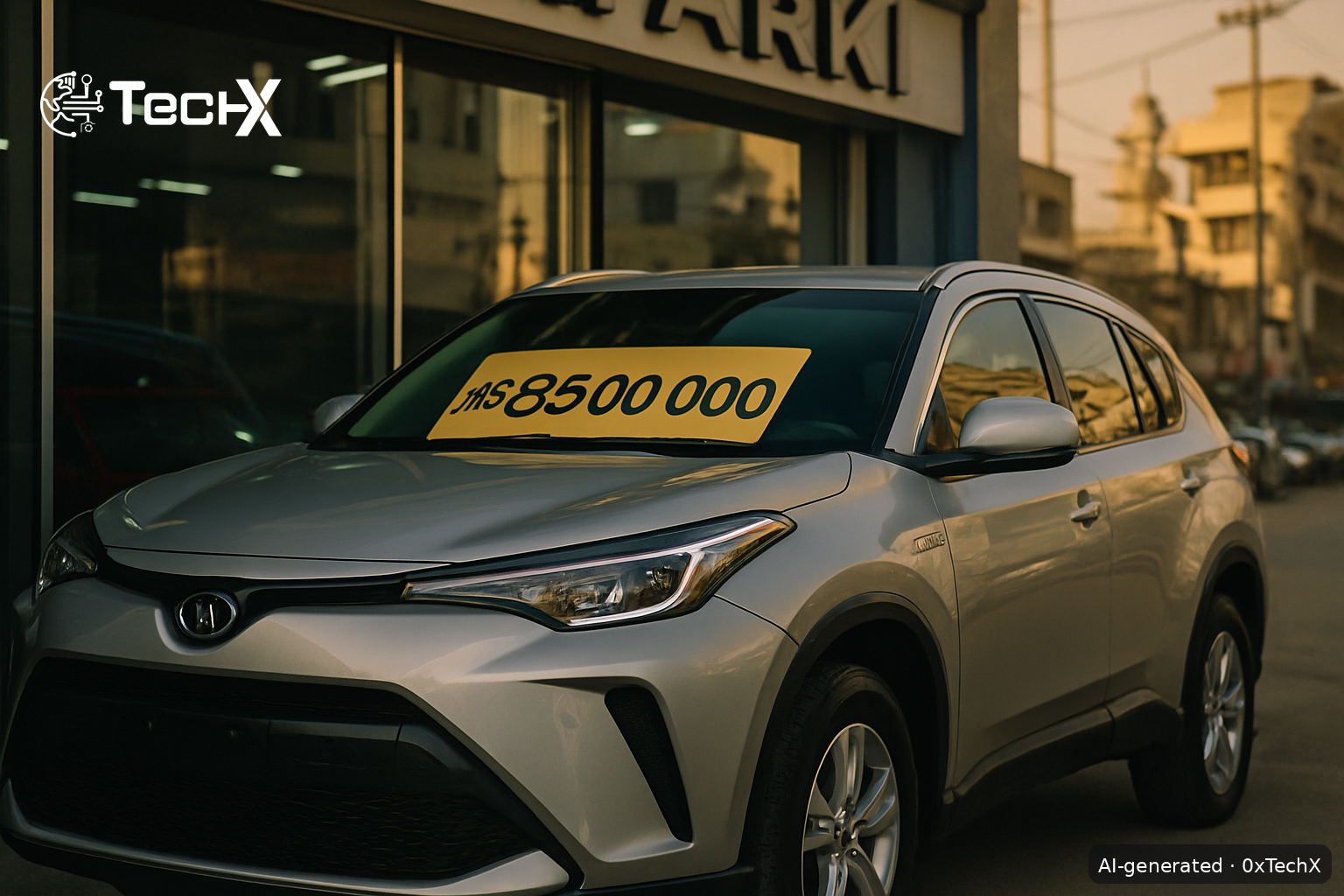
Hybrid car prices in Pakistan have shot up by as much as Rs1.37 million after the federal government raised the General Sales Tax (GST) on hybrid electric vehicles (HEVs) from 8.5% to 25% in the FY2026-27 budget. The change took effect on July 1, 2026, and buyers eyeing popular models like the Toyota Corolla Cross or Honda HR-V are now facing a very different price tag than they expected just weeks ago.
How Much Have Hybrid Car Prices in Pakistan Gone Up?
The numbers are significant. Indus Motor Company, which makes Toyota vehicles locally, raised prices of its two Toyota Corolla Cross hybrid models by Rs1.364 million and Rs1.314 million, taking them to Rs10.299 million and Rs9.849 million respectively. That means the top-spec Corolla Cross HEV X has crossed the Rs1 crore mark for the first time.
Honda has done the same. Honda Atlas Cars Pakistan raised the price of its HR-Ve hybrid by Rs1.37 million, with the vehicle now costing Rs10.369 million. Both cars, once seen as premium-but-reachable choices for middle-class families, have now moved firmly into the luxury segment.
The impact is not limited to Toyota and Honda. Popular hybrid models from brands such as Hyundai, Kia, Haval, MG, Jaecoo, and GWM could become Rs1 million to over Rs2.5 million more expensive, depending on the model. Plug-in hybrid (PHEV) buyers are also affected, with PHEVs facing a price hike of up to Rs25 lakh if manufacturers invoice them at the full 25% GST.
Why Did Hybrid Car Prices in Pakistan Jump So Sharply?
The FY27 budget increased GST on hybrid electric vehicles from 8.5% to 25%, prompting major manufacturers to revise prices. Previously, hybrids up to 1,800cc were taxed at just 8.5%, a special low rate that had been in place to encourage people to buy cleaner, more fuel-efficient cars.
That low rate was part of the Auto Policy 2021-26, which expired on June 30, 2026. The previous Auto Policy 2021-26 expired on June 30, but the government has yet to notify the new five-year policy despite earlier assurances that a draft had been prepared and shared with stakeholders. With no new policy in place and no extension of the old tax break, the standard 25% GST rate applied automatically from July 1.
Pakistan’s IMF programme also played a role. Pakistan is under an IMF programme with aggressive revenue targets; for FY2026-27, the FBR needs to collect approximately Rs15.3 trillion, a 14% increase over the current year. Removing the hybrid tax concession was one way to raise revenue.
Some Assemblers Have Paused Deliveries
Not every car company rushed to issue new invoices. Other assemblers have put on hold the invoicing and delivery of hybrid vehicles, appearing to expect some changes in the new auto policy or believing the government may reduce the GST from the current 25%.
This has left many buyers in a difficult spot. If you booked a hybrid before June 30 but your factory invoice was not issued before that date, you are likely paying the new, higher price. It is important to understand that only the factory invoice date matters legally, a booking receipt or payment confirmation does not protect you from post-budget tax changes.
Auto Policy 2026-31 Is Still Missing
The bigger uncertainty for the hybrid market is the delayed Auto Policy 2026-31. The industry is now looking to the upcoming Automotive Industry Development and Export Policy (AIDEP) 2026-31 to see whether new incentives for hybrid vehicles will be introduced. According to Topline Securities analyst Asad Ali, the revised policy is expected to introduce a new incentive framework for the auto sector, but no official notification has been issued so far.
Until the new policy arrives, the market is in a grey zone. Assemblers do not know what tax rules will apply going forward, and buyers have no certainty on whether prices will fall, stay high, or climb further. Auto dealers warned that the sharp increase in prices could significantly reduce consumer demand for hybrid and plug-in hybrid electric vehicles, undermining the government’s goal of encouraging fuel-efficient and environmentally friendly transport.
EVs Got Relief, Hybrids Did Not
Here is the part that many buyers find frustrating: while hybrids were hit hard, pure electric vehicles actually got support. The FY27 budget extends the 1% GST concession on imported Completely Knocked Down (CKD) kits for locally assembled electric cars, SUVs, and light commercial vehicles until June 30, 2027. This means EVs remain far cheaper to assemble locally, while hybrids now face the same standard tax as petrol cars.
The policy direction is clear: the government wants to push the market toward full EVs rather than hybrids. For buyers and industry players interested in where Pakistan’s EV shift is heading, see our earlier look at Pakistan’s EV policy and the changes reshaping the car market.
What Should Hybrid Buyers Do Right Now?
If you are in the market for a hybrid, here is what you need to know:
- Prices are already higher. Toyota and Honda have updated their prices. Expect other brands to follow soon.
- Some dealers have paused deliveries. Ask your dealer if they are issuing invoices or waiting for policy clarity.
- The factory invoice date is what counts. If your invoice was issued before July 1, 2026, you may be protected from the hike. If not, the new price applies.
- Watch for the Auto Policy 2026-31. If no relief is provided, experts believe the higher upfront cost could reduce demand for hybrid cars, prompting some buyers to postpone purchases, opt for conventional petrol vehicles, or turn to the used-car market instead.
- Consider a petrol alternative. Because conventional petrol variants did not rely on these specific hybrid tax exemptions, their pricing remains completely unaffected, creating a massive price gap between the two powertrain options.
Frequently Asked Questions
By how much have hybrid car prices in Pakistan increased?
Toyota raised Corolla Cross HEV prices by Rs1.314 million to Rs1.364 million, while Honda raised the HR-V e:HEV by Rs1.37 million. Other hybrid brands could see hikes of Rs1 million to Rs2.5 million or more depending on the model.
Why did hybrid car GST go up in Pakistan?
The FY2026-27 federal budget removed the old concession that taxed hybrids at 8.5% and replaced it with the standard 25% GST rate. The old concession was part of the Auto Policy 2021-26, which expired on June 30, 2026, and has not been renewed yet.
Will hybrid prices come down again?
It is possible but not confirmed. Some assemblers have paused deliveries while waiting to see if the government lowers the GST rate or introduces hybrid incentives in the new Auto Policy 2026-31. Until an official announcement is made, the current prices stand.
Are electric vehicles also more expensive now?
No. The FY27 budget actually extended the 1% GST concession on locally assembled electric vehicle CKD kits until June 2027. Pure EVs remain cheaper to produce locally, so their prices have not risen the way hybrid prices have.