

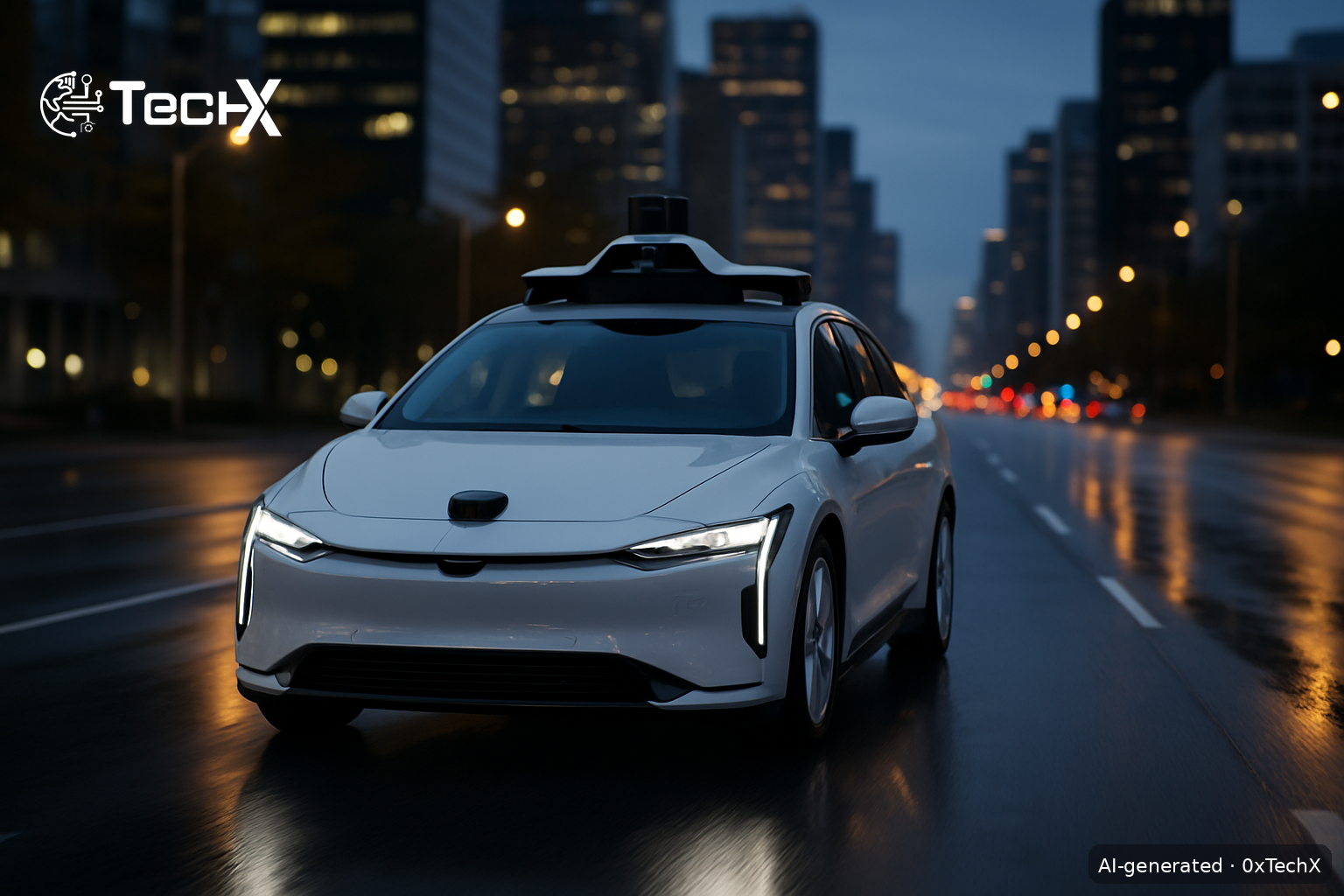
Waymo driverless expansion hit another major milestone on July 8, 2026, when the Alphabet-owned robotaxi company announced fully autonomous operations in four new US markets at once: Las Vegas, San Diego, Tampa, and Denver. No human at the wheel. No safety driver. Just a car, a route, and a passenger.
This is the biggest single-day city push Waymo has ever made, and it signals that the self-driving car era is moving from a slow experiment to a fast-growing reality.
What Happened on July 8, 2026
Alphabet’s robotaxi division confirmed it will soon offer fully autonomous rides in San Diego, Las Vegas, Tampa, and Denver. The launch will begin with Alphabet employees before opening to the public.
In Las Vegas, rider-only trips have already begun in the greater area including the Strip. Service is expected to expand to the public in the coming months.
The July 8 announcement converts what had been testing and employee-access operations in these four cities into commercial public rides. Select riders will receive invitations through the Waymo app starting this week, with additional access rolling out gradually ahead of full public availability.
The news arrives just months after Waymo had already added Dallas, Houston, San Antonio, and Orlando to its network. Waymo’s full network now includes Phoenix, San Francisco Bay Area, Los Angeles, Miami, Orlando, Dallas, Houston, San Antonio, Nashville, Austin, Atlanta, and the newly announced San Diego, Las Vegas, Tampa, and Denver.
How Big Is This Waymo Driverless Expansion Really?
The numbers tell the story. Waymo now operates a fleet of roughly 3,500 robotaxis and has surpassed 20 million total trips. The company was providing around 500,000 paid rides per week across its existing markets earlier this year.
The company plans to begin service in London, its first international market, later this year, with its sights set on hitting 1 million weekly trips by end of 2026.
Waymo raised a $16 billion funding round at a $126 billion valuation in February, the largest investment ever in an autonomous vehicle company, to fund city-by-city expansion.
That money is clearly being put to work. Waymo had already announced a major expansion of its service area, growing to over 1,400 square miles across 11 US cities. That is an estimated 27% increase and more territory than the entire state of Rhode Island.
New Vehicles Join the Fleet
It is not just new cities. Waymo is also scaling up its hardware. The company announced it is starting to use its Hyundai IONIQ 5 robotaxi vehicles, driving them autonomously with a specialist present in this early validation phase.
Waymo is deploying a mixed fleet of Jaguar I-Pace vehicles with its fifth-generation Waymo Driver and Zeekr RT vehicles with the sixth-generation Ojai system. The Ojai system offers improved lidar, radar, and weather performance at lower hardware costs, making it central to Waymo’s fleet scaling plans.
Las Vegas riders will also be among the first to experience the new Ojai vehicle, which Waymo describes as designed with subtle passenger conveniences throughout.
How Does Waymo Compare to Its Rivals?
The gap between Waymo and other robotaxi services is growing wider by the month. Waymo is the only US company operating a commercial fully autonomous ride-hailing service without safety drivers at scale.
Its closest US rival, Tesla, has struggled to match the pace. You can read more about how Tesla’s robotaxi service launched in our earlier coverage of the Tesla Robotaxi driverless launch and what it promised. Since then, Tesla has expanded its service to Dallas, Houston, and Miami, but the fleet remains tiny, with roughly 20 driverless vehicles covering about 245 square miles of the Austin metro according to third-party tracking data.
Tesla’s rides are cheaper at roughly $0.81 per mile compared to Waymo’s $1.36 to $1.43, but wait times average over 15 minutes compared to Waymo’s 5.7 minutes, and the majority of Tesla rides still include a safety driver.
Outside the US, Chinese companies are also making moves. Robotaxi leaders in Asia including Apollo Go, owned by Baidu, and publicly traded WeRide have been growing market share overseas. WeRide in particular has launched fully driverless commercial operations in Abu Dhabi and Dubai through a partnership with Uber.
Waymo’s Safety Record
Public trust is key for any driverless service. A recent safety study analyzing more than 220 million fully autonomous miles found that Waymo vehicles were involved in 94% fewer crashes causing serious or fatal injuries, 82% fewer crashes in which an airbag was deployed, and 82% fewer crashes involving any reported injuries, compared with human drivers.
That data matters a lot. Six in 10 US drivers said they were fearful of driverless cars, according to a 2025 survey by the American Automobile Association. Waymo is betting that real-world safety records will slowly win over those skeptics city by city.
There have been some hiccups too. Some Waymo vehicles have driven into flooded roadways following extreme weather events, and during Fourth of July celebrations a number of vehicles in San Francisco were stuck in traffic so long that their batteries died. The company says it is learning from each incident.
What This Means Beyond the US
For readers in Pakistan and across South Asia, this wave of Waymo driverless expansion is worth watching closely, even if a robotaxi in Lahore or Karachi is still a distant idea.
The speed at which Waymo is adding cities, from 5 markets in early 2025 to 14-plus markets by mid-2026, shows that Level 4 autonomy (where the car drives itself with no human backup in any situation) is moving from test labs to daily commutes far faster than most experts predicted five years ago.
Pakistani cities face massive urban mobility pressures. Karachi, Lahore, and Islamabad are all dealing with traffic congestion, road safety crises, and rising fuel costs. The technology being proven at scale in Las Vegas and San Diego today will eventually shape how mobility startups, urban planners, and ride-hailing apps in developing markets think about their own futures.
Globally, every city that adds a Waymo service becomes a live data point on whether driverless transport is ready to replace human drivers. As that dataset grows, regulators and investors worldwide will have less reason to wait. The global Waymo driverless expansion clock is ticking for everyone. For more on how AV technology is reshaping the global electric vehicle landscape, see our piece on BYD’s record-breaking NEV production and what it signals for transport trends.
Frequently Asked Questions
Which four cities did Waymo just add on July 8, 2026?
Waymo announced the launch of fully driverless commercial rides in Las Vegas, Nevada; San Diego, California; Tampa, Florida; and Denver, Colorado on July 8, 2026.
How many total cities does Waymo now operate in?
Waymo currently operates driverless cars in more than 10 cities across the US, with the July 8 announcement pushing that number past 14 active or near-active markets. Detroit, Washington D.C., Nashville, and London remain the next announced markets in Waymo’s expansion pipeline.
How does Waymo’s service work for riders?
Riders in new markets receive invitations through the Waymo app on a rolling basis before the full public launch, a graduated access approach that allows Waymo to manage demand and quality before opening to all. You download the app, join the waitlist, and receive an invite when your city is ready.
Is Waymo coming to international cities like London or Tokyo?
The company has set a target of 1 million paid rides per week by the end of 2026, with international service planned for London and Tokyo. Waymo has also begun testing vehicles in New York City and Tokyo. London will be its first fully operational market outside the United States.