

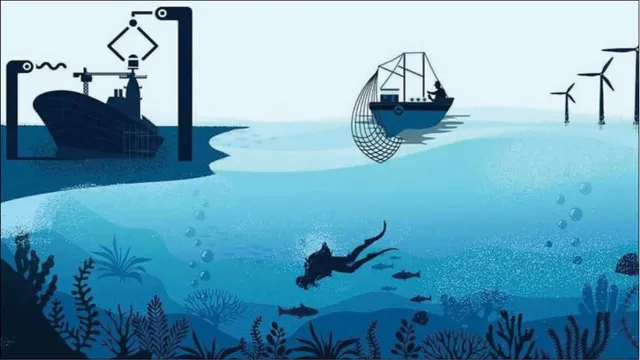
In 2021, the marine economy in the United States had an economic impact of $432 billion, or nearly 2% of GDP.
That’s what the most up-to-date numbers show, as reported by NOAA and the Bureau of Economic Analysis (BEA) as part of their annual Marine Economy Satellite Account. Activities in the ocean, along the coasts, and in the country’s major water bodies including the Great Lakes, Puget Sound, and Chesapeake Bay are all included in the marine economy data.
The marine economy recovered well from the reductions caused by the COVID-19 pandemic between 2020 and 2021, with GDP increasing by 7.4% and sales increasing by 10.5%. The expansion of the maritime sector exceeded the overall expansion of the American economy (5.9% GDP growth, 6.2% sales expansion).
“The Biden-Harris Administration and the Department of Commerce are committed to investing in America, and that includes enhancing our marine economy,” stated United States Secretary of Commerce Gina Raimondo. To assist local communities, economies, and ecosystems thrive, it is crucial to invest in a robust and sustainable maritime economy.
US marine economy is diverse
Experts from NOAA and BEA described 10 industries that depend on the nation’s ocean, coasts, and Great Lakes for economic activity between 2014 and 2021. In 2021, the companies studied in the paper earned $730 billion in revenue and maintained 2.3 million employees.
Sales projections for the top 10 industries in 2021 (after adjusting for inflation) are as follows:
- Leisure and travel ($232 billion; +27.3% by 2020).
- There was a 1.3% increase to $190 billion for national defence and public administration by the year 2020.
- Minerals extracted from deep sea waters ($97 billion, down 2.5% from $99 billion in 2020).
- Supply chain management ($57 billion, up 16.8 percent from 2020) and transportation and storage ($57 billion).
- Fishing and aquaculture, which together provide $31 billion and are expected to expand by 13.5 percent by 2020.
- Ship and boat construction ($20 billion, up 15.2 per cent by 2020).
- Coastal utility companies ($13 billion, down 9.5% from 2020).
- Education and research (10 billion, down 8.2% from 2020).
- Professional and scientific consulting ($7 billion, up 4.0% from 2020).
- Construction of ships and other watercraft ($6 billion, down 14.9% from 2020).
“These numbers demonstrate the marine economy’s resilience, with higher growth than the overall U.S. economy,” said Monica Grasso, Ph.D., NOAA’s Chief Economist. “By investing in sustainable practises and working collaboratively with stakeholders, we can continue to build a thriving and resilient marine economy that supports our communities, protects the environment, and drives our country’s economy forward.”
To read our article about “Pakistan received 1st shipment of rebated Russian crude oil” click here.