

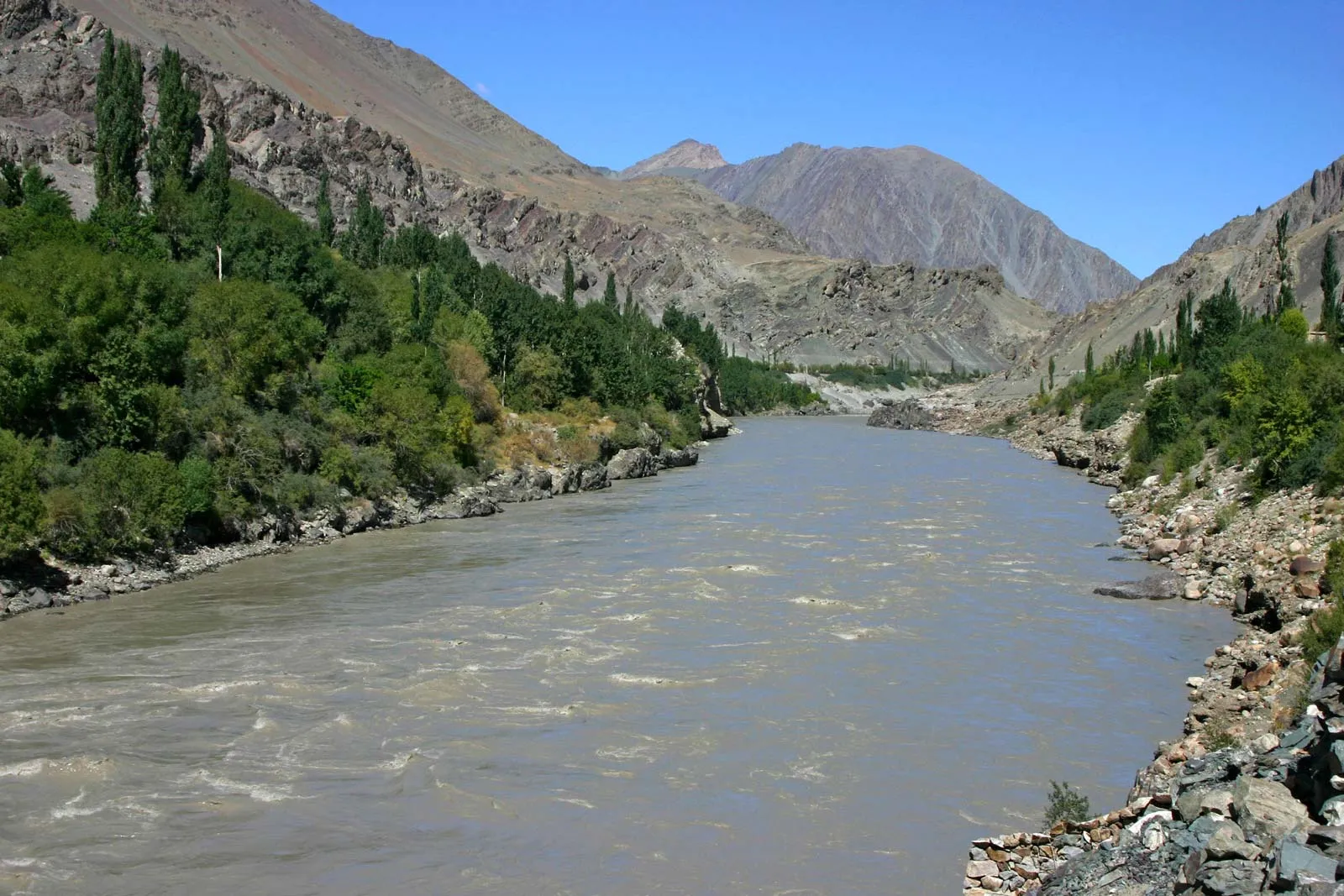
After flooding millions of acres of productive farmland due to weeks of nonstop rain, a powerful rush of water racing downwards from tributaries in the north on Monday threatened to burst the banks of the Indus River in Sindh.
As persistent floods in various sections of the country continued their killing spree, pushing the overall death toll to 1,136 and the national tally of impacted people to 33 million, a significant relief operation was underway in the country with international aid coming in.
In Khyber-Pakhtunkhwa (K-P), numerous rivers and tributaries had medium to extremely high volumes that reached the lowlands.
The Swat River, which last week devastated the area severely, saw a reduction of 41,000 cusecs.
According to the information available from the flood cell, however, 296,731 cusecs of water were still flowing through the river at Nowshera, which was still a “very high” flow. The water flow at the same location on Sunday was greater than 336,000 cusecs.
The Kabul River was also reported to have a high flow at Warsak with 103,614 cusecs and a “mid” flow at Adezai Bridge with 54,495 cusecs.
As the flood moved south, local officials predicted that the water level in the Kabul River will decrease significantly over the next few hours.
The greatest dam in the nation, Tarbela, was reportedly releasing all of its 264,700 cusecs of inflow; however, at Mangla, the inflow was 39,400 cusecs, and the outflow was 10,000 cusecs.
A high inflow of 518,100 cusecs was contrasted at Chashma with an outflow of 513,300 cusecs.
According to WAPDA, the Kabul River at Nowshera had an input of 318,500 cusecs, which was all being released, while the Chenab River at Marala Headworks had an intake of 60,300 cusecs and a discharge of 32,900 cusecs.
According to a WAPDA official, the combined water storage in the Tarbela, Mangla, and Chashma reservoirs has reached 9.271 million acre-feet (MAF), with the Tarbela and Mangla dams accounting for 5.827 MAF and 3.412 MAF, respectively.
The spokesman also stated that 32,000 acre-feet of water were stored in Chashma.
To read our blog “Balochistan floods cause damage to 11 bridges and 7 dams,” click here.