
A group of experts has put together a one-of-a-kind apparatus to assist them understand how to collect energy from deep underground.
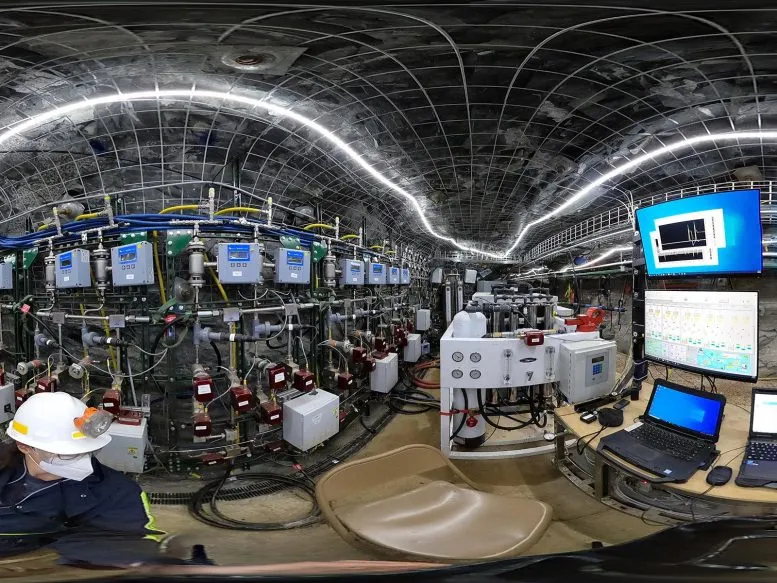
The Stimulation and Flow System is the latest “rock star” from Pacific Northwest National Laboratory (PNNL) and its collaborators, designed to study how water moves underground through extremely hot rock and then distributes heat to the surface.
The new system is part of the Enhanced Geothermal Systems—or EGS—Collab, a collaboration between numerous national laboratories, universities, and industrial partners to advance geothermal technologies.
Several parts, one distinct system
The mine, which was formerly thought to be North America’s largest and deepest gold mine, is now used for a variety of scientific reasons. One study is investigating how geothermal energy could one day power ten million households.
The EGS Collab will use the subterranean facility as a test bed, pumping high-pressure water and other fluid combinations into one of five boreholes—four-inch-wide “tunnels” carved into the rock—and then pumping them out of the other boreholes. The researchers are investigating not just how the fluids break apart the rock between the boreholes, but also how they collect heat from the energy stored within the rock—energy that can someday be injected above ground to generate power.
To aid the EGS Collab’s efforts, the team created the system, which is comprised of many instruments essential to their research.
“The uniqueness of this system is that it rolls several components needed to glean important data for geothermal study into one system,” said Chris Strickland, the PNNL scientist who co-leads the EGS Collab’s Simulation and Flow team. “This doesn’t exist anywhere else.”
These components comprise two injection pumps, each of which can shoot high-pressure fluids into the rock. One pump can be utilized for extremely accurate flow and pressure control, while the other can be used for enormous flow rates.
A fluid chiller generates cold water, allowing the scientists to investigate how different water temperatures alter the thermal properties of the granite. Using a reverse osmosis machine, the team may gather information on the water’s flow path by varying the salinity (or saltiness) of the injected fluid.
A set of five “packers” that are placed into the boreholes is also part of the system. The packers are outfitted with sensors that assess temperature and pressure. Packer pressurized bladders and control pumps seal the boreholes and prevent leakage outside of the intended borehole portion.
“The uniqueness of this system is that it rolls several components needed to glean important data for geothermal study into one system. This doesn’t exist anywhere else.” — Chris Strickland
The system’s level of precision and integration is a distinguishing feature, giving the high-quality data required to further scientific understanding. “The nicest thing is that the device is autonomous, which means we can operate it and collect data above ground from home using a laptop or phone,” added Strickland. “We won’t have to spend as much time underground.”
To read our blog on “A major breakthrough in science that allows electricity to store for 18 years,” click here