

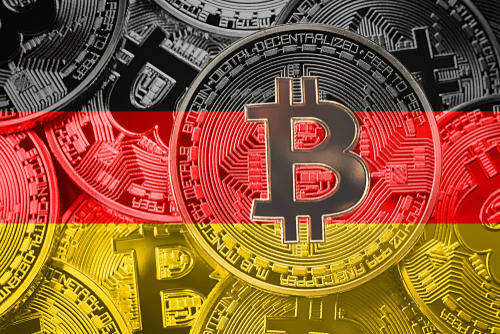
Almost half of German crypto investors (49%) think crypto can help them meet their long-term financial goals, per data compiled by KuCoin. In light of the current economic uncertainty, one in four people believe the asset class could act as a safe haven.
Millennials (those born between the early 1980s and late 1990s) make up the largest segment of the German crypto investment community. The survey found that among cryptocurrency investors in Germany, Millennials make up 51%, with Generation X (those in their 40s and 50s) coming in at 30%.
Young people, with their natural curiosity and willingness to try new things, often find discussions on digital assets to be quite engaging. Only 19% of Germans have any experience with the cryptocurrency market, and this includes only members of Generation Z (those aged 18-25).
Most new converts joined the movement within the past three months, while only 15% did so within the prior six months. The crypto market’s recent upswing since the beginning of 2023 may be one probable explanation for this renewed interest. For instance, Bitcoin’s price in 2022 was roughly $16,500, but it is now well over $30,000.
Four out of every ten Germans who put money into cryptocurrencies did so to broaden their holdings. Thirty percent find investing in digital assets “convenient,” while twenty-two percent are looking for instant wealth.
Trading, online shopping, buying NFTs, HODLing/staking, accepting/paying salaries, and other use cases are among the most popular for crypto in Germany.
Bitcoin (BTC) is the most popular cryptocurrency among local investors (64% of investors have BTC exposure). While 40% have invested in Ethereum (ETH), just 26% have done so in NFTs.
KuCoin calls the situation in Germany’s bitcoin market “evolving.” According to the report, this is “a promising sign, given the speed with which the cryptocurrency market is developing and adopting emerging technologies like AI, AR, VR, and more.”
Furthermore, the corporation claimed that the hype around Ethereum and related projects foreshadows a Web3 revolution coming to Europe’s strongest economy.
Cryptocurrency Support in Germany
According to another study conducted by Coincub, this European nation is predicted to be Q1 2022’s most crypto-friendly country. The body cited Germany’s “groundbreaking decision” to enable investments in the asset class as a contributing factor to the country’s top ranking.
German authorities doubled down not long after, making gains from the sale of Bitcoin and Ethereum tax-free for holding periods of 12 months or more. Before that time, taxpayers had to retain such assets for ten years before they could deduct their gains.
Germany, unlike many of its European neighbors, has introduced new rules in recent years. All cryptocurrency exchanges inside the borders of the country must obtain a license from the Federal Financial Supervisory Authority (BaFin) per legislation passed in 2020. In addition to meeting the requirements of anti-money laundering regulations, such organizations must maintain a certain level of capital.
To read our article about “Binance will Open its Headquarters in UAE” click here.