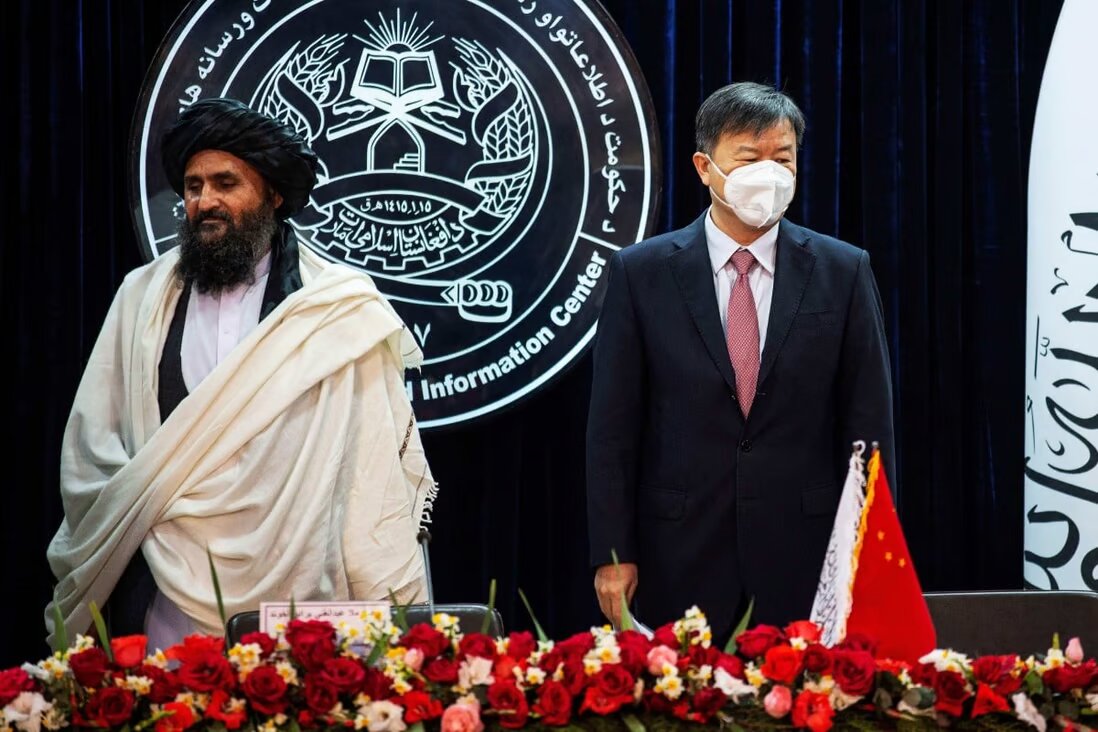
The Taliban-led Afghan government has signed an agreement with the Chinese government to extract oil in northern Afghanistan. This will be Afghanistan’s first high-profile agreement since the Taliban’s takeover in 2021.
Xinjiang Central Asia Petroleum and Gas Company (CAPEIC) will drill for oil in the Amu Darya basin, a transboundary river shared by Afghanistan, Uzbekistan, Turkmenistan, and Tajikistan, for the next 25 years.
The Chinese Ambassador to Afghanistan, Wang Yu, stated in this regard that the oil extraction agreement is a significant initiative between China and Afghanistan.
Afghanistan is endowed with abundant natural resources. The country’s war-torn reserves of natural gas, copper, and rare-earth elements are estimated to be worth more than $1 trillion.
Although China has not officially recognized the Taliban government, the initiative demonstrates China’s economic ambitions in the country, which is central to the Belt and Road Initiative (BRI) network.
The Taliban have retaliated for Chinese efforts to revive Afghanistan’s economy by targeting Islamic State militants who attacked a hotel where Chinese businessmen were staying. On Thursday, the Taliban killed 8 and arrested 7 IS militants.
At least three people were killed and 18 others were injured in December’s attack on the Longan Hotel in Kabul, including five Chinese citizens.
According to Taliban spokesperson Zabihullah Mujahid, the oil extraction agreement would see Xinjiang Central Asia Petroleum and Gas Company (CAPEIC) drill for oil in the Amu Darya basin.
“The Amu Darya oil contract is an important project between China and Afghanistan,” China’s ambassador to Afghanistan Wang Yu told a news conference in the capital Kabul.
A Chinese state-owned company is also negotiating the operation of a copper mine in the country’s east.
Afghanistan is thought to be sitting on natural resources worth more than $1 trillion, including natural gas, copper, and rare earths. However, due to the country’s decades of turmoil, many of those reserves remain untapped.
To read our latest blog on “After 3 years, China will reopen its border with Hong Kong,” click here