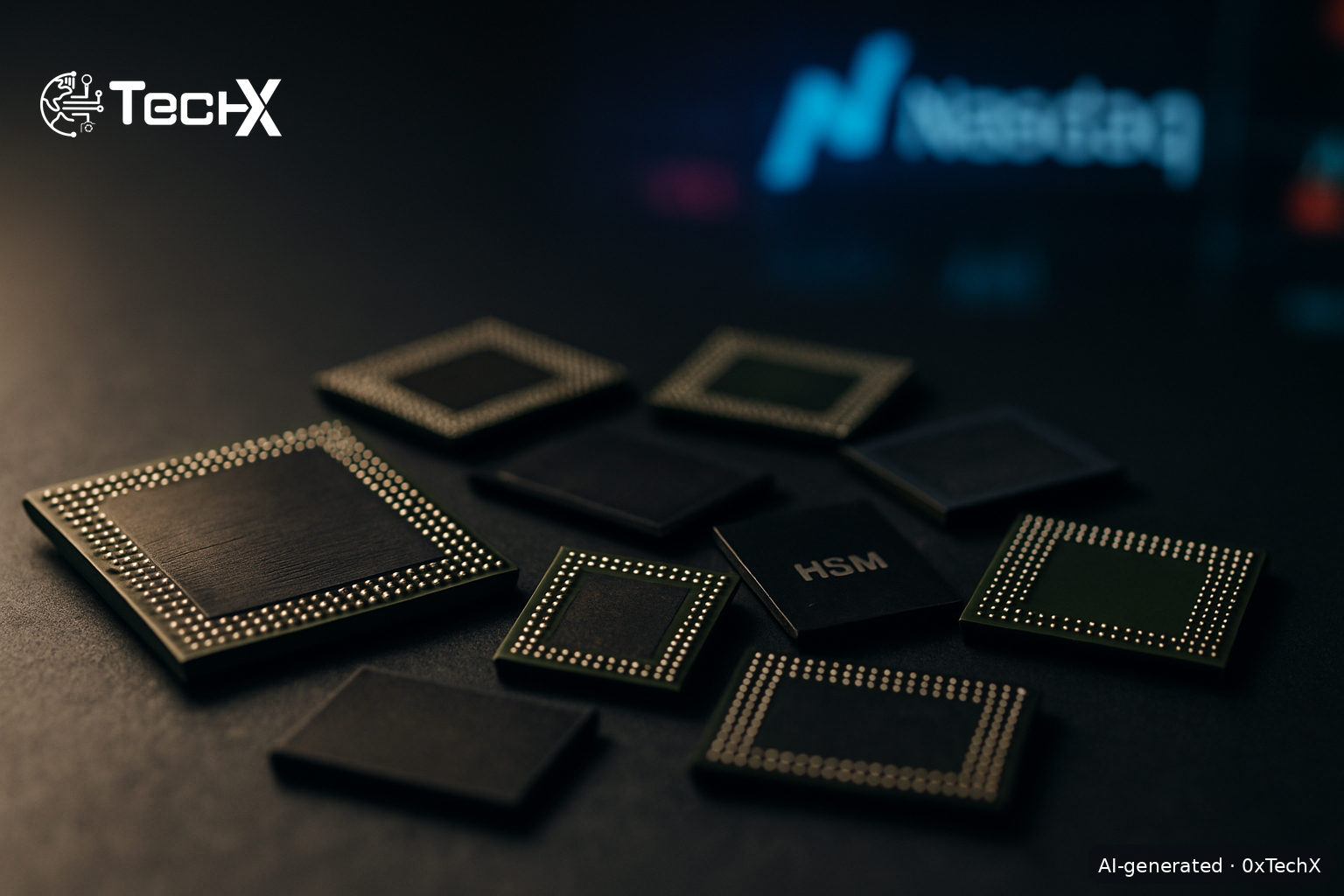
AI memory chip prices are at their highest level in years, and the timing of SK Hynix’s landmark Nasdaq listing on July 10, 2026 makes the trend impossible to ignore. The South Korean chipmaker, the world’s second-largest memory producer, has joined the Nasdaq under the ticker SKHY, raising up to $29 billion in what is the largest American Depositary Receipt (ADR) listing in Wall Street history. For everyday buyers in Pakistan, the story behind this listing explains why your next smartphone or laptop will cost noticeably more.
SK Hynix Hits Nasdaq in a Record-Breaking Move
SK Hynix has traded on the Seoul Stock Exchange since 1996, but until now, U.S. investors had no easy way to buy into the company. The Nasdaq listing changes that. SK Hynix plans to raise around $29 billion by issuing American depositary receipts (ADRs) in order to fund new factories and equipment. That figure tops Alibaba’s $21.8 billion New York debut in 2014 and even Saudi Aramco’s $25.6 billion IPO, making this the biggest ADR deal ever recorded globally.
The money will fund two massive new chip plants in South Korea’s Yongin region and a $4 billion advanced packaging facility in West Lafayette, Indiana, SK Hynix’s first production site in the United States. The company expects up to $458 million in support from the U.S. CHIPS and Science Act for that plant.
SK Hynix’s stock has been on a remarkable run. Its shares soared more than sevenfold over the past year, pushing its market capitalisation above $1 trillion. It recently overtook Samsung Electronics to become South Korea’s most valuable publicly listed company. One fund manager described it as “one of the most important companies in the world that most U.S. institutions could not easily own”, now that barrier is gone.
Why AI Memory Chip Prices Are Surging Right Now
The root of the problem is a straightforward supply-and-demand squeeze, but one with a twist: it is deliberate. The world’s three major memory makers, Samsung, SK Hynix, and Micron, control more than 95% of global DRAM output. All three have been aggressively shifting production toward a specialised product called high-bandwidth memory (HBM), the stacked chip that sits next to AI accelerators like Nvidia’s data-centre GPUs.
HBM commands margins three to five times higher than conventional DRAM. The economic logic is hard to argue with, but the knock-on effect is brutal for consumers. Every wafer used to make HBM is a wafer not used to make the everyday LPDDR5 memory inside your phone or the DDR5 module in your laptop. HBM also needs roughly three times more wafer space per gigabyte than standard DRAM, so the supply squeeze compounds fast.
The numbers tell the story clearly. DRAM prices surged around 80 to 90 percent in the first quarter of 2026 alone compared to the previous quarter. Standard DDR4 kits roughly doubled in price, while some DDR5 modules went up three to four times. AI memory chip prices for HBM are effectively sold out through the end of 2026 under multi-year supply agreements. Analysts at Gartner project a roughly 130% memory cost surge by the end of 2026, with PC prices rising about 17% and smartphone prices about 13% versus 2025 levels. Relief is not expected until late 2027 or 2028, when new factory capacity starts coming online.
Bank of America has called 2026 “a supercycle similar to the boom of the 1990s,” forecasting global DRAM revenue to surge 51% year-on-year. IDC describes the current shift as a “permanent reallocation” of manufacturing capacity toward AI, not a temporary glitch like previous chip shortages.
How This Hits Pakistani Smartphone and Laptop Buyers
Pakistani consumers face a double squeeze that most global coverage skips over. The first hit is the global one: AI memory chip prices feed directly into the cost of building any phone or laptop, and those costs are passed on. Nasdaq-listed tech companies and global brands across all price ranges are raising retail prices. Laptops and smartphones are already seeing price hikes of up to 20% worldwide.
The second hit is local. Pakistan relies almost entirely on imported memory chips, and local phone assemblers buy those chips at global spot prices. With memory components now 20 to 30 percent more expensive globally, locally assembled phones have gone up in price too. Entry-level laptops in Pakistan now start at around Rs 124,000 and mid-range models easily cross Rs 150,000. Flagship smartphones regularly exceed Rs 400,000. An 18% sales tax on smartphones and a rupee that is paid against the dollar make every global price hike land harder here than in most markets.
Budget and mid-range devices, the segment most Pakistani buyers rely on, are hit hardest. Brands like Realme, Xiaomi, Tecno, and Infinix run on thin margins, so they have little room to absorb rising component costs. If you are considering a new phone or laptop, you may also notice “shrinkflation”, devices listed at a familiar price but quietly shipping with less RAM or smaller storage than before. A phone that came with 8GB of RAM last year might now ship with 6GB at the same rupee price. Manufacturers are quietly trimming specs to hold price points rather than showing an obvious sticker increase.
If you are planning a tech upgrade, the data suggests buying sooner rather than later, or holding your current device for longer. Analysts broadly agree that prices will keep climbing through 2026 and into 2027, with no meaningful relief before new factory capacity, including SK Hynix’s Yongin cluster, starts operating in 2027 or 2028.
For Pakistani IT workers and tech entrepreneurs, there is a different angle worth watching. The AI memory boom that is making consumer devices expensive is also the same wave powering massive investment in AI infrastructure globally. Pakistan’s own tech export sector has been growing fast, and the broader AI hardware cycle that SK Hynix’s Nasdaq listing represents is part of the same global trend shaping demand for software and digital services built here.
What Comes Next
SK Hynix will begin trading as SKHY on the Nasdaq Global Select Market, with full regular-way trading expected from July 13, 2026 onward. The listing is expected to pull billions in passive investment from index-tracking funds once SKHY becomes eligible for major U.S. benchmarks like the Nasdaq 100. That would make SK Hynix, and by extension the AI memory chip prices story, even more central to global markets.
For now, the message for Pakistani buyers is straightforward: the prices you see on phones and laptops today are not a glitch. They reflect a structural shift in how the world’s memory chips are made and who gets them first. Until new factories open and supply catches up with AI demand, this is the new normal.
Frequently Asked Questions
What is SK Hynix and why did it list on Nasdaq?
SK Hynix is South Korea’s largest memory chipmaker and the second-largest in the world. It listed on Nasdaq on July 10, 2026 under the ticker SKHY, raising up to $29 billion to fund new chip factories. The listing, the biggest ADR offering in Wall Street history, gives U.S. and global investors direct access to a company at the centre of the AI memory boom.
Why are AI memory chip prices rising so fast?
The three companies that make almost all the world’s DRAM, Samsung, SK Hynix, and Micron, are shifting production to high-bandwidth memory (HBM) for AI data centres. HBM earns far higher margins and is effectively sold out for 2026. That leaves less standard memory for phones and laptops, driving prices sharply higher. DRAM prices rose around 80 to 90 percent in Q1 2026 alone.
How much more expensive will phones and laptops be in Pakistan?
Globally, Gartner projects PC prices up about 17% and smartphone prices up about 13% in 2026 versus last year. In Pakistan, the impact is sharper because local assemblers buy chips at global prices, the rupee is paid in dollars, and an 18% sales tax applies to smartphones. Entry-level phones and laptops are hit hardest, and budget devices may quietly offer less RAM or storage than before at the same price.
When will memory chip prices come down?
Most analysts point to late 2027 or 2028 as the earliest point for meaningful relief, when new factories from SK Hynix, Samsung, and Micron start producing at scale. Until then, tight supply and high demand for AI chips will keep AI memory chip prices elevated, and consumer device costs will remain high worldwide, including in Pakistan.