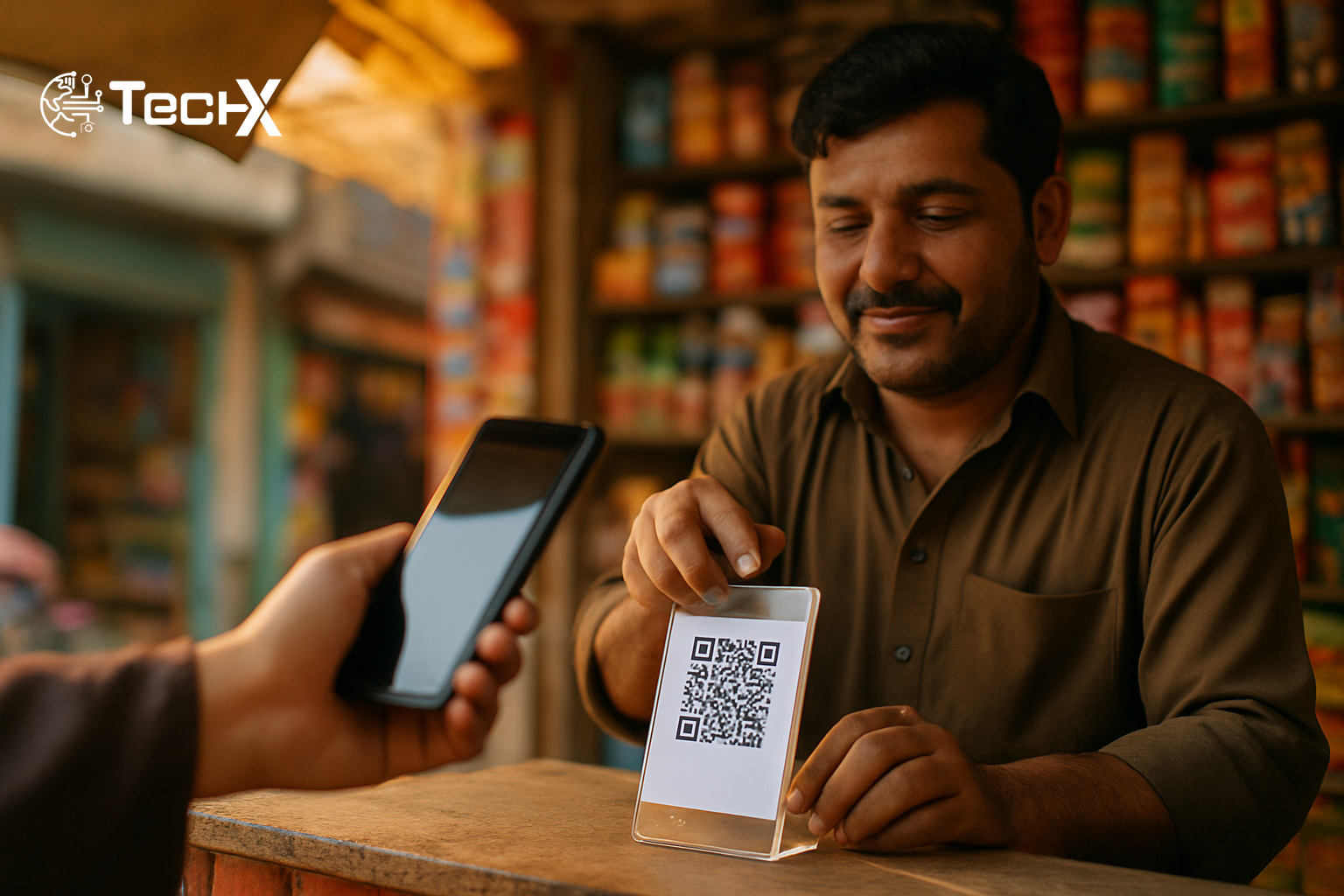
Pakistan’s Raast QR merchants target of 2 million active outlets by June 2026 has come and gone, and the numbers show the country did not quite get there. The Cashless Pakistan Initiative, backed by the Prime Minister’s office and the State Bank of Pakistan (SBP), set three headline goals for this month. All three faced a gap. Here is what the data says and what happens next.
What Were the Raast QR Merchants and Digital Payment Targets?
The targets were announced publicly and repeated at multiple forums. The number of monthly active Raast QR merchants was to increase from 500,000 to 2 million by June 2026, annual digital transactions were to double from 7.5 billion to 15 billion by the same period, and 100 percent of government payments, both government-to-person and person-to-government, were to be digitised.
Pakistan’s undocumented economy is estimated at around 40 percent of its gross domestic product, leading to inefficiencies and revenue leakages. That backdrop made these targets more than just numbers. The government argued that digitising even a modest portion of cash transactions could save the country approximately Rs164 billion annually.
Where Do the Raast QR Merchants Numbers Actually Stand?
The clearest data point on merchant progress came in March 2026. JazzCash, Pakistan’s leading digital financial services platform, had onboarded its 1 millionth Raast QR-enabled merchant as of March 30, 2026. That milestone cemented JazzCash’s position as the nation’s largest QR ecosystem in line with the SBP’s ambition to formalise the economy.
JazzCash is just one provider, so the total across all banks and fintechs will be higher. But the fact that the country’s single biggest player only crossed 1 million in late March, just three months before the June deadline, makes it very unlikely the full ecosystem reached 2 million active Raast QR merchants by June 30. No official figure confirming the 2 million target was met has been published as of this writing.
The broader picture of merchant QR activity does show growth. Person-to-merchant (P2M) transactions rose significantly, climbing to 55.9 million in Q1 2026 from 36.3 million in the previous quarter. That is strong momentum, but it also shows the P2M segment is still relatively small compared to P2P transfers.
How Close Is Pakistan to 15 Billion Annual Digital Transactions?
This target is closer, but still not confirmed as met. During the January, March 2026 quarter alone, 3.7 billion retail payments worth Rs168.8 trillion were processed through formal banking and payment channels, of which 92 percent were conducted through digital channels.
If you annualise that one quarter, multiply by four, you get roughly 13.6 billion digital transactions per year. The country would need a strong final quarter (April, June 2026) to cross 15 billion for the full year. Mobile banking and digital wallet registrations climbed to more than 132 million by the end of March 2026, compared to 96 million a year earlier, a 37 percent annual increase. That user growth supports continued volume increases, but hitting 15 billion for the full calendar year would still require a significant jump in the final quarter.
The Raast Instant Payment System processed 742.1 million transactions worth Rs23.3 trillion in Q1 2026, with P2P transactions rising to 664 million, up 10 percent quarter-on-quarter.
What About the Government Payments Digitisation Goal?
Here the picture is mixed, and the deadline itself shifted in some official communications. The 100 percent government payments digitisation target, covering both government-to-person and person-to-government payments, was set for December 2026, not June 2026 as some earlier statements suggested. That gives the government a few more months on this particular goal.
Major federal entities including the Power Division, Petroleum Division, Pakistan Railways, NADRA, and Pakistan Post Office are transitioning to full Raast-based integration, while the Benazir Income Support Programme (BISP), Pakistan Military Accounts Department, and Central Directorate of National Savings had set a 100 percent digitisation deadline between March and June 2026.
Earlier wins included utility bill integration. Major utilities began printing Raast QR codes on consumer bills, with 10 of 11 electricity distribution companies and the two largest gas distributors now QR-enabled.
What Did the Government Do to Push Adoption?
Policymakers did not sit still. Several concrete steps were taken to close the gap on Raast QR merchants adoption. The federal government approved a Rs3.5 billion subsidy covering person-to-merchant transactions between September 1, 2025, and June 30, 2026, with financial institutions receiving support at 0.5 percent of each transaction’s value or Rs100, whichever is lower.
The Economic Coordination Committee (ECC) directed the SBP to present a detailed impact report in July 2026, covering transaction values, effectiveness of interventions, and recommendations for future enhancements. That report will be a key document for understanding the true scale of the gap.
The SBP also expanded the cashless push into new sectors. The SBP’s nationwide Go-Cashless campaign for Eid-ul-Azha 2026 expanded into cattle markets across Pakistan, aimed at promoting cashless transactions in one of the country’s most cash-intensive seasonal markets.
For Pakistani users, the NayaPay-Alipay+ integration that went live this year adds another layer to the digital payments ecosystem. You can read more about how Pakistan’s QR payment rails are connecting to global networks in our article on the NayaPay Alipay+ global QR payments partnership.
Why Did the Gap Happen?
The shortfall on Raast QR merchants is not surprising to anyone who has tracked the initiative closely. Officials themselves acknowledged implementation gaps and operational risks, flagging connectivity and IT readiness at district levels, integration of SAP/IFMIS with tax treasuries, and temporary allowances for paper claims during flood emergencies as near-term constraints.
Pakistan is a cash-dominated market where a significant portion of transactions, particularly in the informal sector, are conducted in cash, with officials noting many of these transactions are aimed at avoiding taxes. Convincing small shopkeepers to switch is a slow process that involves trust, cost, and habit change, not just policy directives.
A comparison with India’s UPI system puts the challenge in context. In India, UPI has fundamentally reshaped how people conduct everyday transactions, now accounting for nearly 85 percent of all digital payments. The widespread adoption of QR code payments has made digital transactions a routine part of daily life, with hundreds of millions of consumers and merchants participating in the ecosystem. Pakistan’s Raast QR merchants ecosystem is at a much earlier stage of that journey.
What Comes Next for the Cashless Pakistan Push?
The June 2026 deadline was always a midpoint, not an endpoint. Internet penetration is also targeted to rise from 60 percent to 80 percent by the end of 2026, laying the foundation for a broader digital economy. The SBP’s July 2026 impact report will likely reset targets and define the next phase of the initiative.
If the programme delivers, it would shift large volumes of government receipts and disbursements onto domestic payment rails and reduce cash leakage. Success will depend on rapid merchant onboarding, reliable district-level IT, consumer trust-building, and continuous oversight.
For ordinary Pakistanis, the practical benefit is simple: the more merchants that accept Raast QR merchants payments, the easier it becomes to go cashless in daily life, at the grocery store, the fuel pump, and the bazaar. The progress is real. The deadline was just too ambitious. The work continues.
For more on Pakistan’s evolving digital policy landscape, see how the country is also building new data governance rights for citizens as part of the broader digital transformation push.
Frequently Asked Questions
What was the Raast QR merchants target for June 2026?
The Cashless Pakistan Initiative set a goal of 2 million active Raast QR merchants by June 2026, up from 500,000 at the start of the programme. As the deadline passed, the total had not reached that figure, with the largest single provider, JazzCash, only crossing 1 million merchants in March 2026.
What is Raast and how does it work for merchants?
Raast is Pakistan’s national instant payment system, built and run by the State Bank of Pakistan (SBP). For merchants, it provides a QR code that customers can scan using any connected banking app or digital wallet to make instant, real-time payments. It is interoperable, meaning a customer using JazzCash can pay a merchant on Easypaisa or a bank app, all through the same Raast infrastructure.
Did Pakistan get close to 15 billion annual digital transactions?
Pakistan processed 3.7 billion retail transactions in Q1 2026 alone, with 92 percent going through digital channels. Annualising that pace points to roughly 13, 14 billion transactions for the year, which is strong growth but still likely short of the 15 billion annual target that was set for June 2026.
What happens now after the June 2026 deadline?
The SBP is due to release a comprehensive impact report in July 2026, covering merchant adoption, consumer usage, and transaction volumes. That report is expected to set revised targets and recommend next steps for the Cashless Pakistan Initiative. The 100 percent government payments digitisation goal has a December 2026 deadline, so that work is still ongoing.