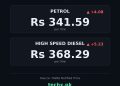
Petrol diesel prices Pakistan will not change for the last week of June 2026. The federal government decided on June 26 to hold current fuel rates steady, closing out the 2025-26 fiscal year without a new revision. Petrol stays at Rs299.78 per litre and High-Speed Diesel (HSD) remains at Rs311.56 per litre. The Oil and Gas Regulatory Authority (OGRA) and the Petroleum Division confirmed the unchanged rates through an official notification.
Petrol Diesel Prices Pakistan Held Steady for Fiscal Year-End
This is the first time in several weeks that the government has chosen not to adjust fuel rates. The decision comes just days after a huge cut on June 19-20, 2026. The price of petrol had been reduced by Rs74 per litre in that revision, falling from Rs373.78 to Rs299.78 per litre. High-Speed Diesel also became Rs67 per litre cheaper, with its price set at Rs311.78 per litre compared to the previous Rs378.78.
After that large reduction, the government has now chosen to keep petrol diesel prices Pakistan steady, rather than make another change so close to the end of the financial year. The current rates will remain in effect until the next official review.

Why Were Prices Cut So Sharply Last Week?
The big cut on June 19-20 came after a period of extreme price swings caused by global events. The highest official petrol rate in Pakistan’s history was Rs458.41 per litre, announced on April 3, 2026, during the Iran-US-Israel war-driven global oil shock. Prices then fell gradually as the situation improved.
Global markets reacted positively after tanker traffic resumed through the Strait of Hormuz, easing concerns over supply disruptions and pushing crude prices lower. Prime Minister Shehbaz Sharif told the National Assembly that the government intended to pass on the benefits of falling international oil prices to the public, and said a substantial reduction in petroleum prices would be announced after the latest review.
Following volatility in international oil markets during the Iran-US conflict, petroleum prices in Pakistan had been reviewed on a weekly basis, with revised rates typically announced every Friday, and updated prices remaining effective for the following week. The June 26 decision breaks that pattern, as no new rates were issued.
How Pakistan Sets Fuel Prices
Understanding why petrol diesel prices Pakistan change so often requires a look at how the system works. OGRA calculates a recommended price every fortnight using a formula based on six components: the international crude cost converted at the prevailing USD/PKR exchange rate, port and import charges, inland freight, oil company margins, dealer commissions, and government taxes. That final number goes to the Prime Minister’s office for approval.
Government taxes alone, including the Petroleum Development Levy and GST, make up roughly 28% of the total pump price, meaning even when crude prices fall, the full benefit does not always reach consumers. This is why many Pakistanis notice that prices at the pump do not always drop as fast as global oil rates.
The fortnightly revision system was introduced to make fuel pricing more responsive to global oil market movements, reducing the risk of large sudden increases or the government accumulating massive fuel subsidies. However, during the recent period of extreme global volatility, the government moved to weekly reviews for faster response.
For official price notifications, you can always check the Pakistan State Oil (PSO) fuel prices page, which lists current and historical rates.
What This Means for Consumers and Transport
Keeping petrol diesel prices Pakistan flat at this level is good news for most people. Lower petrol prices directly benefit motorists, motorcycle riders, and daily commuters, while the reduction in diesel prices can help decrease transportation and logistics costs, potentially supporting lower prices for goods and services.
Fuel prices directly influence the cost of goods and services throughout the economy. Lower petroleum prices can reduce transportation expenses, helping stabilize prices of essential commodities and improving purchasing power for consumers. Economic analysts suggest that sustained lower fuel prices may support business activity, improve consumer confidence, and provide relief to sectors heavily dependent on transportation and energy costs.
For Pakistan’s trucking and logistics sector, diesel is the key fuel. With HSD staying below Rs312, freight operators can plan costs with more certainty going into the new fiscal year. Motorcyclists, who make up a huge part of Pakistan’s daily commuters, also benefit directly from petrol holding below the Rs300 mark.
You can also read about Pakistan petrol prices possibly dropping further, as the government’s adviser hinted at more reductions ahead if global oil prices keep falling.
A Rocky Ride: Pakistan Fuel Prices in 2026
The story of Pakistan’s fuel prices in 2026 has been dramatic. Petrol, which stood at Rs258.17 per litre before the crisis, climbed as high as Rs458.41 per litre before retreating to around Rs374. Diesel followed a similar path, jumping from Rs275.70 to a peak of Rs520.35 per litre before easing back.
The April 2026 hike was driven by the closure of the Strait of Hormuz following the US-Israel war on Iran, which disrupted global oil supply and sent Brent crude to over $130 per barrel. Pakistan sources approximately 80% of its crude from Gulf markets and was severely exposed.
Since then, the government has made a series of cuts, bringing prices to their current level. The decision to hold rates steady on June 26 draws a line under this volatile period for the 2025-26 financial year. The next revision is expected in early July, as the new fiscal year begins.
Frequently Asked Questions
What is the petrol price in Pakistan right now?
As of June 26, 2026, petrol is priced at Rs299.78 per litre. The government confirmed this rate will remain in place through the end of June 2026.
What is the diesel price in Pakistan right now?
High-Speed Diesel (HSD) is currently priced at Rs311.56 per litre as per the Petroleum Division’s June 26 notification. HSD is the main fuel for trucks, buses, and commercial vehicles.
Why did the government not change petrol diesel prices Pakistan on June 26?
The government chose to keep rates unchanged to close out the 2025-26 fiscal year without disruption. A large cut had already been made on June 19-20, and holding rates steady gives consumers and businesses a stable ending to the financial year.
When will the next fuel price review happen?
Petroleum prices are usually revised every fortnight, typically on the 15th and last day of each month. The next review is expected in early July 2026, at the start of the new financial year. Any further changes will depend on global oil markets and OGRA’s calculations.