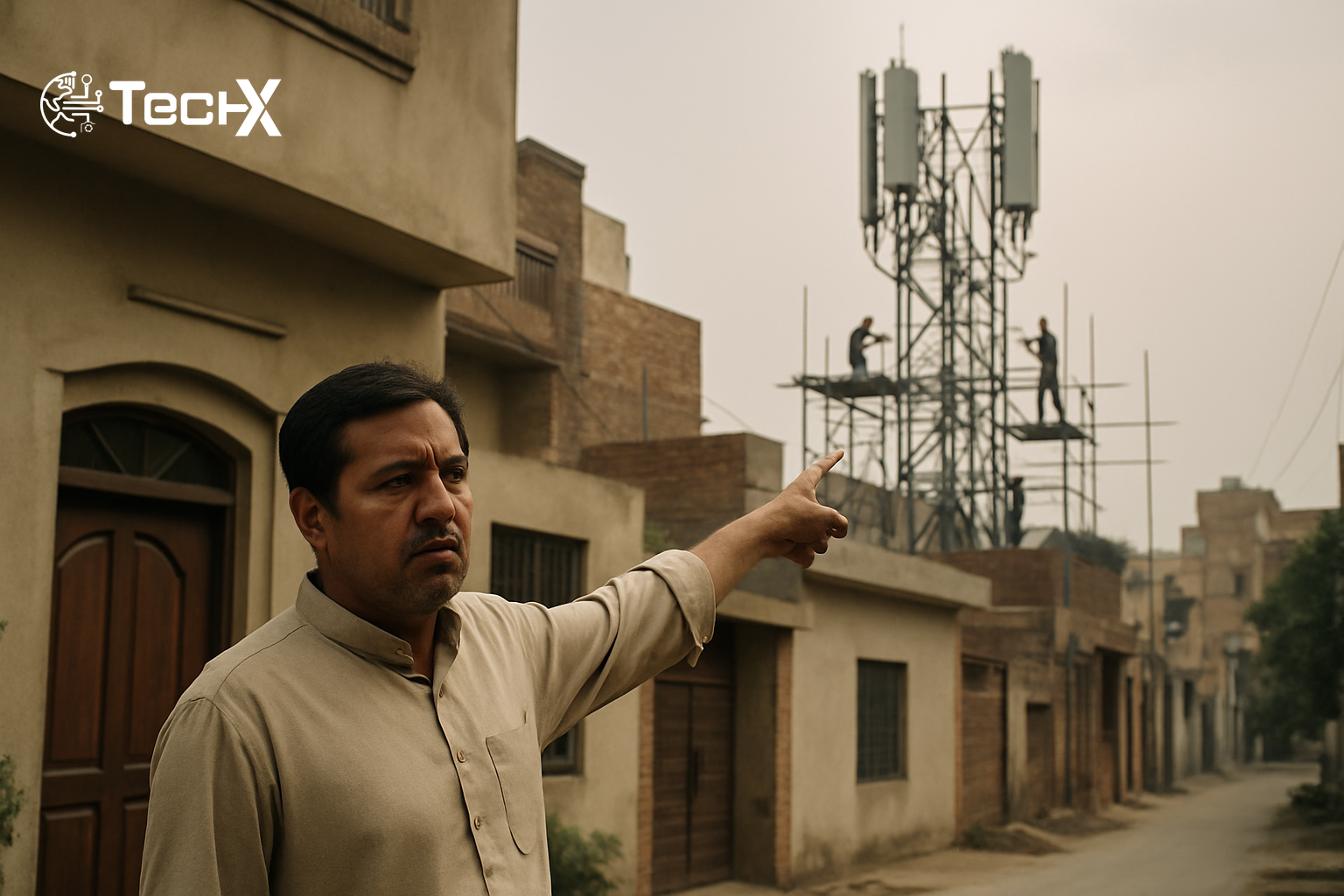
The idea of a telecom tower on home property being forced upon Pakistani citizens has triggered one of the most heated legislative controversies of 2026. The Pakistan Telecommunication (Re-organisation) (Amendment) Bill 2026 has divided lawmakers, legal experts, and the public, raising urgent questions about property rights, constitutional protections, and the true cost of building Pakistan’s 5G future.
What Is the Telecom Amendment Bill 2026?
The Pakistan Telecommunication (Re-organisation) (Amendment) Bill 2026, which seeks changes to a 1996 act, was tabled by IT Minister Shaza Fatima Khawaja and approved by the National Assembly on June 11 by a majority vote. The bill is a major rewrite of Pakistan’s decades-old telecom framework, and its most controversial section directly concerns infrastructure deployment on private land.
The bill proposes changes to the 1996 Telecommunication Act, including a redefinition of Right of Way provisions. The existing definition under Section 2qb described Right of Way simply as a right to pass over land or property to provide telecom services. The amendment replaces this with a broader concept, recast as ‘access by licensee for telecommunication infrastructure’, and introduces new sections 27A and 27B covering right of way and its enforcement.
Section 27A gives telecom licensees the right to access public and private property to install towers, lay fiber cables, and deploy other telecom infrastructure, including parks and other public spaces, without the usual requirement of an environmental assessment report.
Can a Telecom Company Install a Telecom Tower on Home Property?
This is the question alarming millions of Pakistanis. Under the proposed bill, the answer is: yes, under certain conditions. The proposed legislation allows licensed telecommunication and mobile phone companies to install towers and lay optical fibre cables on private residential properties, commercial plots and government institutions.
The process works like this: if a telecom company wants to place its equipment on private land, it can formally ask the owner for permission. The property owner would have 30 days to respond. If both sides cannot reach an agreement, the matter could be sent to a government-appointed official, who would decide whether the telecom company can use the land and how much compensation or rent should be paid to the owner.
Most critically, a property owner’s failure to respond to two official notices would be treated as ‘implied consent’ for telecom installations. That single clause has caused the most public outrage across Pakistan.
The Rs 50 Million Fine Explained
A newly introduced clause, Section 27B, proposes fines of up to Rs 50 million on any property owner, tenant, landlord, or institution that refuses telecom companies right-of-way access. Critics argue this penalty is wildly disproportionate, especially for homeowners who simply want to protect their private space.
The bill would also allow authorities to override local zoning rules and regulations governing housing societies, granting telecom operators access through public and residential areas with limited scope for appeal.
Why Is the Government Pushing This Law?
The government’s reasoning is rooted in Pakistan’s digital ambitions. Pakistan has more than 207 million mobile and fixed-line subscriptions and 58,423 cell sites, according to the Economic Survey 2025-26. Industry officials have long cited weak network infrastructure as a major obstacle, and only 14 to 19 percent of telecom towers are connected to fiber networks, leaving most users dependent on mobile broadband services.
Pakistan’s fiberization has been stuck for years because Right of Way charges and unclear access rules slow down every fiber rollout and tower installation. Minister Shaza Fatima told the Senate committee that all provinces have now abolished RoW charges, and this bill is meant to lock that change into federal law so it cannot be reversed by a future provincial government or local authority.
The ministry stressed that the provisions are ‘designed to accelerate telecom infrastructure deployment, improve connectivity for citizens, and establish a transparent legal framework while fully safeguarding private property rights’, pointing specifically to the recent 5G spectrum auction in which 480 megahertz of spectrum was sold for $507 million.
If you want to understand how limited 5G access already is for ordinary Pakistanis, read our detailed report on the Pakistan 5G handset barrier and why only 2% of users own a 5G phone, a reality that makes the infrastructure debate even more important.
Constitutional Concerns and Senate Pushback
The bill has not had smooth sailing in the Senate. Senator Palwasha Khan, chair of the Senate Standing Committee on Information Technology, secured a 45-day extension to review the draft after lawmakers identified ‘serious flaws’. ‘In its current form, the bill conflicts with Articles 23 and 24 of the Constitution, which protect citizens’ rights to own and use property,’ Khan said.
Senators argued that no Pakistani citizen should be compelled to permit telecom infrastructure on private property without clear legal protections and a transparent mutual-consent mechanism.
The bill is widely considered a poorly written document at best. The controversy it has unleashed has reached a point where the government’s key partner in its legislative agenda, the PPP, is refusing to approve it before it undergoes a thorough discussion in the relevant Senate Standing Committee.
PM Orders High-Level Review
Amid mounting concerns over provisions, Prime Minister Shehbaz Sharif ordered an urgent review of the Right of Way clauses, establishing a 10-member high-level committee to scrutinize the proposed framework. The committee, headed by the Federal Minister for Law and Justice, has been tasked with conducting a comprehensive examination of the bill’s RoW provisions and assessing their legal, constitutional, and policy implications.
What the Government Says It Does NOT Allow
Amid public panic about a forced telecom tower on home or property, the IT Ministry issued a clarification. The ministry said the Right of Way provisions in the bill ‘do not permit telecom operators to enter individual private property without the owner’s permission or due legal process.’
The ministry stated that ‘property owners retain the right to respond, negotiate terms, seek compensation where applicable, raise objections, and agree matters such as route alignment, timing and access.’ When a property owner does not respond despite reminders, the matter will be referred to the appropriate government authority for resolution, while upholding constitutional and legal rights.
The bill also mandates that the licensee must restore any site to its original condition after work is complete. Critics, however, say the written language of the bill does not match these assurances, and ambiguous phrasing leaves property owners legally exposed. For background on how Pakistan’s telecom regulator, the PTA, governs tower and infrastructure licensing, its official site remains the authoritative reference. You can also review the National Assembly of Pakistan’s official portal for the bill’s text and status updates.
Where Does the Bill Stand Right Now?
The Senate Standing Committee deferred approval of the bill until its next session, directing a clause-by-clause review to replace ambiguous language and strengthen private property protections. Meanwhile, a high-level review committee is expected to submit its recommendations to Prime Minister Shehbaz Sharif after examining legal, constitutional, and technical objections raised by stakeholders. The committee is headed by Law Minister Azam Nazeer Tarar.
The bill in its current form is not yet law. It requires Senate approval before it can be enacted. Given the scale of opposition, significant amendments to the telecom tower on home provisions are considered highly likely before any final passage.
Frequently Asked Questions
Can a telecom company install a tower on my home right now?
No. The Pakistan Telecommunication Amendment Bill 2026 has only been passed by the National Assembly. It is currently under review by the Senate Standing Committee and has not yet become law. No telecom company has any legal authority under this bill as of June 2026.
What is the Rs 50 million fine about?
Under Section 27B, property owners, landlords, tenants and public or private institutions are required to provide space for the infrastructure and telecom operators can access these lands following a notice period. Any failure or refusal to grant right-of-way access attracts a maximum fine of Rs 50 million. This provision is one of the most contested parts of the bill.
Does this bill violate the Constitution of Pakistan?
Senator Palwasha Khan stated that ‘in its current form, the bill conflicts with Articles 23 and 24 of the Constitution, which protect citizens’ rights to own and use property.’ The government disputes this interpretation, but the constitutional questions are precisely why the PM ordered a high-level legal review.
What happens if a property owner ignores the notice from a telecom company?
Under the bill as written, a property owner’s failure to respond to two official notices would be treated as ‘implied consent’ for telecom installations. This ‘silence equals consent’ clause is widely seen as the most problematic provision and is expected to be revised or removed during the Senate review process.