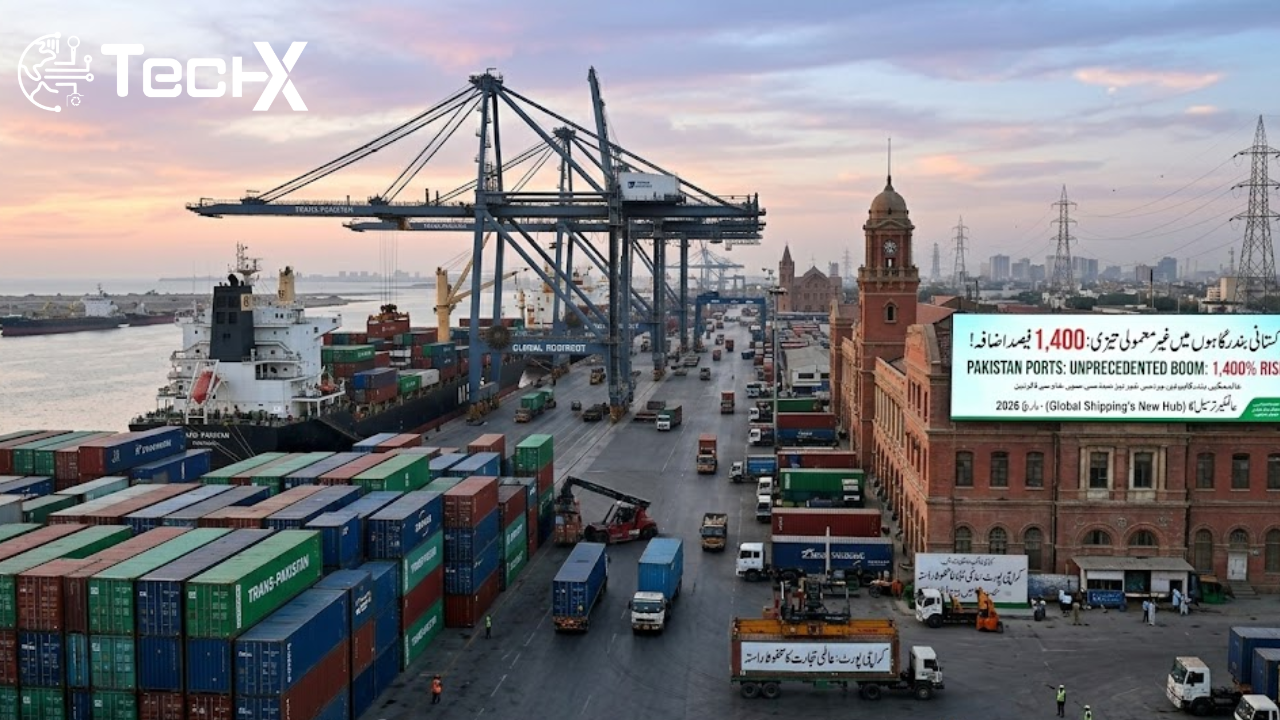
Pakistan has experienced a remarkable surge in port activity, with transshipment volumes rising by more than 1,400 % compared to the previous year. This surge reflects a sudden shift in global trade patterns as shipping companies adjust to international disruptions.
Global Shipping Disruptions Drive Change
The sharp increase in port traffic is linked to global shipping disruptions, particularly those caused by rising tensions in the Middle East. As traditional maritime routes near the Gulf face instability, carriers have begun rerouting vessels to alternative hubs, bringing more business to Pakistan’s seaports.
Karachi Port Leads the Growth
Karachi Port, Pakistan’s largest and busiest seaport, has seen the most dramatic rise in activity. In just the first 24 days of reporting, the port handled more containers than it did during the entire previous year, showcasing a 1,423 % increase in cargo throughput.
Role of Other Major Ports
Alongside Karachi, other major ports such as Port Qasim and Gwadar have also reported sharp increases in cargo handling and transshipment. These ports are strategically positioned to absorb redirected traffic as shipping lines seek reliable alternatives during global route disruptions.
Policy Adjustments and Infrastructure
Policy changes have supported this growth, including revisions to transshipment regulations that allow more flexibility in handling cargo. Improved infrastructure, including developments under initiatives like the China‑Pakistan Economic Corridor (CPEC), has also helped Pakistan attract higher volumes of international trade.
Economic Opportunity and Future Outlook
This surge presents an economic opportunity for Pakistan to strengthen its role as a regional maritime and logistics hub. If global conditions remain unstable, sustained port activity could lead to long‑term investments, expanded capacity, and greater integration into international supply chains.