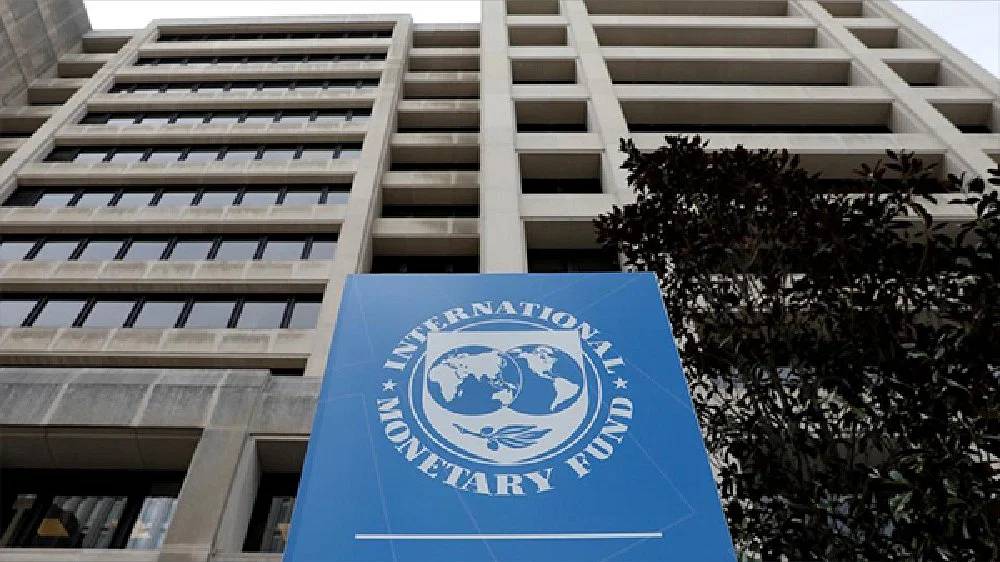
To avoid an economic catastrophe, Pakistan claims it has reached an agreement with the International Monetary Fund (IMF) on the terms for releasing roughly $1.1 billion payout in financial help.
Ishaq Dar, the finance minister, said that “routine procedures” were to blame for the payment delay as an IMF delegation left cash-strapped Pakistan on Friday following 10 days of negotiations with the government.
Payout agreement between IMF and Pakistan
Pakistan and the IMF had agreed to a payout plan of $6 billion in 2019, and another $1 billion was added to the program the next year. Since December, the $1.1 billion initial payment has been delayed.
“The prime minister has said we are committed … We will implement whatever has been agreed upon between our teams,” Dar told reporters.
“We will try to make sure Pakistan completes its second IMF program in its history,” he added.
In a statement, Nathan Porter, the head of the IMF mission in Pakistan, said that discussions with the Pakistani government had achieved “significant progress” and that further progress will be made.
Dar declared that the government would carry out the IMF-requested economic measures, which include imposing new taxes to raise 170 billion Pakistani rupees ($627 million).
Additionally, pledges to raise gasoline taxes will be carried out; this year, diesel charges will be quadrupled to 5 rupees per liter on March 1 and again on April 1.
A balance of payments crisis, record inflation, and a collapsing currency that has lost more than 10% of its value in the previous two weeks are all contributing factors to the economic catastrophe Pakistan is currently facing.
Last week, Prime Minister Shehbaz Sharif described the economic condition as “unimaginable.”
The situation was made worse by last year’s catastrophic rains, which also raised questions about food security, persisted political unrest, and deteriorating security conditions.
Data released by the central bank on Thursday showed that during the week ended February 3, the nation’s foreign exchange reserves decreased to $2.9 billion.
Economic Experts Analysis regarding Payout Plan
According to experts, the reserves will expire in less than 20 days, and any IMF payout delay might have significant repercussions.
While both the IMF and the government appear “moderately upbeat” over their conversations, Asad Sayeed, a Karachi-based economist with the research group Collective for Social Science Research, told a foreign news agency that Pakistan’s next week will be crucial.
“There are a lot of decisions to be made and they need to be done as soon as possible, which makes the next week so important. If the government does what the IMF wants, perhaps then we can see the completion of their payout agreement. But if it does not, it will be a red signal for the country.”
The IMF agreement has a “technical-political split,” according to economist Haris Gazdar.
“The technical agreement would already signal an IMF nod and the advantage it confers upon the government. The IMF obviously needs ‘political’ commitment before it confers that advantage,” he said.
Given that Pakistan has participated in more than 20 such programs with the international lender since 1958, according to Gazdar, the IMF’s requirements are not novel to the country.
“The things they have asked us includes revenue collection, phasing out untargeted subsidies, non-interference with exchange rate etc. Since the relationship between these variables and actual economic outcomes is never precise, there is room for genuine disagreement on targets that must be met,” he said.
“So, negotiation is part of the deal. But how much space Pakistan gets in the end is partly political.”
To read our blog on “Major breakthrough occurs between IMF & Govt.” click here.