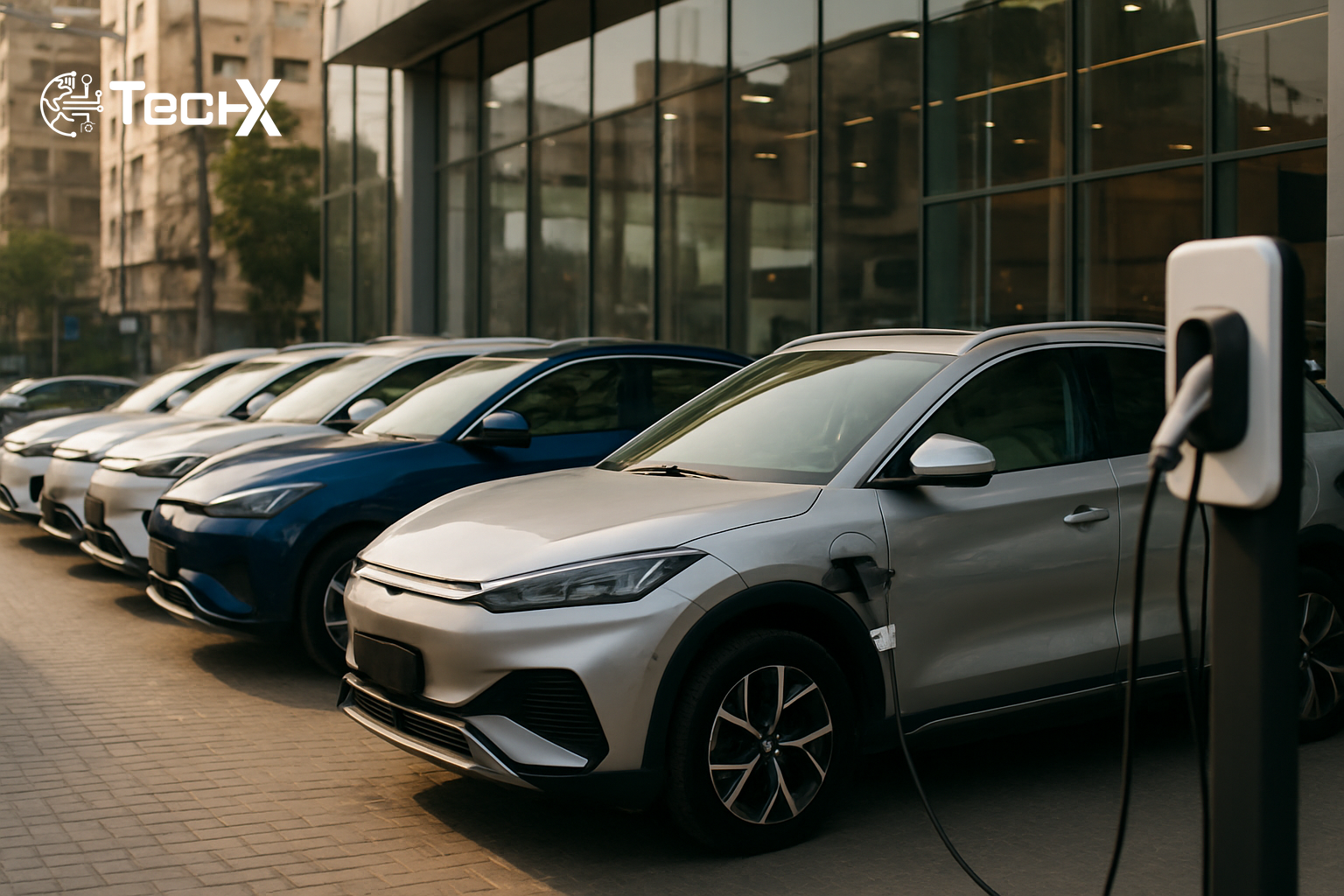
Pakistan EV launches are transforming the country’s auto market at a pace few expected. According to data from Arif Habib Limited (AHL), around 23 new vehicle models are set to enter Pakistan between June and December 2026, and a striking 87% of them run on some form of electric or hybrid power. For Pakistani buyers, this is the biggest wave of new car choices in years.
Pakistan EV Launches by the Numbers
The AHL data breaks the 23 planned launches into three groups. Nine are fully electric vehicles (EVs), meaning they run entirely on battery power with no petrol engine at all. Eleven are either plug-in hybrid electric vehicles (PHEVs) or range-extended electric vehicles (REEVs). A PHEV uses both a battery and a petrol engine. A REEV goes a step further: the petrol engine only acts as a generator to charge the battery, so the wheels are always driven by electricity. Only three of the 23 upcoming models use a traditional petrol engine alone.
This means traditional petrol vehicles make up just 13% of the upcoming pipeline, a dramatic shift from even two years ago, when petrol models dominated nearly every new launch.
Which Models Are Coming and When
The launch calendar is packed from July through to December. Here is a month-by-month look at what is coming:
- July: Jaecoo J8 PHEV, Nevo Q05 REEV, Deepal G318 REEV, and the all-electric Nevo A06.
- August: Ora 03 EV, Deepal Hunter K50 REEV, and the Avatr 11 EV.
- September: Chery QQ3 electric hatchback and Deepal S09 REEV.
- October: Changan Lumin EV, a compact city electric car.
- December: A big final batch of six models, Denza B5 PHEV, Denza B8 PHEV, BYD Sealion 6 PHEV, Nevo Q07 PHEV, Avatr 07 EV, and Aion ES EV.
That final December wave alone brings six new models, capping what is shaping up to be the most active year in Pakistan’s auto history for new-energy vehicles.
Chinese Brands Are Leading the Charge
Almost every Pakistan EV launch in this wave comes from a Chinese brand. Names like BYD, GAC, Changan, Deepal, Avatr, Denza, Ora, Omoda, Nevo, and Jaecoo are expanding their presence in Pakistan through partnerships with local assemblers. This is not just an import story. Several Chinese makers are now setting up local assembly lines to cut costs and build long-term presence.
The biggest example is BYD, the world’s top EV maker. It has built an assembly plant near Karachi in a joint venture with Mega Motor Company, a subsidiary of Hub Power. The plant can build up to 25,000 vehicles per year and is expected to produce its first Pakistan-assembled car in mid-2026. Starting with local assembly means lower costs for buyers, since imported vehicles carry heavy duties.
Master Changan Motors is also locally assembling Deepal vehicles. The Deepal S05 became Pakistan’s first locally assembled range-extended EV earlier in 2026, a real milestone for the industry.
Why Pakistan Is Pushing So Hard for EVs
The push behind all these Pakistan EV launches is not just about cars. It is about money, specifically, the billions Pakistan spends on imported fuel every year. Pakistan spends an estimated $10 to $15 billion annually on crude oil and liquefied natural gas imports, which puts enormous pressure on its foreign exchange reserves. The government believes that shifting transport to electric power could save around $4.5 billion in fuel imports over time.
To make this happen, the government has put real incentives on the table. Buyers and makers benefit from a 1% customs duty on EV-specific completely knocked-down (CKD) parts, and locally manufactured EVs with batteries below 50 kilowatt-hours are taxed at just 1% sales tax. These policies began under the Auto Industry Development and Export Policy (AIDEP) 2021-26 and are expected to continue, possibly with more support, under the incoming Auto Policy 2026-31.
For everyday Pakistanis dealing with rising petrol prices, an EV or PHEV makes a lot of financial sense too. Running on electricity is far cheaper per kilometre than petrol, and a PHEV removes range anxiety since the petrol engine is still there for longer trips or areas without charging stations.
What About Charging and Affordability?
The rapid pace of Pakistan EV launches is exciting, but real challenges remain. Charging infrastructure is still thin outside major cities. Many buyers worry about what happens if the battery runs flat on a long route or in a smaller city. This is exactly why PHEVs and REEVs are expected to outsell pure EVs in the near term, they offer the savings of electric running without fully depending on a charging network.
Affordability is the other big hurdle. Most of the new models launching are mid-range to premium vehicles. A broad, affordable EV market for average Pakistani families, think Alto or Mehran territory, is still a work in progress, though models like the Changan Lumin EV and the Chery QQ3 hatchback are aimed at the more budget-friendly end.
Automakers are aware of these gaps. Several are planning dedicated charging networks alongside their vehicle launches, and financing options are being designed to bring monthly payments within reach of more buyers.
If you are also comparing value options in the traditional car market, see our guide on the Suzuki Alto 2026 price in Pakistan to understand how entry-level petrol cars still stack up against the new wave of electric options.
Frequently Asked Questions
How many new EV and hybrid models are coming to Pakistan in 2026?
According to Arif Habib Limited data, 23 new vehicle models are expected to launch in Pakistan between June and December 2026. Of these, nine are fully electric and 11 are plug-in or range-extended hybrids, making 87% of all launches electrified in some form.
What is a REEV and how is it different from a PHEV?
Both use a battery and a petrol engine. In a PHEV, the petrol engine can drive the wheels directly. In a REEV (Range-Extended Electric Vehicle), the petrol engine only acts as a generator to charge the battery, the wheels are always powered by electricity. REEVs feel more like pure EVs to drive but do not suffer from range anxiety.
Why is Pakistan targeting $4.5 billion in fuel savings through EVs?
Pakistan imports $10 to $15 billion worth of crude oil and LNG every year. This puts heavy strain on the country’s foreign exchange reserves. By gradually moving transport to electric power, policymakers believe Pakistan can cut a large portion of this fuel import bill, with the government’s official savings target set at $4.5 billion.
Is BYD assembling cars locally in Pakistan?
Yes. BYD has built an assembly plant near Karachi in a joint venture with Mega Motor Company. The facility can produce up to 25,000 vehicles a year and is expected to roll out its first Pakistan-made car in mid-2026. Local assembly reduces costs compared to fully imported units, which face high customs duties.