
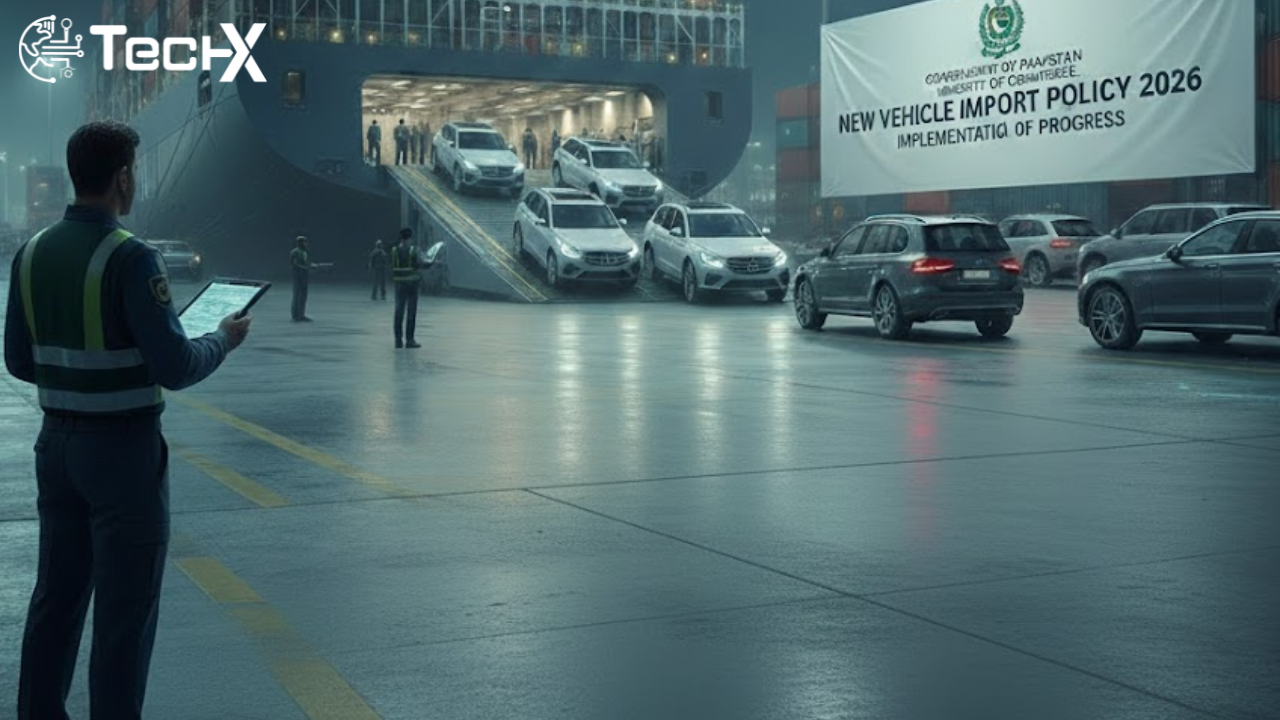
The Government of Pakistan has announced comprehensive amendments to its vehicle import policy with the objective of tightening regulations, discouraging misuse of import schemes, improving road safety, and reducing environmental pollution. These changes directly affect overseas Pakistanis and local residents who intend to import vehicles for personal use. The revised policy clearly defines eligible import schemes, introduces stricter timelines, applies resale restrictions, and enforces uniform safety and environmental standards. This detailed article explains every aspect of the updated rules to ensure full clarity and compliance.
Abolition of the Personal Baggage Scheme
Under the new notification, the Personal Baggage Scheme has been completely abolished. Previously, individuals were allowed to import a vehicle as part of their personal luggage upon arrival in Pakistan. However, this option is no longer available.
Key Impact
- Vehicles can no longer be imported as personal effects
- The scheme was discontinued due to frequent misuse, including tax avoidance and speculative resale
- All vehicle imports must now strictly follow approved schemes only
Authorized Vehicle Import Schemes
Following the abolition of the Personal Baggage Scheme, vehicles may now be imported into Pakistan only under the two schemes outlined below.
Transfer of Residence (ToR)
The Transfer of Residence scheme applies to Pakistani nationals who are returning to Pakistan after living abroad for a prolonged period.
Eligibility Conditions:
- The importer must be permanently relocating to Pakistan
- The vehicle must have been owned and used by the importer during their stay abroad
- The vehicle must comply with age, safety, and environmental regulations
This scheme is intended strictly for personal use and not for commercial or resale purposes.
Gift Scheme
Under the Gift Scheme, a vehicle may be imported as a gift from an overseas Pakistani, typically a close family member.
Key Conditions:
- The donor must be residing abroad
- The import is strictly non-commercial
- All applicable duties, taxes, and regulatory requirements apply
The government has tightened monitoring of this scheme to prevent its use for business or profit-making activities.
Increase in Vehicle Import Interval
To control repeated imports by the same individual, the government has increased the mandatory waiting period between successive vehicle imports.
| Policy Aspect | Previous Rule | Revised Rule |
|---|---|---|
| Import Interval | 2 years | 3 years (850 days) |
Explanation
- An individual who has imported a vehicle under any eligible scheme must wait at least 850 days from the previous import date
- The restriction applies regardless of whether the vehicle was imported under ToR or Gift Scheme
This measure aims to eliminate frequent imports that resemble commercial activity.
Restriction on Sale and Transfer of Ownership
The updated policy introduces a mandatory holding period for imported vehicles.
Sale Restriction
- Vehicles imported under Transfer of Residence or Gift Scheme cannot be sold, transferred, or disposed of for one full year
- The vehicle must remain registered in the importer’s name during this period
Purpose
- To discourage profit-oriented imports
- To ensure vehicles are imported strictly for personal use
Violation of this condition may result in penalties or legal action.
Mandatory Safety and Environmental Compliance
One of the most significant changes is the extension of safety and environmental compliance requirements to all non-commercial imports.
Applicable Standards
Vehicles imported under Gift or ToR schemes must now comply with:
- National vehicle safety standards
- Environmental and emission regulations
Practical Implications
- Overly old vehicles may be restricted
- High-emission or poorly maintained vehicles will be rejected
- Vehicles failing inspection standards will not be cleared for import
This change aligns personal imports with commercial import regulations, improving road safety and environmental protection.
Country of Origin Requirement for Transfer of Residence
The government has also clarified rules regarding the origin of vehicles imported under the Transfer of Residence scheme.
New Requirement
- The vehicle must be imported from the same country where the importer was residing prior to relocation
Example
- If an individual lived in the United Arab Emirates, the vehicle must be shipped from the UAE
- Importing a vehicle from a third country such as Japan or the United Kingdom is not permitted under ToR
This condition prevents indirect imports and misuse of the relocation facility.
Compliance and Advisory
Prospective importers are advised to:
- Review eligibility requirements carefully
- Ensure compliance with safety and emission standards before shipment
- Verify documentation related to residence, ownership, and shipment origin
Failure to meet these requirements may result in clearance delays, financial penalties, or outright rejection of the imported vehicle.
Conclusion
The revised vehicle import rules introduced by the Government of Pakistan represent a comprehensive effort to regulate personal vehicle imports more effectively. By eliminating the Personal Baggage Scheme, limiting import frequency, enforcing resale restrictions, and applying uniform safety and environmental standards, the policy aims to promote transparency, environmental responsibility, and genuine personal use. Individuals planning to import vehicles should fully understand and comply with these updated regulations to avoid legal and financial complications.