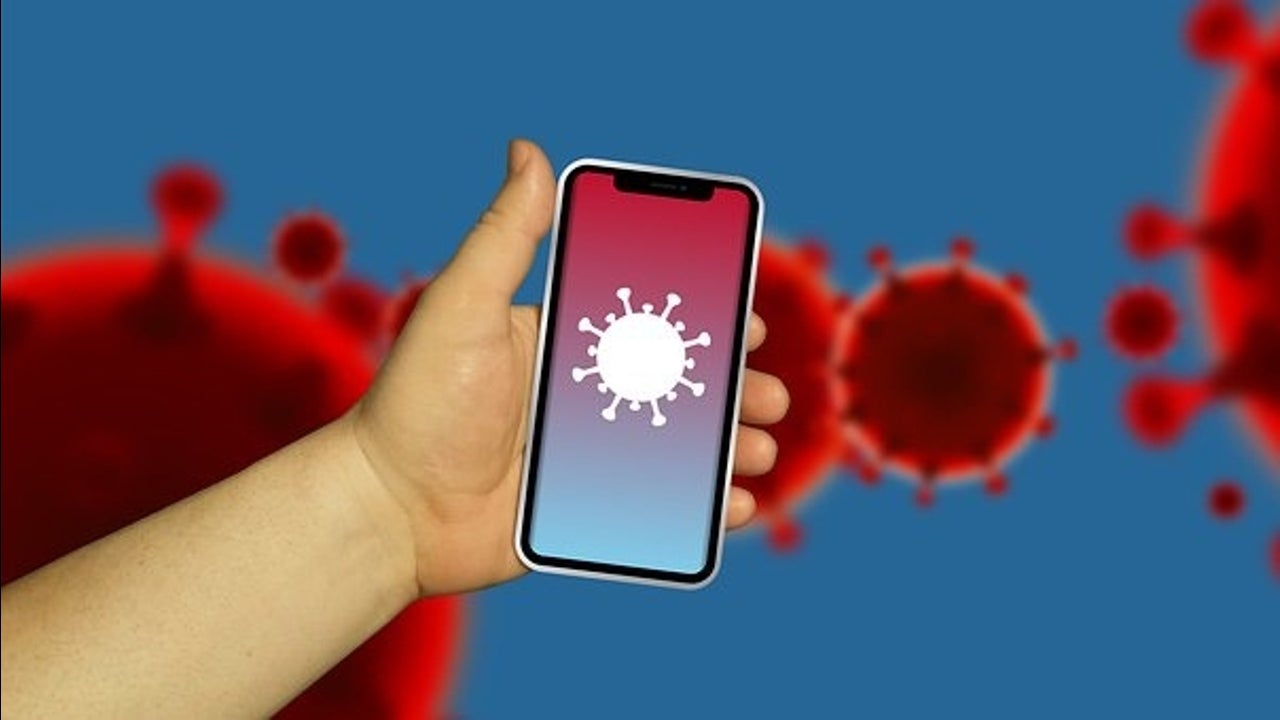
Researchers announced on Monday that a smartphone app can accurately identify Covid-19 infection in people’s voices using artificial intelligence (AI).
The software can be utilized in low-income nations where PCR tests are expensive and/or challenging to deliver because, according to the team, it is cheaper, quicker, and easier to use than numerous antigen testing.
“The promising results suggest that simple voice recordings and fine-tuned AI algorithms can potentially achieve high precision in determining which patients have Covid-19 infection,” said Wafaa Aljbawi, a researcher at the Institute of Data Science, Maastricht University, Netherlands.
“Moreover, they enable remote, virtual testing and have a turnaround time of less than a minute. They could be used, for example, at the entry points for large gatherings, enabling rapid screening of the population,” she said at the European Respiratory Society International Congress in Barcelona, Spain.
The upper respiratory tract and vocal cords are typically impacted by the covid-19 infection, changing a person’s voice.
Aljbawi and her superiors made the decision to look into the viability of using AI to analyze voices in order to identify Covid-19.
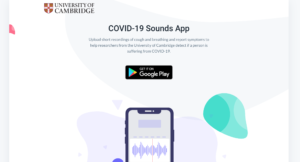
They used information from the crowdsourced Covid-19 Sounds App from the University of Cambridge, which includes 893 audio samples from 4,352 healthy and unhealthy subjects, of whom 308 had tested positive for Covid-19.
Mel-spectrogram analysis, a method for analyzing voice characteristics like loudness, power, and temporal fluctuation, was employed by the researchers.
“In order to distinguish the voice of Covid-19 patients from those who did not have the disease, we built different artificial intelligence models and evaluated which one worked best at classifying the Covid-19 cases,” Aljbawi added.
Long-Short Term Memory (LSTM) was one of the models they discovered to perform better than the others.
Neural networks, on which LSTM is based, imitate how the human brain functions and identify the underlying links in data.
It was 89 percent accurate overall, 89 percent accurate at spotting positive instances, and 83 percent accurate at seeing negative cases.
To read our blog on “Australia Covid: Expensive ‘failure’ contact tracing app,” click here.