As non-profit organizations increasingly operate across borders, time zones, and constrained budgets, digital transformation has become essential rather than optional. Community-led programmes that once relied on in-person delivery and manual coordination are now expected to scale responsibly, demonstrate impact, and remain resilient in changing conditions. For many social-impact organisations, the challenge lies in adopting technology without losing the trust, accessibility, and human connection that sit at the heart of their work.
Against this backdrop, Mind Works International has continued its efforts to support youth development, women in technology, and remote talent across Pakistan, the United Kingdom, and other regions. Over recent years, the organisation has focused on combining community-based mentoring with digital access while maintaining a strong social mission.
A key phase in this transition took place between June 2022 and September 2023, when Mahvash joined the organisation as a Product & Digital Transformation Lead. Her involvement coincided with Mind Works’ efforts to improve consistency, accessibility, and long-term sustainability across its programs by transitioning from manual coordination to a more structured, technologically enabled delivery.
In this exclusive interview, Mahvash shares insights into her journey with Mindworks International, strategies for building impactful digital systems, and advice for others stepping into this space in the tech world.
Editor, TechX:
Before June 2022, Mind Works International relied mainly on informal mentoring and locally managed sessions. What changed as a result of your involvement?
Mahvash Khan:
When I joined, mentoring and training were working well at a local level, but delivery depended heavily on individual coordination. There were no shared digital learning spaces or standardised curriculum paths, which made it difficult to support learners consistently across locations.
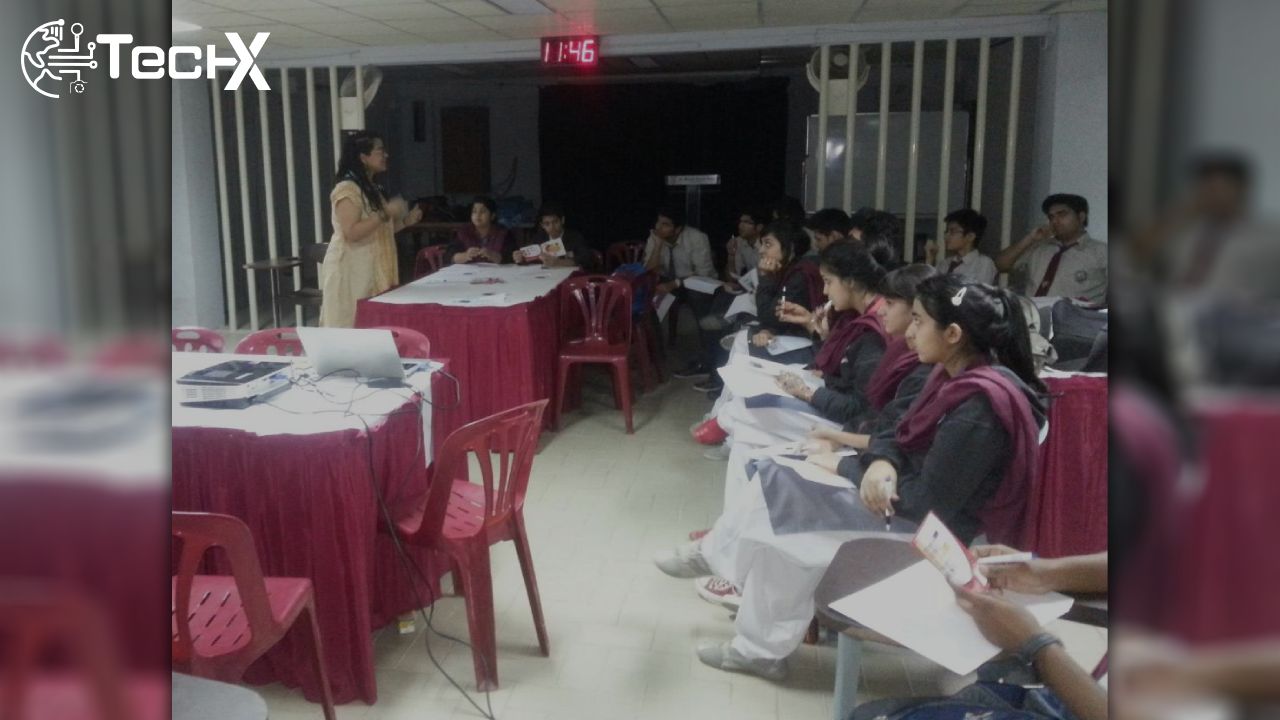
The focus of my contribution was to introduce structure rather than scale for its own sake. We modernised curriculum delivery and created online learning environments that could be accessed reliably by learners and mentors across Pakistan and UK
Impact on Learners and Curriculum Access
TechX Editor:
How did these changes affect learners directly? How many learners were able to access the digital curriculum during this period?
Mahvash Khan:
The biggest change for learners was predictability. Instead of relying solely on ad-hoc sessions, they had access to structured learning content and clearer mentoring pathways. This helped learners engage more consistently and at their own pace. The structured digital curriculum was accessed by approximately 120–150 learners over the 3-month period. The Learning materials were standardised into repeatable modules, reducing dependency on live-only sessions. There was an increased engagement from learners balancing education with work or caregiving responsibilities across the country
Strengthening Cross-Border Mentorship
TechX Editor:
TechX noted a steady increase in cross-border mentor participation. How did that happen in practice?
Mahvash Khan:
Previously, onboarding new mentors especially from outside Pakistan required significant manual coordination. I introduced clear digital onboarding workflows and documentation, and a CRM system in place which made it easier for international professionals to contribute without ongoing administrative support. This saw in increase from a small, ad-hoc group to 20–30 active mentors and their onboarding time reduced from several weeks to just 2-3 working days.
Operational Efficiency Across Regions
TechX Editor:
Mind Works expanded across multiple regions during this time. How did digital systems support that without increasing administrative overhead?
Mahvash Khan:
The intention was to make the organisation easier to run, not heavier. By introducing shared digital tools and standard processes, Mind Works could support programmes across Pakistan, UK and even the UAE using the same digital systems without needing additional coordination staff. The staff is able to track the participation and programme activity through shared dashboards rather than manual reporting
TechX Editorial Perspective
From an editorial standpoint, this work stood out not because of rapid expansion, but because of measured, sustainable digital change. The introduction of structured curriculum, shared learning systems, and scalable mentor workflows enabled Mind Works International to widen access while maintaining quality and community trust.
The recognition reflects a broader shift in the non-profit sector, where applied digital product thinking is increasingly necessary to support inclusion, accountability, and cross-border collaboration without compromising the foundations of social-impact work. This is just the start of a much larger digital evolution in place at a time where such transformation is a necessity than a luxury.