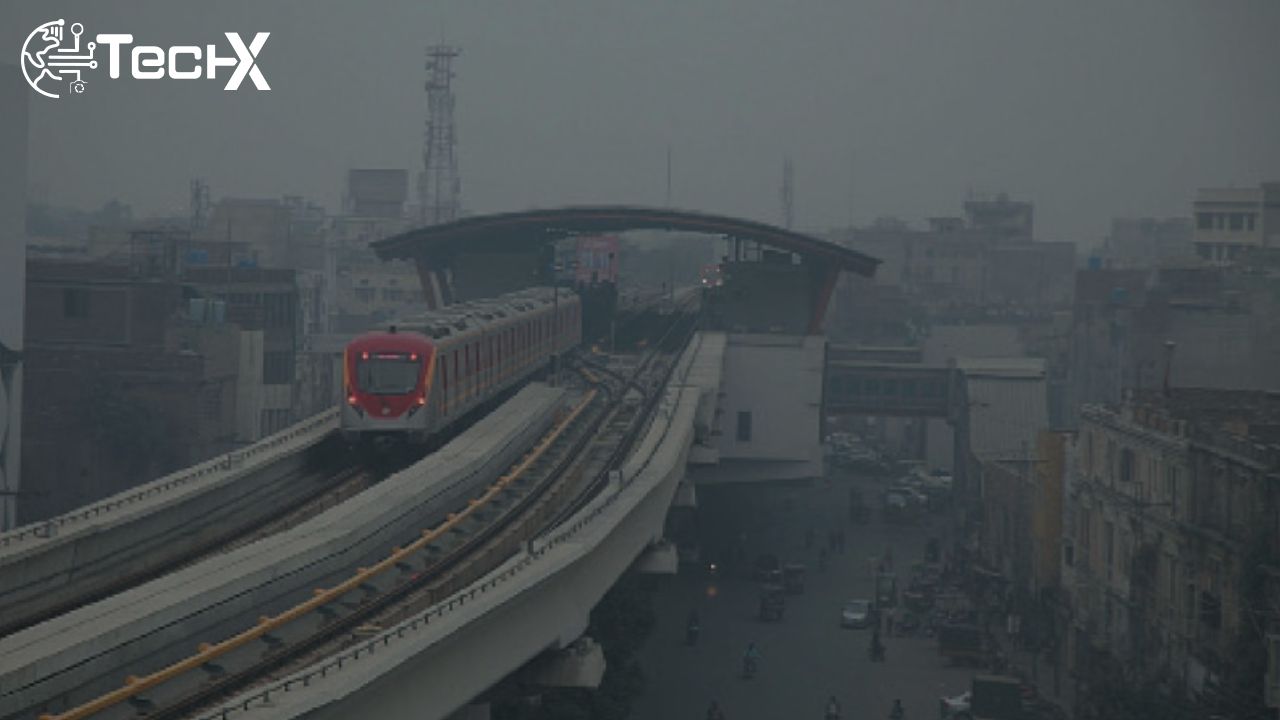
Lahore has once again been declared the world’s most polluted city, with an average Air Quality Index (AQI) of 443. This level falls in the “hazardous” category, posing serious health risks to residents. Experts warn that prolonged exposure to such air can lead to severe respiratory and cardiovascular problems, affecting people of all ages and health conditions.
Localities Face Extreme Pollution
By early afternoon, air quality sharply declined across many areas. Begampura recorded an extremely dangerous AQI of 1,748, Muslim Town 848, Qila Gujjar Singh 759, and Cantonment 722. Environmental experts stress that even short exposure at these levels can be life-threatening. Citizens are urged to avoid outdoor activities and take all necessary precautions to protect their health.
Causes of Severe Smog
Lahore suffers from severe winter smog due to multiple factors. Vehicle emissions, industrial pollution, crop residue burning, and weather conditions that trap pollutants near the ground all contribute, despite government measures such as traffic restrictions and partial lockdowns, to pollution spikes during the peak smog season. Experts say these steps are insufficient without long-term environmental strategies.
Health Authorities Advise Safety Measures
Health authorities have urged residents to stay indoors, wear protective masks, and keep windows closed. Vulnerable groups, including children, the elderly, and people with existing health conditions, face the highest risk. Experts warn that prolonged exposure to Lahore’s current AQI can cause serious health complications, emphasising that life-threatening conditions may develop even in healthy individuals.
Call for Government Action
Environmental organisations are pressuring authorities to act immediately. Stricter emission regulations, industrial output control, and promotion of clean transport are among the urgent measures recommended. Experts insist that without sustained action, Lahore will continue to experience hazardous air episodes. Public awareness campaigns and long-term policy implementation are crucial to mitigate health risks and improve overall air quality.
Top 20 Most Polluted Cities in the World (2025) with Average AQI
| Rank | City | Country | Average AQI | Notes on Pollution Source |
|---|---|---|---|---|
| 1 | Baghdad | Iraq | 430 | Industrial emissions, traffic, dust storms |
| 2 | Lahore | Pakistan | 443 | Vehicle emissions, crop burning, smog |
| 3 | Delhi | India | 420 | Traffic, industry, crop residue burning |
| 4 | Kuwait City | Kuwait | 390 | Industrial pollution, desert dust |
| 5 | Kolkata | India | 385 | Urban emissions, traffic |
| 6 | Doha | Qatar | 380 | Urban growth, desert dust |
| 7 | Dhaka | Bangladesh | 375 | Industry, population growth |
| 8 | Kinshasa | DRC | 370 | Urban emissions, industrial activity |
| 9 | Mumbai | India | 365 | Traffic, construction dust |
| 10 | Karachi | Pakistan | 360 | Seasonal smog, urban emissions |
| 11 | Kampala | Uganda | 355 | Traffic, urban pollution |
| 12 | Manama | Bahrain | 350 | Industrial and traffic pollution |
| 13 | Riyadh | Saudi Arabia | 345 | Desert dust, traffic |
| 14 | Cairo | Egypt | 340 | Industry, vehicles, urban pollution |
| 15 | Tehran | Iran | 335 | Traffic, industry, and weather-related smog |
| 16 | Ho Chi Minh City | Vietnam | 330 | Traffic congestion, construction dust |
| 17 | Jakarta | Indonesia | 325 | Traffic, industry, urban emissions |
| 18 | Bangkok | Thailand | 320 | Traffic, industrial emissions |
| 19 | Lagos | Nigeria | 315 | Traffic, urban emissions |
| 20 | Beijing | China | 310 | Industry, vehicles, winter smog |