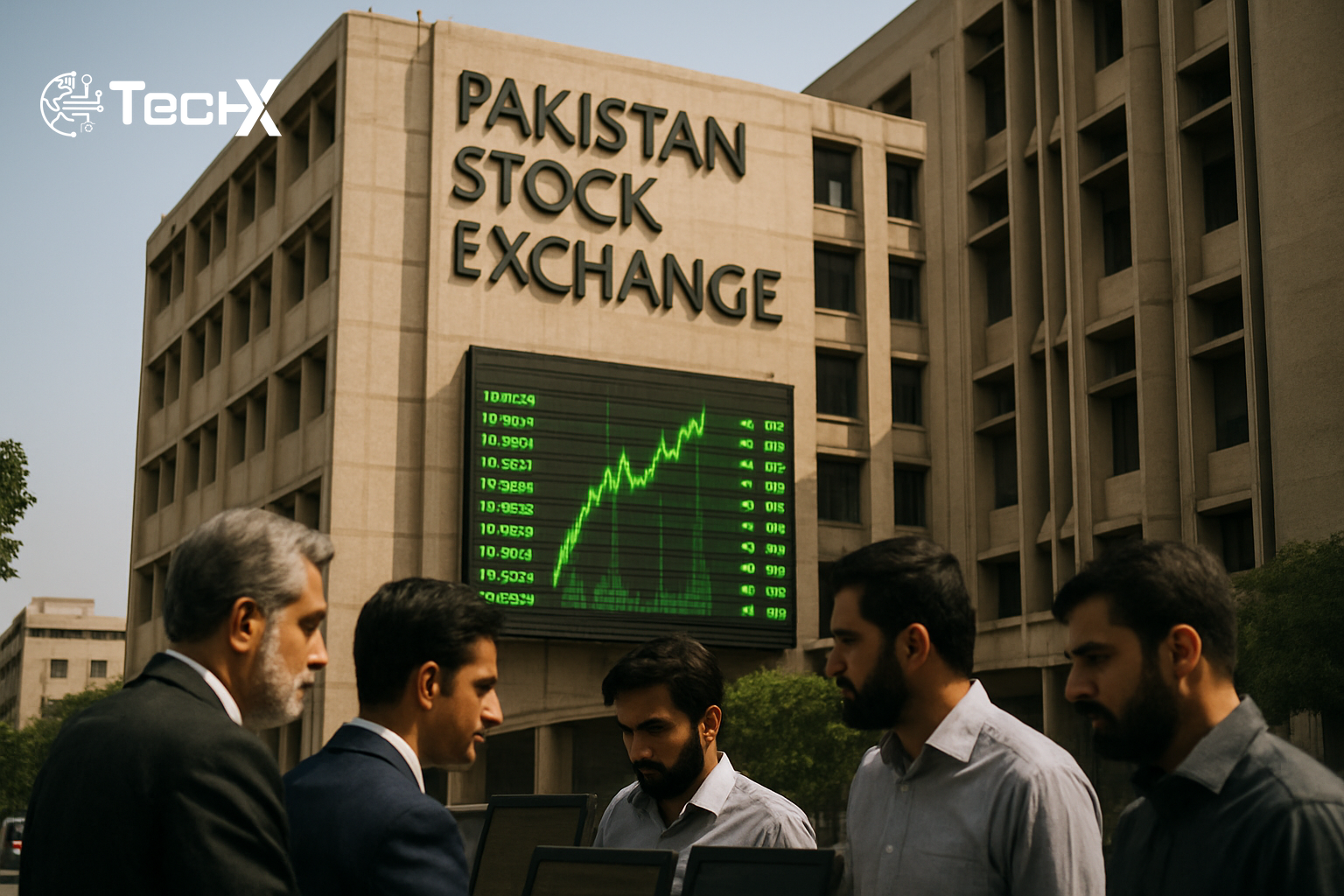
The KSE-100 Index in 2026 has delivered one of its most dramatic performances in recent memory, crossing the 179,000-point mark and leaving investors and analysts taking notice. After years of turbulence, Pakistan’s benchmark equity index is posting returns that are hard to ignore, backed by a set of real, measurable economic improvements. This article breaks down what is happening, why it is happening, and what ordinary Pakistanis should understand about the rally.
KSE-100 Index 2026: Where Does It Stand Right Now?
Pakistan Stock Exchange (PSX) data shows the benchmark index trading around the 179,000-point level in the final week of June 2026. Pakistan’s main stock market index, the KSE 100, rose to 179,571 points on June 24, 2026, gaining 1.06% from the previous session. That single-day gain of nearly 1,900 points came after a brief two-session dip caused by profit-taking, highlighting the market’s underlying resilience.
The KSE-100 previously touched an all-time high of 189,556 index points, with a 12-month gain of 64.89% at its January 2026 peak before settling into a broadly upward but sometimes choppy path through mid-year. Over the past month, the index climbed 4.57% and is up 46.28% compared to the same time last year.
What Is the KSE-100 and Why Does It Matter?
The Karachi Stock Exchange 100 Index is a major stock market index which tracks the performance of the largest companies by market capitalization from each sector of the Pakistani economy listed on the Karachi Stock Exchange. Think of it as the single most-watched thermometer of investor confidence in Pakistan’s corporate sector.
The Pakistan Stock Exchange (PSX), founded as the Karachi Stock Exchange (KSE) in 1947, merged with the Lahore Stock Exchange and Islamabad Stock Exchange in January 2016 to form the PSX, aiming to reduce market fragmentation and attract strategic investment partnerships.
As of February 2026, PSX lists 561 companies with a total market capitalization of approximately PKR 18.276 trillion (about $64.83 billion USD). For context, the exchange has 1,886 foreign institutional investors, 883 domestic institutional investors, around 220,000 retail investors, 400 brokerage houses, and 21 asset management companies.
Key Drivers Behind the 2026 Rally
1. Super Tax Abolition for Exporters
One of the most immediate catalysts for the late-June recovery was a major fiscal policy shift. Investor sentiment was boosted by the government’s decision to abolish super tax for large-scale exporters, a move expected to improve profitability and competitiveness of export-oriented industries, particularly textiles. This is significant because textile and export-linked stocks carry heavy weight inside the KSE-100.
2. Softer Oil Prices
Softer international oil prices eased concerns over Pakistan’s import bill and inflation outlook, strengthening expectations of macroeconomic stability. Pakistan imports nearly all of its crude oil, so a drop in global energy prices directly reduces pressure on the current account and the rupee.
3. Improving Macroeconomic Backdrop
Attractive market valuations, improving macroeconomic stability, and a stable currency outlook are expected to support renewed investor interest. The rupee has also remained relatively stable through much of 2026, with the Pakistani rupee posting a marginal gain against the US dollar in the inter-bank market, settling at 278.20.
4. Broad-Based Sector Participation
Commercial banks, cement, oil and gas, and textile stocks emerged as the leading contributors to the benchmark’s gains. When a rally is driven by multiple sectors rather than a single industry, it is generally considered a healthier and more sustainable signal for the broader market.
Recent Volatility: Fiscal Year-End Profit-Taking
Not every day in June 2026 has been smooth. Volatility continued at the Pakistan Stock Exchange as the benchmark KSE-100 Index remained under selling pressure through most of the trading session, shedding nearly 800 points on Tuesday. Analysts pointed to two main reasons: profit-taking by investors closing out positions before the fiscal year ends on June 30, and jitters from global markets including the United States where stocks moved lower with the S&P 500 down 0.4%, as traders grappled with expectations of an accelerated schedule of rate hikes by a more aggressive Federal Reserve under the leadership of new Chair Kevin Warsh.
Short-term dips of this nature are a normal feature of any bull market, particularly around fiscal year boundaries when fund managers rebalance portfolios.
How Does PSX Compare Internationally?
The KSE-100 Index delivered an impressive USD-based return of 57% in FY25, making it the best-performing market in the Asia-Pacific region. This placed Pakistan ahead of far larger economies in terms of pure equity returns. The KSE-100 remains one of the most liquid markets in the MSCI Frontier Markets space, with an average daily trading volume (ADTV) of $102 million in FY25.
Foreign investors are also watching closely. The anticipation is a recovery in foreign investment in FY26, with inflows expected to range between $150 million and $200 million, a meaningful turnaround after net outflows recorded in the prior year.
Structural Reforms Strengthening Market Infrastructure
Beyond stock prices, the PSX has been modernising its plumbing. Settlement now takes place on a T+1 basis, which was adopted on 9 February 2026 to align with international standards. This reduces counterparty risk, meaning transactions settle one day after they are executed, bringing Pakistan’s market into line with major global exchanges.
The Pakistan Stock Exchange is regulated by the Securities and Exchange Commission of Pakistan (SECP), which supervises capital markets and protects investors. The SECP’s growing enforcement activity over the past year has also contributed to improved market confidence among both retail and institutional participants.
What This Means for Ordinary Pakistani Investors
The strong performance of the KSE-100 Index in 2026 is not just a headline number. It reflects a broader shift in Pakistan’s economic trajectory: lower inflation, a more stable currency, and a government signalling support for the private sector through tax reforms. However, investors should also recognise that stock markets carry inherent risk. Short-term swings, global headwinds, and geopolitical factors can reverse gains quickly.
Anyone considering entering the stock market should understand how the index works, which sectors carry the most weight, and how global macro events like Federal Reserve rate decisions or oil price movements feed through to Karachi’s trading floor. The PSX has made it easier to participate through digital brokerage platforms, but informed participation is always the safer route.
For those tracking Pakistan’s broader digital economy and financial infrastructure, it is also worth noting how digital payment growth is feeding into retail investor activity. Pakistan’s Raast digital payments network processed 742 million transactions in Q1 2026, a sign that more Pakistanis are becoming comfortable with digital financial tools, which could eventually expand the retail investor base on the PSX.
Frequently Asked Questions
What is the KSE-100 Index in 2026?
The KSE-100 Index in 2026 is Pakistan’s benchmark stock market index, tracking 100 companies across all major sectors. It has crossed 179,000 points by late June 2026, reflecting a year-on-year gain of over 46%.
Why did the KSE-100 rally so strongly in 2026?
The rally is driven by falling inflation, a stable Pakistani rupee, the government’s abolition of super tax for large exporters, softer international oil prices, and improving macroeconomic fundamentals. Foreign investor interest has also returned after outflows in the prior year.
Is the PSX safe for retail investors?
The PSX is regulated by the SECP and has adopted T+1 settlement and circuit breakers in line with international standards. However, all stock market investments carry risk, and individual investors should do their own research or consult a licensed financial advisor before investing.
How do global events affect Pakistan’s stock market?
Global factors like US Federal Reserve interest rate decisions, international oil prices, and geopolitical developments directly influence the KSE-100. Rising oil prices increase Pakistan’s import bill and weaken the rupee, while Fed rate hikes can prompt foreign capital to exit frontier markets like Pakistan.