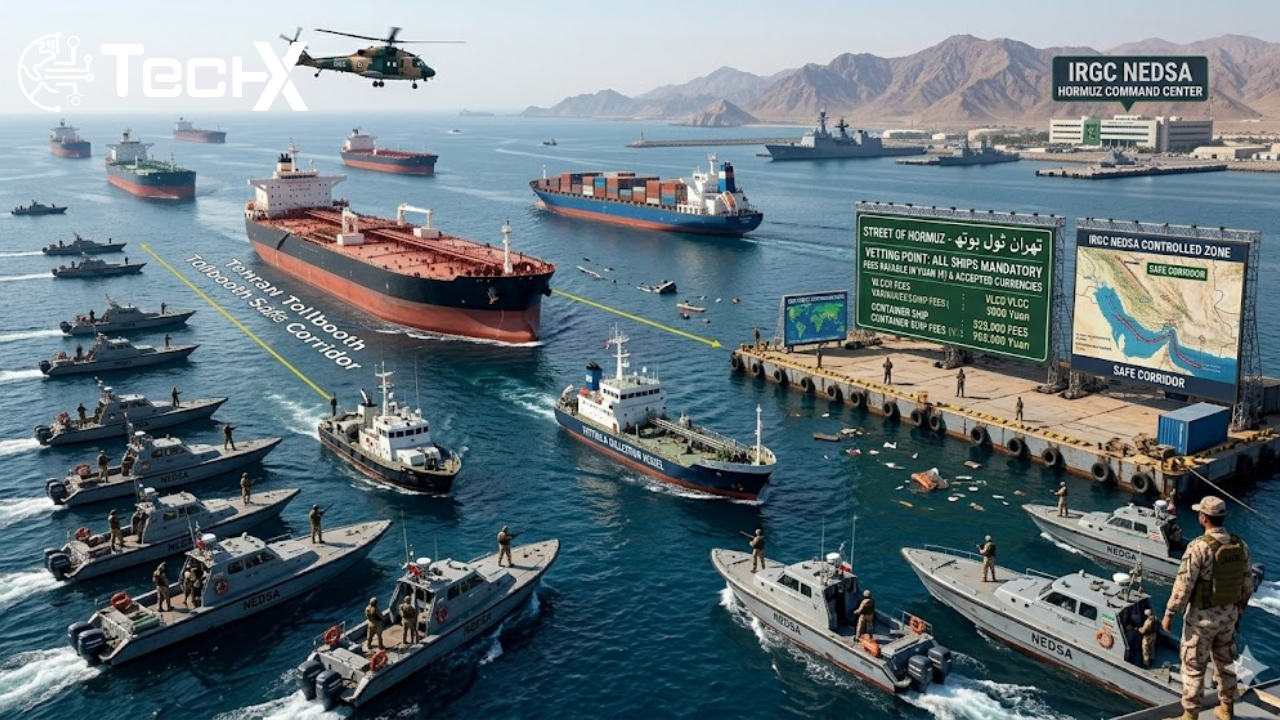
Iran is currently planning and partially implementing a system to charge ships for passing through the Strait of Hormuz, one of the world’s most important oil routes. This move comes during the ongoing 2026 Middle East conflict, where Iran has tightened control over the strait and restricted global shipping traffic.
Why the Strait of Hormuz Is So Important
The Strait of Hormuz is a critical global chokepoint through which around 20% of the world’s oil supply passes daily. Any disruption in this route directly affects global energy markets, oil prices, and international trade. Because of this importance, even small changes like tolls or restrictions can have massive global consequences.
Background War and Shipping Disruption
The current situation started after the 2026 conflict involving Iran, the U.S., and Israel, which led Iran to restrict or nearly block shipping in the region. Many ships stopped passing due to safety concerns, attacks, and rising insurance costs, causing a sharp drop in maritime traffic.
What Is the Toll System?
Iran is working on a formal toll or transit fee system, but right now it exists mostly as a “de facto” (informal) system. Ships that want to pass must coordinate with Iranian authorities, especially the Islamic Revolutionary Guard Corps (IRGC), which controls the area.
How Ships Are Allowed to Pass
Instead of using the normal international shipping lane, many ships are now required to use a special route near Iran’s coast (around Larak Island). In this route, Iranian forces can inspect, verify, and approve ships before allowing them to continue their journey.
Approval and Verification Process
Ships must submit detailed information such as:
- Cargo details
- Ownership information
- Destination
- Crew list
After approval, ships may receive a clearance code and in some cases are even escorted by Iranian forces to ensure safe passage.
How Much Toll Is Being Charged?
There is no fixed official toll announced yet, but reports confirm that:
- Some ships have already paid for passage
- Payments have reportedly reached up to $2 million per tanker
- Payments are often made in Chinese yuan instead of US dollars
This means the pricing is currently negotiated case-by-case, not standardized.
Who Has to Pay and Who Can Pass
Iran has stated that only “non-hostile” countries’ ships are allowed to pass safely. Ships linked to countries involved in conflict (like the U.S. or its allies) may be blocked or denied access. Some countries have negotiated special permission for their vessels.
Legal and Global Concerns
Many countries and experts argue that this toll system may be illegal under international maritime law, which guarantees “free transit passage” through key waterways like Hormuz. Critics say this could set a dangerous precedent and disrupt global trade systems.
Conclusion: Current Reality and Future Outlook
In summary, Iran is not yet running a fully official toll system, but it has clearly started controlling ship movement and charging some vessels for safe passage. The system is still evolving, and future laws may formalize these charges. If fully implemented, this could permanently change global shipping, increase oil prices, and reshape international trade routes