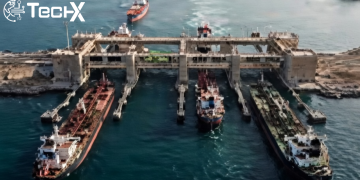

A senior spokesperson for Iran’s Revolutionary Guards Corps (IRGC) has publicly challenged the United States over the possible deployment of U.S. naval vessels to escort oil tankers through the strategic Strait of Hormuz. The remarks come amid escalating tensions in the Middle East that have disrupted shipping and energy exports in one of the world’s most critical waterways.
U.S. Response on Naval Escorting
U.S. President Donald Trump indicated that the U.S. Navy could escort oil tankers through the Strait of Hormuz “if necessary” as part of efforts to protect vessels and ensure the safe flow of energy supplies. This statement was made in the context of increased hostilities between the U.S., Israel, and Iran.
Iran Welcomes But Warns of Risks
According to Iranian state media, IRGC spokesperson Alimohammad Naini responded by saying that Iran “strongly welcomes” the idea of U.S. forces being present for tankers crossing the strait, adding that Iran is “awaiting their presence.” The statement reflects Tehran’s attempt to frame the issue as one of national pride and regional influence.
Historical and Recent Incidents Cited
In his remarks, Naini referenced past maritime events, warning the Americans to remember the 1987 fire on the U.S. supertanker Bridgeton and the recent attacks on oil vessels in the region. Such references serve as a reminder of how volatile the area has been historically and how easily attacks can escalate into broader conflicts.
Attacks on Vessels and Shipping Halt
At least nine vessels have been targeted since U.S. and Israeli strikes on Iran began, according to available reports. These incidents ranging from missile and drone strikes on tankers to other hostile acts—have forced many shipping companies to halt operations in and around the Strait of Hormuz, raising global concerns about energy supply security.
Strategic Importance of the Strait of Hormuz
The Strait of Hormuz is a narrow chokepoint through which roughly 20 percent of the world’s oil supply is shipped. Its security is therefore crucial not only for regional players like Iran and the Gulf states but also for global energy markets. Disruptions here can push crude prices higher and affect energy costs worldwide.
What It Means for Global Oil and Security
The public challenge from Iran’s IRGC to the United States highlights how military posturing and diplomatic tensions can quickly involve civilian energy infrastructure and shipping. If naval escorts are deployed, it could mark a significant escalation in the conflict, potentially drawing in broader international naval forces and affecting global energy markets.