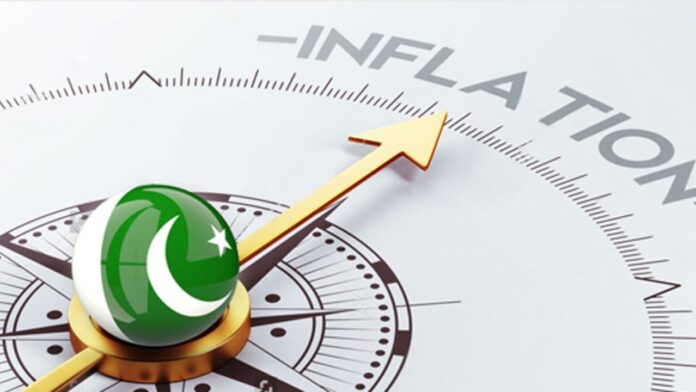
The damage caused by the floods that disrupted the supply of necessities was reported by the Finance Division on Tuesday, and it is anticipated that inflationary pressure in Pakistan would gradually subside as a result.
Rising onion and wheat costs, according to the Monthly Economic Update & Outlook for January 2023, are major variables influencing the level of prices overall.
SBP claims it understands the price of monetary tightening but that reducing inflation is crucial.
Additionally, it estimated that CPI-based inflation will be between 24 and 26% in January 2023 on an annual basis.
“International commodity prices are showing a downward trend on a year-on-year basis and its impact will ultimately be transmitted into domestic prices with some lags after adjusting the currency devaluation.”
It is important to note that throughout the last several trading sessions, the rupee saw a significant drop.
The Finance Division added that “while the government kept the administered prices at their current level to stabilize the overall prices, the post floods persistent shortfall of essential crops is preventing inflation to settle down.”
Inflation Pressure and SBP policies
In order to reduce inflationary pressure, it was also stated that the State Bank of Pakistan (SBP) was also implementing a contractionary monetary policy.
However, supply-side factors account for a bigger proportion of the volatility in the present price level.
Additionally, the recent political and economic uncertainty are raising expectations for inflation.
The report claims that Pakistan’s economy has been growing more slowly since the start of the current fiscal year.
“This is also reflected by the negative growth of several high frequency variables such as cement dispatches, oil sales, industrial production. Furthermore, the slowdown in global growth especially in main export markets along with the tight monetary policy stance by central banks (17% policy rate in January 2023) and low export growth also affected economic growth in Pakistan negatively.”
According to the report, rising inflation, tightening financial conditions, and geopolitical unrest have all had a significant negative impact on expectations for global growth, posing significant difficulties for the world’s economies in general and Pakistan in particular.
“The government of Pakistan has adopted tight fiscal and monetary policies to combat the economic problems brought on by both internal and external forces,” the document stated.
Currently, the government must balance aiding weaker groups in society with other pressing needs for public spending, including mounting interest payments.
The fiscal deficit was nevertheless kept to the same level of 1.4% of GDP as the previous year thanks to careful spending control and efficient domestic resource mobilization, and the primary balance surplus was likewise preserved for the first five months.
“Pakistan is currently confronted with the challenges like high inflation, low growth, and low levels of official foreign exchange reserves. Further month-on-month increases in consumer prices may be countered by a further mean reverting international commodity prices and some exchange rate stability due to decreased pace of depreciation.”
It also stated that a return to low and steady inflation is still compatible with overall money supply increase.
According to the research, the outlook for M2 is largely based on the fiscal accounts, which are under severe stress due to high interest payments and rehabilitation spending.
Nevertheless, the first five months of the current fiscal year have finished with some developments; excellent fiscal management has kept the fiscal surplus and deficit in the main balance.
“Fiscal consolidation is key to saving official reserves and exchange rate stability. This may temporarily be costly in terms of growth prospects in the short term, but long-run prosperity and growth can only be achieved by augmenting the country’s long-term equilibrium growth path by expanding production capacities and productivity. This is a shared responsibility of both the private and public sectors.”
To read our blog on “Recent SBP policies worsened economy of Pakistan, EAG,” click here.