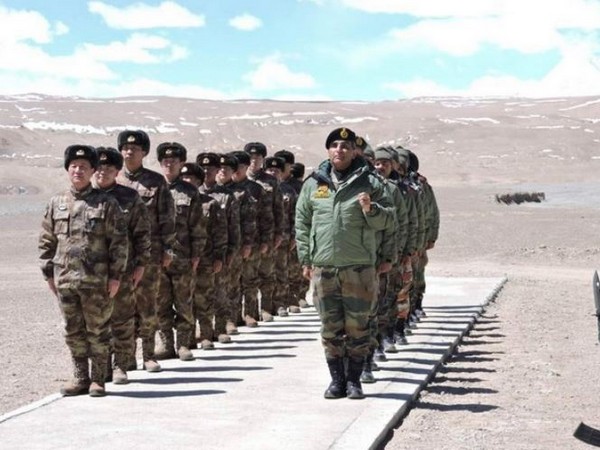
Both Indian and Chinese troops have begun disengaging from the Gogra-Hotsprings border area in the western Himalayas, two years after border clashes strained diplomatic ties.
The disengagement comes ahead of a meeting in Uzbekistan next week attended by Chinese President Xi Jinping and Indian Prime Minister Narendra Modi.
Both sides stated that withdrawal was taking place in a coordinated and “planned” manner that would aid in maintaining border peace.
“The eyeball-to-eyeball contact has ended,” an Indian defence source said on Thursday, despite the fact that both countries had thousands of soldiers stationed along the de facto border, known as the Line of Actual Control (LAC).
“The forces have disengaged. They have not been de-inducted.”
“This is the first step towards a calmer LAC,” the source said, declining to be identified as they are not authorized to speak to the media.
According to China’s defence ministry, troops from both sides have begun to disengage in a “synchronized and planned” manner. “This is conducive to maintaining peace and tranquility in the border areas,” the ministry said.
India and China share a 3,800 km (2,360 mile) border where their troops previously followed long-standing protocols to avoid the use of firearms.
Since June 2020, when Indian and Chinese troops clashed in the Galwan area of Ladakh, there have been 16 rounds of meetings between senior military commanders from both countries.
At least 20 Indian and four Chinese soldiers were killed in hand-to-hand combat, escalating tensions between the nuclear-armed Asian superpowers.
To match Chinese deployments, India moved 50,000 troops along contested areas in Ladakh, some of them at altitudes of more than 15,000 feet (4,572 m), where scarce oxygen and freezing temperatures can be fatal.
In February 2021, Chinese troops dismantled dozens of structures and moved vehicles to clear entire camps from the banks of the Pangong Tso lake in Ladakh as part of an agreement to withdraw their soldiers, some of whom were deployed in close proximity to one another.
To read our blog on “US warns Russia for diverting military troops to Ukraine,” click here