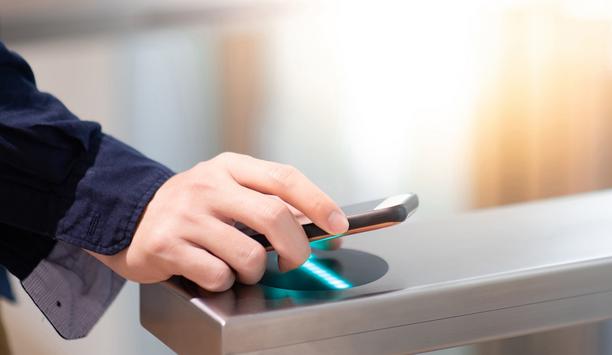
More and more people are able to expect to live to a ripe old age, and the vast majority of them prefer to do so in their own homes.
This expanding demographic, which is also becoming older, bodes well for the future of smart locks and other Internet-of-Things (IoTs) product lines.
The number of Americans 65 and older is expected to nearly double, from 52 million in 2018 to 95 million by 2060, according to research by the Population Reference Bureau titled “Aging in the United States.”
It is claimed in the study that the Baby Boomer generation is mostly responsible for this expansion. The majority of persons aged 50–80 (88%) felt it is vital to remain in their homes for as long as feasible, according to a national study on healthy ageing done by the University of Michigan in 2022.
In other words, they want to age in situ, remaining in their own homes as long as possible while maintaining their independence and comfort.
“Home automation technology like the smart lock is at the vanguard of making aging-in-place a reality for the current generation of seniors,” said Erik Glassen, Senior Manager, Brand Marketing at Kwikset.
Connected smart locks like our Home Connect 620 can play a crucial part in any connected aging-in-place environment by giving seniors, carers, and loved one’s total access to the lock as well as other security systems and connected gadgets.
In order to facilitate aging in place, smart locks can serve five crucial functions
In addition to standard keyed entry, smart locks provide for unique access codes. All authorised individuals who may need access to the home and its occupants might be given their own unique access code.
They can be repairmen like plumbers and electricians, or medical staff called in during an emergency. In preparation, homeowners and caretakers can decide who will have access to the house and when.
Children of seniors can keep tabs on their parents’ whereabouts with the use of smart locks. The lock itself can be thought of as a “sensor” that informs the homeowner about who has entered the house and at what time.
Electronic locks can be set up to notify you via email or text message whenever someone gains access to your property.
In this way, adult children can keep tabs on their elderly parents’ inactivity through the use of smart locks. Caregivers should take notice if they notice a lock has not been unlocked in more than two days.
A check on their health is probably warranted at this point. The smart lock can also be locked remotely by a caretaker if it is discovered to be unlocked at night, when the senior is most likely asleep, or at other times when the resident is known to be out of the house.
Caregiver management may be made easier and safer with the use of smart locks. Because keyless entry eliminates the need to give keys to maintenance staff, security is increased.
Also, nurses and housekeepers come and go, but with smart locks, the codes can be updated as needed so that lost keys are never a concern.
Fifth, smart locks are in the spotlight. When connected to a home hub, smart locks provide seniors the freedom to personalize their smart home environment before entering.
When a tenant unlocks their door, the lights in the hallway can be programmed to turn on, the thermostat can be set, and the shades can be raised automatically. The act of unlocking the door enables a cascade of other activities.
“It’s really up to dealers to educate this market about the benefits that smart locks bring to aging-in-place elders and their families,” Glassen added.
“The smart lock is a fantastic entry point for dealers looking to take advantage of this burgeoning market.”
To read our blog on “At home smartphone-based kidney testing, thanks to Reset,” click here.