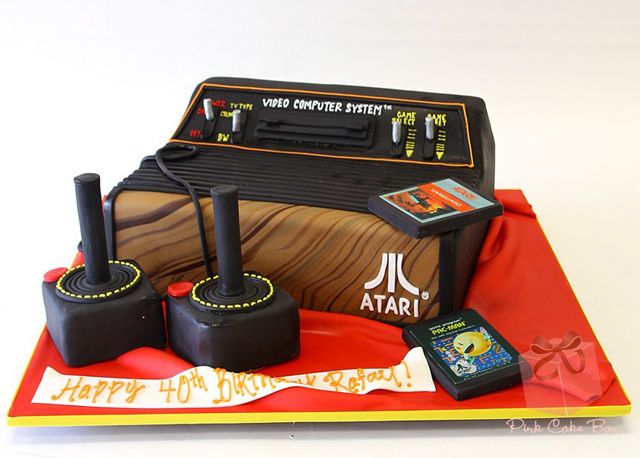
This week marks a truly significant video game anniversary: Nolan Bushnell and Ted Dabney founded Atari Inc, the company that laid the groundwork for the video game industry, 50 years ago.
Many articles in the games press have praised the company and its landmark achievements in recent days, beginning with the arrival of a Pong machine in Andy Capp’s Tavern in Sunnyvale, California, in 1972, and progressing through classic titles such as Breakout, Asteroids, and Missile Commands, to the iconic home consoles.
So many creative genius moments, so many genres, concepts, and conventions bursting forth at the hands of scruffy engineers and designers like Ed Logg, Larry Kaplan, and Dona Bailey.
However, one aspect that is frequently overlooked in these nostalgic reminiscences is how Atari taught the first generation of electronic gamers how to think symbolically.
Pong invited us to imagine ourselves playing tennis with two rectangles and a square, whereas Night Driver’s series of moving rectangles convinced us we were driving a car.
Some will credit the Magnavox Odyssey from 1972 as the originator of these concepts, but it was Atari who put them in arcade machines and later consoles all over the world. Atari also created an entire universe around its simple games.
The company sought to simulate players’ imaginations before they even held the controller through beautiful cabinet designs, expert use of iconography and graphic design, and the gorgeous illustrations on its Atari VCS cartridges.
The boxes for titles like Berzerk and Defender, all of which were highly abstract and visually simple games, were alive with drama; they showed human characters, explosions, and colours that were impossible to achieve on screen at the time, quietly providing players with the imaginative tools they needed to immerse themselves.
George Opperman also created Atari’s now-famous logo, which consists of three simple lines, the two exterior shafts curving inwards toward the peak.
Opperman has claimed many influences for his design over the years, including Mount Fuji, Japanese alphabet symbols, and Pong itself.
Personally, I’ve always viewed it as a spaceship. Atari demonstrated 50 years ago that games exist in a strange liminal space between the screen and the brain, from which they can constantly escape. The dots on the screen are always only a part of the picture, and the picture is never static.
To read our blog on “New Xbox and PC gaming performance enhancements are added to Microsoft Edge,” click here