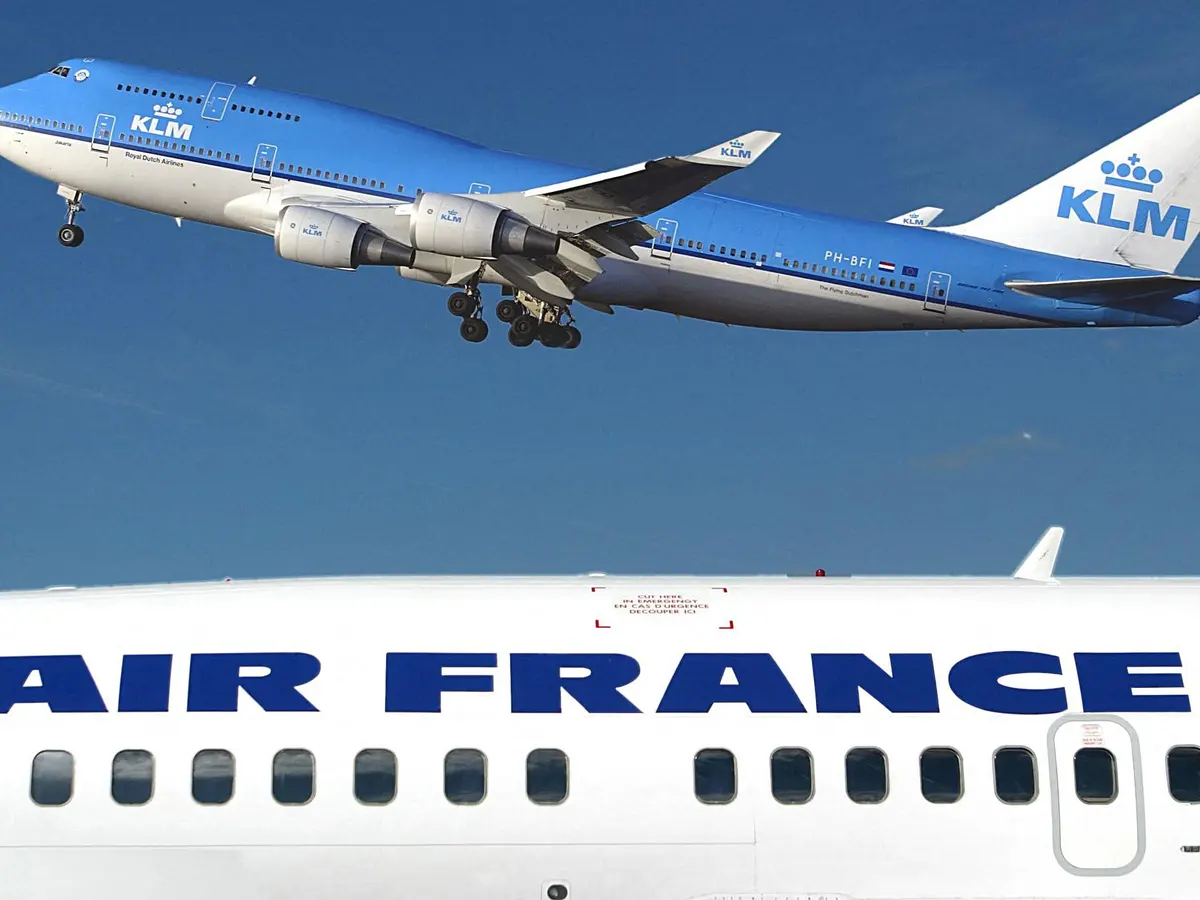
France has taken an important step forward in its fight against carbon emissions by enacting legislation that prohibits domestic short-haul flights when train alternatives are readily available.
France made Law
The legislation, which went into effect two years after lawmakers approved it, specifically targets routes where the same journey can be completed by train in two and a half hours.
As a result, air travel between Paris and several cities, including Nantes, Lyon, and Bordeaux, has all but disappeared. The ban, however, has no effect on connecting flights.
While the move has been lauded as a step toward sustainability, critics argue that the impact may be symbolic rather than significant.
Laurent Donceel, interim CEO of Airlines for Europe (A4E), expressed doubts about the ban’s ability to reduce CO2 emissions.
He believes that “banning these trips will have minimal effects,” and that governments should prioritize supporting tangible and significant solutions to the problem.
The COVID-19 pandemic has had a significant impact on the aviation industry, with a significant decrease in the number of flights worldwide.
According to source, a popular flight tracking website, flight numbers will be down nearly 42% in 2020 compared to 2019.

Despite the challenges that airlines face, France’s Citizens’ Convention on Climate, comprised of 150 members of the public and established by President Emmanuel Macron in 2019, proposed a more stringent approach by suggesting the elimination of plane journeys where train options of less than four hours were available.
The proposed time limit was reduced to two and a half hours due to objections from certain regions and Air France-KLM.
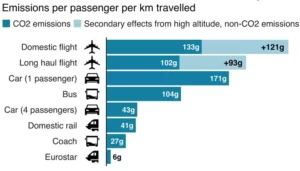
The decision to prohibit short-haul flights is based on the significant difference in carbon emissions between planes and trains.
According to the French consumer group UFC-Que Choisir, planes emit 77 times more CO2 per passenger than trains on comparable routes.
Furthermore, with only a 40-minute time difference, the train option is not only more environmentally friendly but also more cost-effective.
The consumer group also demanded safeguards to ensure that the French national railway, SNCF, does not take advantage of the situation by inflating prices or compromising rail service quality.
In conclusion, France’s decision to impose a ban on domestic short-haul flights with train alternatives represents a significant step toward reducing carbon emissions. However, the actual impact on CO2 reduction and the aviation industry is still being debated.
To read our blog on “Electric scooters are being banned in France,” click here