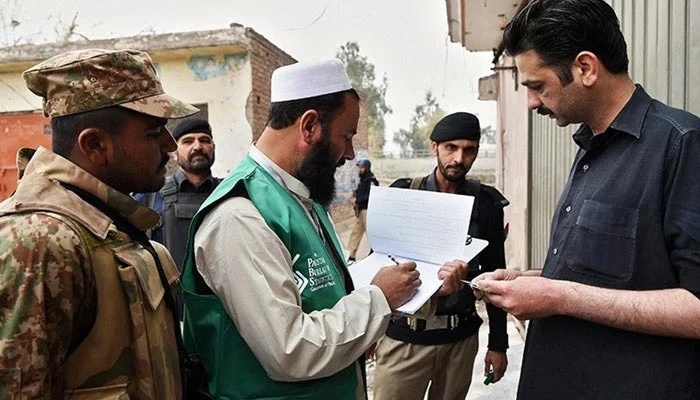
Beyond May 15, 2023, the federal government will not postpone the digital census.
According to sources within the Pakistan Bureau of Statistics (PBS), the department has already extended the date of the census four times to ensure thorough coverage and enumeration.
According to sources, PBS has tried to address the worries of political parties, notably those in Karachi.
PBS has found some irregularities, particularly in large cities, including field enumerators who were careless with their job and an inadequate deployment of security personnel for field staff.
Actions Must Be Taken During Digital Census
However, sources claimed that PBS had informed provincial governments to strictly oversee field enumeration by respective ACs and DCs, take close notice of any misreporting by enumerators, and provide one-on-one security to enumerators.
According to sources, PBS identified and shared with provincial governments a list of blocks with multistory buildings that receive less coverage, a list of blocks with negative population growth, and other pertinent data with the aid of a digital system.
PBS has sent out more officers from its main office to assist the provincial governments in this way.
An increase of 8.2 million people was recorded in the blocks that had previously been finished as a result of these activities and the team at PBS and the government of Sindh working together, sources added.
Along with the aforementioned, PBS also discovered and provided a second list of blocks identifying the possible under coverage with the province governments for correction through targeted and coordinated combing activities to achieve full coverage. This program increased the population of the already-completed blocks by 4.6 million.
According to sources, in addition to data on demographics and housing characteristics, this digital census also includes features like geo-tagging of all structures and buildings used for residential and commercial purposes and the collection of information on economic activities according to international classification.
The census’s additional components will serve as the foundation for evidence-based policy, planning, and decision-making to ensure good governance and to identify the diversity, expansion, and sharing of the various economic activities that are essential to ensuring the prosperity of the country.
Up to May 11, a total of 120,007,936 people had been counted in Punjab, 56,149,769 in Sindh, 39,596,664 in Khyber Pakhtunkhwa, 20,634,606 in Balochistan, and 2,270,436 in the Islamabad Capital Territory.
To read our blog on “Census team asked to fulfill the operation by 15th May,” click here.