Intriguingly, the trend of rising global food Inflation is gradually reversing, and this process is already one year old, with prices falling by 2.5 percent from their peak in February last year, when Russia attacked Ukraine.
This downward trend in food costs is attributable to a mix of reasons such as adequate supplies, low import demand, and the continuation of a treaty allowing the safe export of Ukrainian grain over the Black Sea.
The index fell due to lower costs for cereals, vegetable oils, and dairy goods, which were able to balance increases in sugar and meat prices.
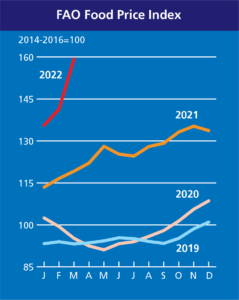
However, while prices have declined globally, they remain quite high and continue to rise in domestic markets, providing further problems to food security.
Food Inflation rises
This challenge is exacerbated in net food importing developing countries, where the situation is exacerbated by currency devaluation versus the US dollar or the Euro, as well as an increasing debt burden.
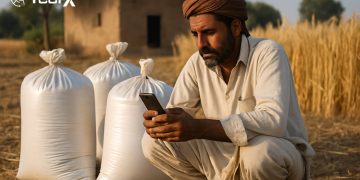
These are the conditions in Pakistan, which is also dealing with the challenge of recovering from historic flooding, notably the wheat crop, which is expected to yield significantly less output than typical.
It is predicted that Pakistan will have lower food output due to below-average rainfall in the second half of the year, and this serves as yet another reminder that agricultural productivity is under significant threat due to climate change.
It has increased agricultural production risks, owing principally to farming’s high reliance on pleasant meteorological conditions, as the Pakistani agriculture industry has witnessed these changes have a significant influence on their productivity over the last decade.
The tendency has put a tremendous strain on food supply, especially wheat and other crops.
Warmer-than-normal weather last year harmed the wheat harvest, forcing the government to import vast quantities of the cereal to feed the people.
It is well known that following last year’s heat wave, which caused wheat grains to shrink, farmers in wheat-growing regions suffered significant losses.
Over time, the farming industry has proven to be a major contributor to Pakistan’s declining economic growth.
Its poor performance has slowed industrial growth, harmed textile exports, and strained the country’s already frail current account.
Agriculture’s actual annual growth rate over the last decade and a half has been limited to 2.2 percent-2.6 percent per year, which is regarded abysmal when compared to the expansion of the services and industrial sectors.
When you consider that nearly two out of every three Pakistanis are involved in or rely on agriculture for a living, this productivity level appears to be dismal.
There are numerous reasons for crop decline, including lack of investment, low mechanisation, poor seed technology and varieties, obsolete and bad government policies influencing farmers’ choices, but the fact remains that the sluggishness of the labour force in this sector is a major contributor.
Farming stagnation means that the trade balance will continue to deteriorate, while food insecurity and poverty will rise until the trend is reversed.
This will necessitate a shift in Pakistani agriculture’s decades-old policy, as well as expanded use of technology and huge private investment in the value chain.
Though the agriculture industry provides investors with several business prospects, their participation will be limited unless the government decides to withdraw from the supply chain and cease intervening in the market.
To mitigate the detrimental effects of climate change on agriculture, the government should also invest in agricultural research and development. With more than half of the population experiencing moderate to severe food insecurity, the time for action is rapidly approaching.
Given these issues, it is not surprise that Pakistan is plagued by widespread inflation.
Food inflation is closely tied to the balance of payments crisis, which caused the rupee’s value to fall dramatically, causing the prices of imported products to rise, resulting in an increase in the general price level.
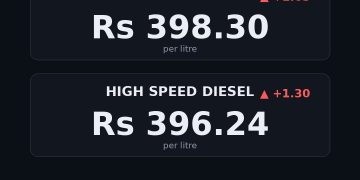
Pakistan’s reliance on oil imports, as well as the rise in oil prices, have both contributed to inflation.
The multi-decade-high food inflation rate is mostly driven by skyrocketing food and fuel prices, particularly the prices of vegetables, meat, and other food items, which have recently seen significant increases.
Food inflation is also persistent as a result of global supply chain disruptions induced by pandemic-related constraints and rising farm production costs.
Inflation, particularly food inflation, is one of the most pressing challenges threatening Pakistan’s economic stability, since it has severely hampered people’s purchasing power.
For years, the relentless pressure of inflation has had significant repercussions for the country’s economy, such as increased unemployment and deteriorating living conditions, which are stoking social unrest and destabilising Pakistan.
In Pakistan, annualised food inflation has risen to 41.9 percent in urban areas and 47 percent in rural areas, compared to 14.3 percent and 14.6 percent, respectively, in February of this year, implying that food inflation has more than tripled in just one year.
This devastating food inflation has hit Pakistanis in the middle of a sharp economic slowdown, with GDP growth of only 1.3 percent in this fiscal year and a projected 6 percent in 2022, displacing around two million people.
One can easily understand the devastation that such a significant drop would have on people whose salaries have plummeted owing to the economic crisis.
Already, the vast majority of financially disadvantaged people live on modest wages from the shadow economy, supplemented by debts, charity, government cash transfers, and subsidies.
The most concerning aspect of the situation is that it is expected to last indefinitely due to higher international commodity prices, rupee depreciation, a lack of administrative controls on retail prices in the midst of a worsening political crisis, food commodity hoarding, and rampant smuggling of food items to neighbouring Afghanistan.
In the first eight months of current fiscal year, Pakistan was forced to spend $6.687 billion on food imports, and it is expected that by the conclusion of the fiscal year, the expenditure on food imports will top $10 billion.
In this connection, it is noted that any reduction in high food prices will be noticeable only when agricultural productivity increases and energy prices fall.
Reduced consumer inflation lowers agricultural input costs and helps to stable the country politically by reducing food hoarding and smuggling.
At the moment, however, food inflation is expanding on a daily basis, and onlookers are astounded to see the escalating price hikes, which have unfortunately failed to deter responsible authorities from attempting to regulate them. Food inflation, it appears, will soon deprive an even greater number of people of eating three square meals a day.
The most important component in managing and eventually reducing food inflation is the high degree of prohibitive actions implemented by the state’s administrative machinery.
To read our blog on “Deposits leaving US banks is biggest economic crisis in 10y,” click here