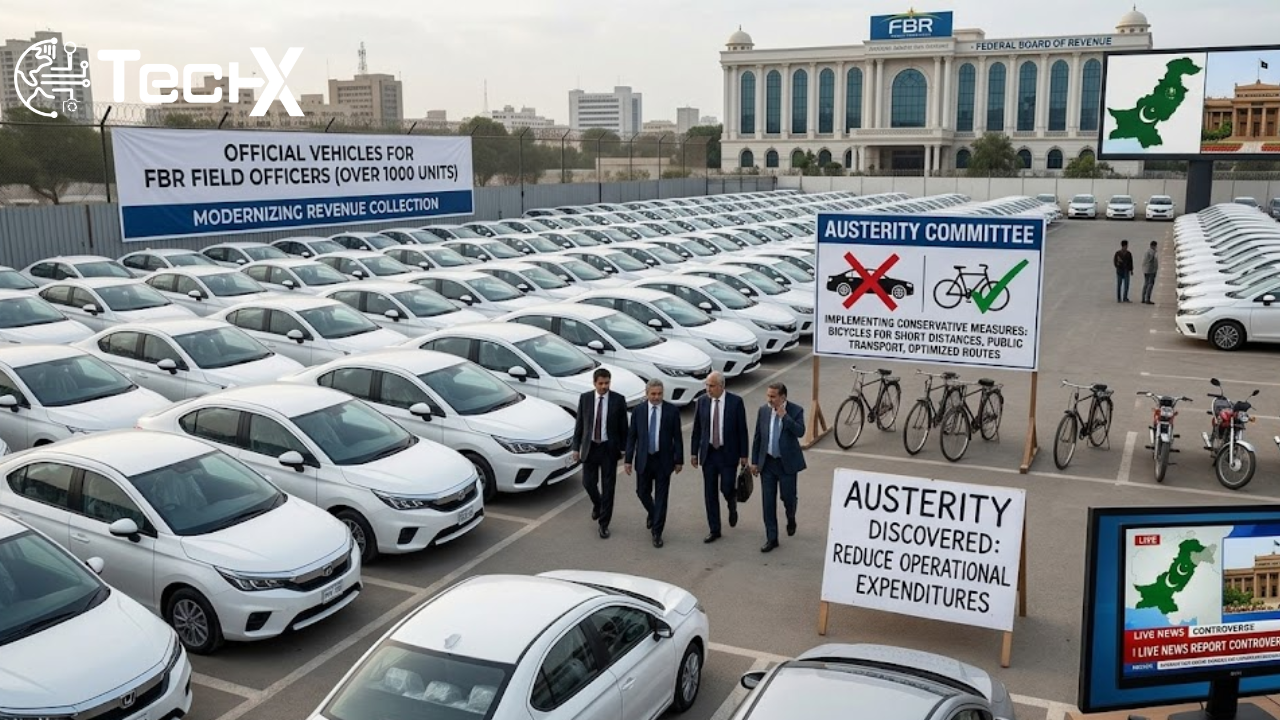
Recently, the Federal Board of Revenue bought more than 1,000 new cars for its tax officers. These included mostly Honda City models, a move that attracted public attention due to the large expenditure from taxpayer funds. Many criticized this as an unnecessary luxury for government employees.
Sudden Austerity Announcement
Shortly after this purchase, the FBR announced strict austerity measures. These measures included cutting back on official spending and reducing the use of official vehicles. The sudden timing raised questions about consistency in government financial planning.
Restrictions on Vehicle Usage
Under the new austerity rules, a significant portion of official vehicles about 60% are to be parked and not used. Fuel allocations for government cars have also been cut by nearly half, and employees are encouraged to minimize unnecessary travel.
Remote Work and Spending Cuts
The austerity plan also includes allowing up to half of FBR staff to work from home. Non-salary expenses have been reduced, and oversight committees have been formed to ensure compliance with the new spending guidelines.
Public Reaction
Many citizens and commentators have criticized the move, saying it is contradictory. Spending heavily on new cars and then suddenly enforcing austerity seems inconsistent. People have questioned the priorities of government spending and accountability.
Key Takeaway
While the FBR’s austerity measures are part of a broader government effort to save costs and manage finances during economic challenges, the timing of the car purchases has sparked debate. The situation highlights the importance of consistent and transparent financial planning in public institutions.