Ahmedabad, India – A devastating plane crash occurred near Ahmedabad’s Sardar Vallabhbhai Patel International Airport on Thursday afternoon, claiming the lives of all 242 passengers and crew on board an Air India flight bound for London. The incident has sent shockwaves across India and the global aviation community, marking one of the deadliest air disasters in recent history.
The Crash: Eyewitness Accounts and Immediate Aftermath
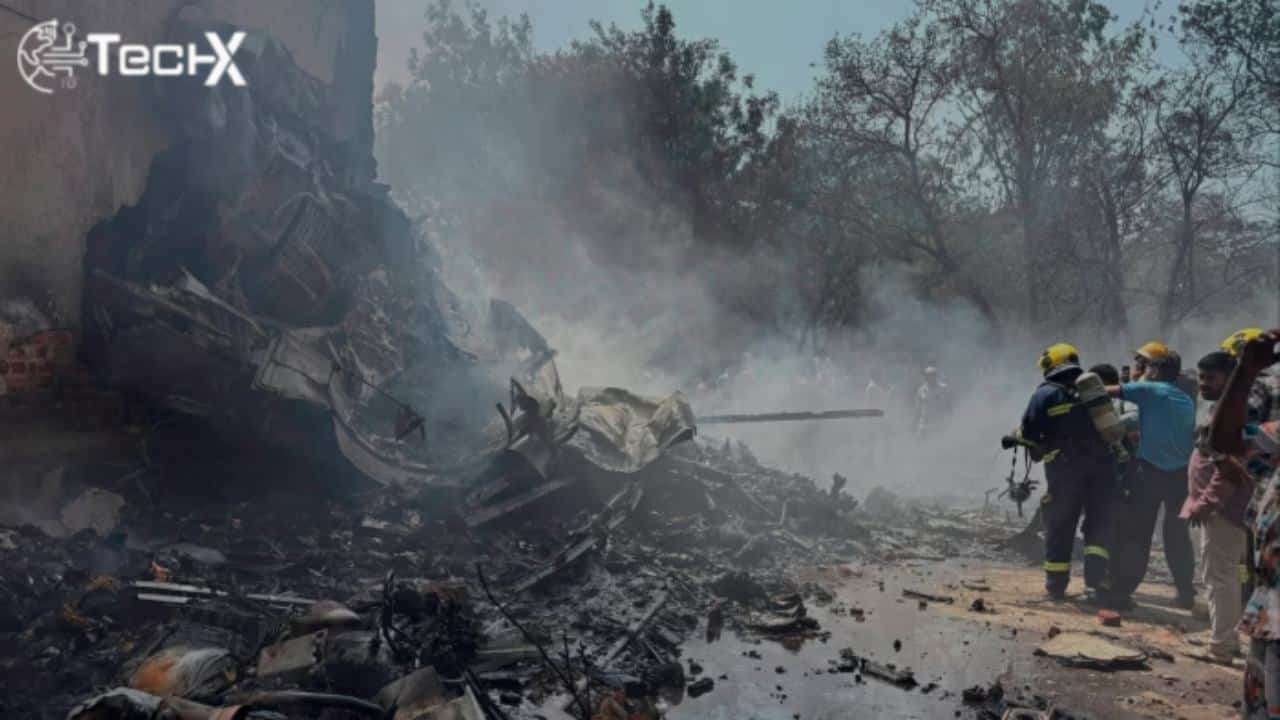
The aircraft, identified as a Boeing 787-8 Dreamliner, crashed in the Meghnagpur area shortly after takeoff. Witnesses reported hearing a loud explosion before seeing thick plumes of smoke rising from the crash site.
“We heard a massive noise, like an explosion, and then saw black smoke,” said Ramesh Patel, a resident. “People rushed to help, but the fire was too intense.”
Emergency teams, including fire tenders, police, and medical personnel, rushed to the scene. Firefighters battled the flames for hours, but the intensity of the blaze made rescue efforts extremely difficult.
Ahmedabad Police Commissioner GS Malik confirmed the crash but initially withheld details about the aircraft type and casualties. “We are coordinating with aviation authorities to determine the cause and identify the victims,” he said.
Also Read: Meta AI Introduces Generative Video Editing for Creativity
No Survivors: A Nation in Mourning
As reports emerged confirming no survivors, grief spread across the country. Families of the passengers were seen arriving at the airport, desperate for information. The Indian government has announced compensation for the victims’ families, while Prime Minister Narendra Modi expressed his condolences on social media, calling it a “heart-wrenching tragedy.”
Air India released a statement acknowledging the crash and confirming that the flight was carrying 232 passengers and 10 crew members. The airline has set up emergency helplines for affected families.
Boeing 787’s First Fatal Crash: A Major Blow to Aviation Safety
The crash marks the first fatal accident involving a Boeing 787 Dreamliner, an aircraft previously lauded for its advanced safety features. The incident has raised urgent questions about potential mechanical failures, maintenance issues, or external factors that may have contributed to the disaster.
Boeing’s stock plummeted by 4.9% following the crash, reflecting investor concerns over the company’s already-troubled reputation. The aerospace giant has faced intense scrutiny in recent years following the grounding of its 737 MAX fleet after two fatal crashes in 2018 and 2019.
Aviation experts suggest that the crash could lead to renewed scrutiny of Boeing’s manufacturing and safety protocols. “This is a catastrophic event for an aircraft with an otherwise strong safety record,” said aviation analyst Captain Mohan Ranganathan. “A thorough investigation is critical.”
Investigation Underway: What Went Wrong?
Authorities from India’s Directorate General of Civil Aviation (DGCA), the Aircraft Accident Investigation Bureau (AAIB), and Boeing’s technical team are working to determine the cause. Key areas of focus include:
- Technical Malfunction – Whether engine failure, electrical issues, or structural defects played a role.
- Pilot Error or Communication Breakdown – Analysis of the cockpit voice recorder (CVR) and flight data recorder (FDR).
- External Factors – Weather conditions, bird strikes, or possible sabotage.
Until the black boxes are recovered and analyzed, speculation remains unconfirmed.
Global Reactions and Aviation Safety Concerns
The crash has reignited debates about aviation safety worldwide. Several airlines operating Boeing 787s may review their fleets as a precaution. The U.S. Federal Aviation Administration (FAA) and European Union Aviation Safety Agency (EASA) are closely monitoring the investigation.
Conclusion
The Ahmedabad plane crash is a grim reminder of the risks in modern air travel. As investigators work to uncover the truth, the focus remains on supporting grieving families and ensuring such a tragedy never happens again. For now, the aviation world holds its breath, awaiting answers that could reshape safety protocols for years to come.