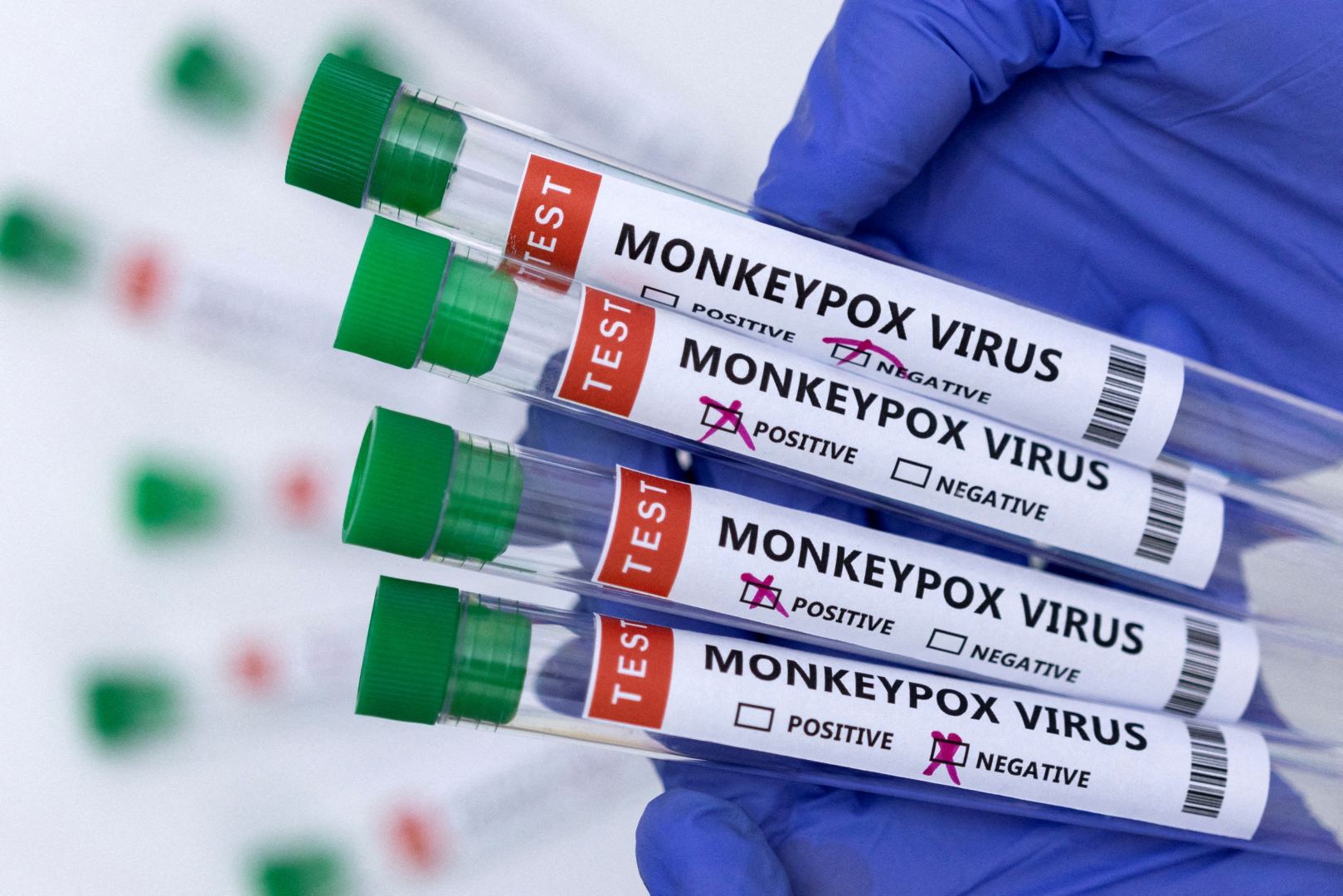
The World Health Organization (WHO) declared on Sunday that monkeypox poses a “moderate risk” to global public health after cases were reported in countries where the disease is uncommon.
“The public health risk could become high if this virus exploits the opportunity to establish itself as a human pathogen and spreads to groups at higher risk of severe diseases such as young children and immunosuppressed persons,” WHO said.
The health agency said in a statement that as of May 26, 257 confirmed cases and 120 suspected cases had been reported from 23 member states that are not endemic to the virus. So far, no fatalities have been reported.
The sudden appearance of monkeypox in several non-endemic countries also suggests undetected transmission for some time and recent amplifying events, according to WHO.
The agency also stated that it expects more cases to be reported as surveillance in both endemic and non-endemic countries increases.
Monkeypox is an infectious disease that is endemic in parts of western and central Africa. Because it is spread through close contact, it is relatively easy to contain through measures such as self-isolation and hygiene.
The majority of the cases reported thus far have been found in the United Kingdom, Spain, and Portugal.
“The vast majority of reported cases so far have no established travel links to an endemic area and have presented through primary care or sexual health services,” the U.N. agency said.
To read our blog on “Cases of monkeypox might be the ‘peak of the iceberg,’ WHO,” click here.