

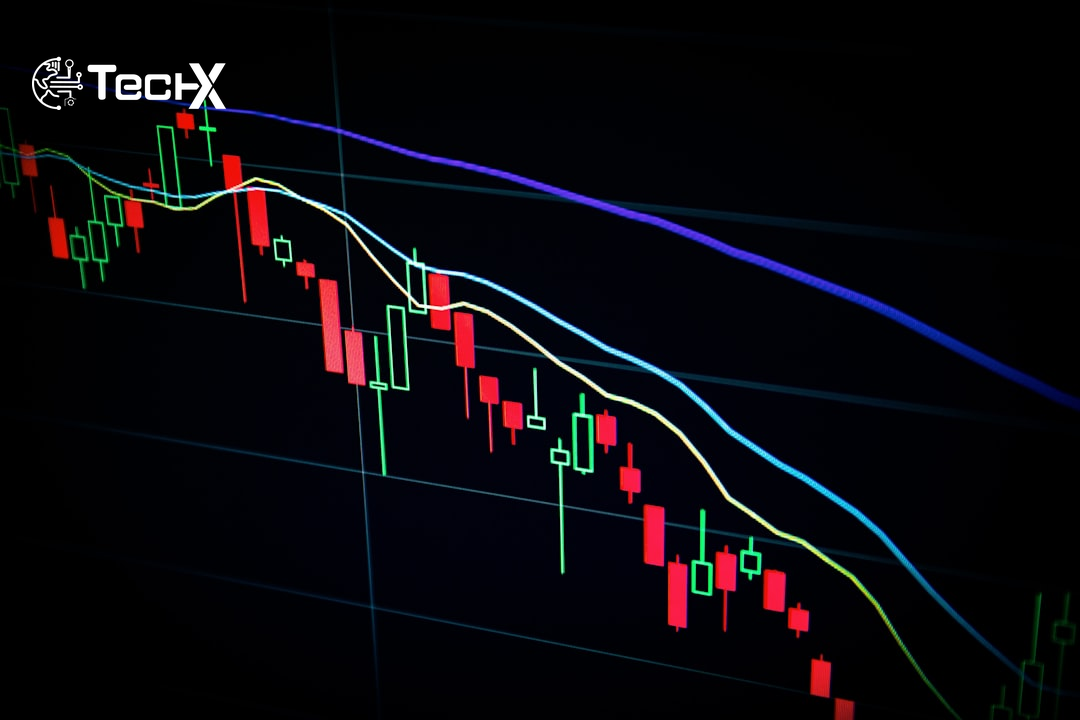
The Oracle stock crash of late June 2026 sent a cold shiver through global tech markets. Oracle, one of the world’s biggest software and cloud companies, saw its shares fall 19% in just five trading days. That is its worst weekly drop since August 2001, when the dot-com bubble was bursting. For anyone watching AI investment hype build up over the past two years, this week felt like a turning point.
What Triggered the Oracle Stock Crash?
The sell-off did not come out of nowhere. The core problem is that Oracle must raise record amounts of debt to meet its AI infrastructure commitments, primarily to OpenAI. It was sitting on about $130 billion in debt at the end of May, while capital expenditure jumped 162% to nearly $56 billion in fiscal 2026.
Oracle recorded negative free cash flow of almost $24 billion in its latest fiscal year. To put that simply: the company is spending far more money than it is bringing in. That kind of cash burn worries investors, especially when interest rates remain elevated.
Oracle has seized massive data-centre deals with OpenAI and Meta to compete more aggressively with rivals like Amazon and Microsoft. But it lacks the large cash flows that have primarily funded those tech giants’ outlays, forcing it to burn cash and sell debt instruments while its traditional software business faces pressure from the very AI tools it plans to support.
Earlier this month, Oracle said it plans to raise $40 billion through debt and equity financing in fiscal 2027, including a $20 billion share sale, after $43 billion in debt sales and $5 billion from equity issuance last fiscal year. Investors are asking a simple question: when does this spending actually pay off?
How Bad Is the Damage?
The past nine months have been brutal for Oracle investors. After the company reached a peak market cap of $900 billion in September, driven by excitement about its AI customers, the stock has lost about 55% of its value.
The iShares Expanded Tech-Software Sector ETF, which tracks big software stocks, is down 16% so far in 2026, while Oracle has fallen 24%. The company also revealed in its annual report that its head count shrank 13% to 141,000 employees in fiscal 2026, with a notable pullback in sales and marketing.
Because of Oracle’s retreating stock price, co-founder Larry Ellison has been surpassed on the global wealth list by Google co-founders Larry Page and Sergey Brin, Amazon founder Jeff Bezos, and Michael Dell.
Is This a Repeat of the Dot-Com Bust?
The comparisons to 2001 are hard to avoid. Oracle just had its worst week since the dot-com bust of the early 2000s, with shares down 19% in five days. For comparison, during the dot-com crash in August 2001, Oracle fell 20%.
But the situation today has some important differences. The dot-com bust more than 25 years ago mostly wiped out smaller companies. A crash today would directly hit some of the largest corporations on Earth. That is a much bigger problem for global financial markets and retirement funds.
Critics argue that technology company stock values have been inflated based on AI hype, regardless of market fundamentals or the financial reality behind monetising AI products. A growing body of analysis on the AI bubble suggests the market may have priced in returns that AI has not yet delivered.
A National Bureau of Economic Research study published in February 2026 found that despite 90% of firms reporting no AI impact on workplace productivity, executives projected AI would increase productivity by 1.4%, leading to comparisons with the productivity paradox.
The Shiller price-to-earnings ratio for the US market exceeded 40 for the first time since the dot-com crash, a level historically associated with market tops.
The Wider Market Panic
The Oracle stock crash did not happen in isolation. It was part of a broader tech sell-off that spread across the world in the week of June 23, 2026.
Among the hardest-hit names were semiconductor giants: Nvidia fell 4%, Advanced Micro Devices dropped 6.2%, Intel lost 7.6%, and Micron Technology sank 8.5%.
South Korea’s Kospi index plunged 10%, triggering a 20-minute trading halt, while chip leaders SK Hynix and Samsung Electronics each lost over 12%.
Total AI spending from US mega-cap companies is expected to reach $1.1 trillion between 2026 and 2029, while total global AI spending is expected to surpass $1.6 trillion. The market is now questioning whether that level of spending can ever produce returns that justify it.
Michael Burry, the investor known for predicting the 2008 housing market collapse, warned in May 2026 that AI market conditions resembled the final months of the dot-com bubble, urging investors to reduce exposure to technology stocks.
Not Everyone Is Panicking
Despite the fear, some analysts think the sell-off is an overreaction. Oracle’s cloud infrastructure revenue grew 84% year-on-year in its third quarter, while its multi-cloud database business saw growth of 531% as enterprises run Oracle databases across major cloud platforms.
Oracle also has a massive $553 billion backlog of contracts, providing clear multi-year revenue visibility. That means real demand exists. The debate is about whether the debt taken to meet that demand will sink the company before the revenue arrives.
Wedbush’s Dan Ives called the sell-off a buying opportunity, describing it as a ‘gut check moment’ amid the ongoing AI revolution.
What Does This Mean for Pakistan?
Pakistan’s IT sector has been growing fast. Pakistan’s technology exports rose 33% year-on-year to $423 million in April 2026, according to the State Bank of Pakistan. The government has an ambitious target to reach $10 billion in IT exports by FY29.
But the Oracle stock crash is a reminder that the global AI investment cycle has a debt problem, and that problem can have ripple effects. When large tech companies cut spending or slow down data-centre projects to manage debt, they tend to reduce outsourcing contracts too. Pakistani IT firms that depend on large US and global tech clients for AI integration and cloud migration work could feel that pressure.
AI is already reducing the value of basic coding, content, design, annotation, and support tasks. More importantly, it is weakening the old outsourcing model built around selling hours. The market is shifting towards outcomes, domain knowledge, product ownership, and delivery maturity. Pakistan’s IT sector needs to move in that direction before a global slowdown in AI spending forces the issue.
Artificial intelligence represents an opportunity to move up the value chain, enabling Pakistani firms to compete on expertise, innovation, and problem-solving capabilities rather than primarily on labour costs. The Oracle story shows how quickly market confidence can evaporate when spending is not matched by returns. That is a lesson for any economy building its future around AI infrastructure.
You can also read about how DeepSeek raised $7.4 billion to double its workforce in the global AI race, which adds another dimension to the pressure on established players like Oracle.
Frequently Asked Questions
Why did Oracle stock crash so badly in June 2026?
Oracle suffered its steepest weekly stock decline in more than two decades, with shares falling approximately 19%. The dramatic sell-off reflects growing investor concern about Oracle’s rapidly expanding debt load as it accelerates billions of dollars in AI infrastructure investments.
Is the Oracle stock crash a sign of an AI bubble?
Recent swings in tech stocks are reviving fears of an AI bubble. Itay Goldstein, a finance professor at the University of Pennsylvania’s Wharton School, said there are many indications of a bubble and that overpricing seems likely. However, most analysts say the situation is less speculative than the late 1990s tech boom.
How much debt does Oracle have right now?
Oracle reported about $130 billion in debt and nearly $56 billion in capital expenditures for fiscal 2026, with negative free cash flow of almost $24 billion, reflecting the cost of building out data centres to compete with Amazon, Microsoft, and Google.
Should Pakistani IT professionals and investors worry?
A sharp slowdown in global AI spending could reduce demand for outsourcing contracts. Pakistan’s IT exports have momentum, but momentum is not resilience. The country has a narrow window to turn a growing but fragile sector into a serious export engine. Moving into higher-value AI services is the best hedge against a global tech correction.