
Khudmukhtar Khatoon is Pakistan’s first SECP-approved digital financing product built exclusively for women-led micro, small and medium enterprises (MSMEs). The Securities and Exchange Commission of Pakistan approved the country’s first digital financing solution dedicated exclusively to women-led MSMEs, with the product named “Khudmukhtar Khatoon” launched by Walee Financial Services, providing Shariah-compliant asset financing through a fully digital process. Announced on 22 June 2026, the approval is not a tokenistic gesture. It is a regulatory first that directly addresses one of the most persistent structural failures in Pakistan’s financial system: the near-total exclusion of female founders from formal credit.
What Is Khudmukhtar Khatoon and How Does It Work?
The name translates directly as “Empowered Woman”, and the product is designed to live up to that promise. The initiative will enable female entrepreneurs to obtain asset financing ranging from Rs100,000 to Rs1.5 million for the purchase of machinery, equipment, and other business-related assets.
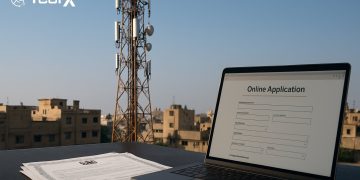
It offers Shariah-compliant asset financing ranging from Rs100,000 to Rs1.5 million, with the final amount for each borrower determined by the credit assessment. The financing facility will be delivered through the company’s existing digital lending application, “Hakeem”, allowing eligible applicants to complete the entire process online.
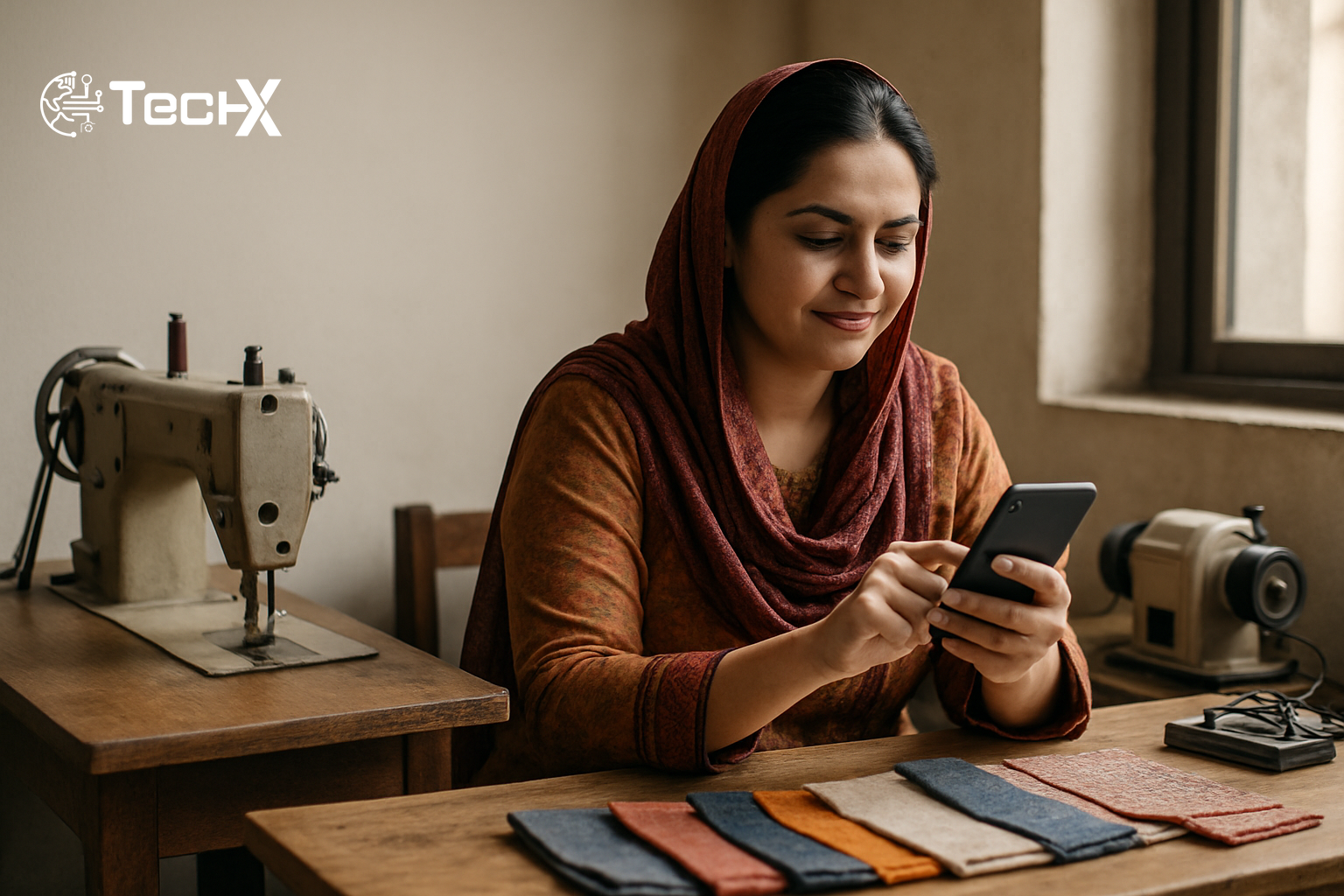
Approved funds may be used to purchase business-related assets through the platform’s integrated marketplace, with items delivered directly to borrowers’ registered addresses. So a woman running a tailoring unit in Faisalabad or a food processing micro-enterprise in Hyderabad can apply, get assessed, receive financing, and have equipment delivered without ever setting foot in a bank branch.
The financing amount may be repaid through equal monthly installments over a period of up to twelve months, enabling women-led enterprises to acquire productive assets while effectively managing their cash flows.
Who Is Behind Khudmukhtar Khatoon?
Walee Financial Services, a licensed non-banking finance company (NBFC), currently offers investment finance services and digital nano-financing through its mobile application. The approval allows the company to extend its operations beyond consumer financing and into the MSME sector. This is a meaningful expansion of mandate. Walee was already operating in the small-ticket consumer lending space, and the SECP’s green light now positions it as an MSME lender with a specific, underserved demographic at its core.
The Hakeem app serves as the single interface for everything: application, credit evaluation, asset selection from an integrated marketplace, disbursement and repayment tracking. The aim is to keep the entire journey on one platform so that women who may lack the time, mobility, or documentation typically required by conventional banks can still access credit on their own terms.
Why This Matters: The Structural Gap It Targets
In a country where women-owned businesses remain significantly underserved by formal financial institutions, the SECP’s approval of the country’s first digital financing product exclusively for women-led MSMEs could mark an important test for financial inclusion efforts.
While the financing size may appear modest, experts say access to credit, rather than the amount itself, remains the biggest hurdle facing women entrepreneurs in Pakistan. Many women-led businesses operate informally, lack collateral or face difficulties navigating traditional banking procedures, leaving them dependent on personal savings or family resources to fund expansion.
This is the structural problem that Khudmukhtar Khatoon is designed to chip away at. By removing the requirement for physical branch visits, collateral-heavy evaluations, and paperwork barriers, it redirects the question of creditworthiness toward digital credit scoring, a model better suited to businesses that have cash flows but no formal paper trail.
Pakistan’s broader NBFC sector has already demonstrated that this model can work at scale. Lending NBFCs are playing a notable role in extending finance to unexplored segments in Pakistan, having collectively disbursed financing of approximately PKR 111 billion to around 7.5 million micro and small businesses during the half-year period from July 2025 to December 2025. The question now is whether a women-only product, designed with specific barriers in mind, can drive comparable penetration into a segment that has historically been invisible to formal lenders.
Pakistan’s digital finance infrastructure is maturing fast. Initiatives like the ongoing evolution of Pakistan’s fintech landscape and Raast’s tokenisation push for digital payments are building the rails that products like Khudmukhtar Khatoon can run on. A Shariah-compliant women’s MSME product is far more viable today than it would have been even three years ago, precisely because the underlying payment and lending infrastructure has improved so dramatically.
Is This Just a PR Win or a Real Policy Shift?
Sceptics are right to ask this question. Pakistan has seen many well-intentioned financial inclusion programmes that struggled with execution. Its success will depend on adoption and accessibility, especially for women outside major cities, and could potentially serve as a model to reduce Pakistan’s gender financing gap and expand formal financial inclusion.
What separates this from earlier efforts is the regulatory architecture behind it. The SECP described the initiative as part of its broader efforts to promote financial inclusion and improve access to formal financing for women entrepreneurs, a segment that has historically faced limited access to credit in Pakistan. The regulator is not just endorsing a product, it is signalling that purpose-built NBFC products targeting specific underserved demographics are a legitimate and encouraged path. That is a policy signal, not a press release.
Expanding access to Shariah-compliant SME financing, credit guarantees, and cash-flow based lending can unlock a significant untapped segment and contribute to economic growth, job creation, and women’s economic empowerment. For Pakistan, where women’s labour force participation remains among the lowest in the region, every structural mechanism that brings female founders into the formal economy carries outsized long-term value.
The Shariah-compliant structure also matters enormously for adoption. A large proportion of Pakistan’s female business owners are unlikely to engage with interest-based credit products on religious grounds. By anchoring Khudmukhtar Khatoon in Islamic finance principles from the outset, Walee Financial Services and the SECP have removed a barrier that would have quietly excluded millions of potential users before they ever applied.
Frequently Asked Questions
What does Khudmukhtar Khatoon mean?
The name translates to “Empowered Woman.” It was chosen to reflect the product’s core purpose of giving women-led businesses the financial independence to grow without depending on informal credit or family resources.
Who is eligible for the Khudmukhtar Khatoon financing product?
Women-owned businesses are eligible to obtain financing ranging from Rs100,000 to Rs1.5 million, subject to credit evaluation. Applicants must apply through the Hakeem digital lending application, where the entire financing process is handled online. There is no requirement to visit a physical branch.
What can the financing be used for?
The financing will be used for the purchase of machinery, equipment, and other business assets. This makes it asset financing rather than general-purpose credit, meaning the funds are directed toward productive business growth rather than working capital or personal expenses.
Is Khudmukhtar Khatoon the first of its kind in Pakistan?
Yes. The SECP approved on Monday the country’s first digital financing product exclusively designed for women-led micro, small and medium enterprises (MSMEs), aimed at improving access to formal finance for women entrepreneurs. No prior NBFC or bank product in Pakistan had been formally dedicated exclusively to this demographic in a fully digital, Shariah-compliant format.