

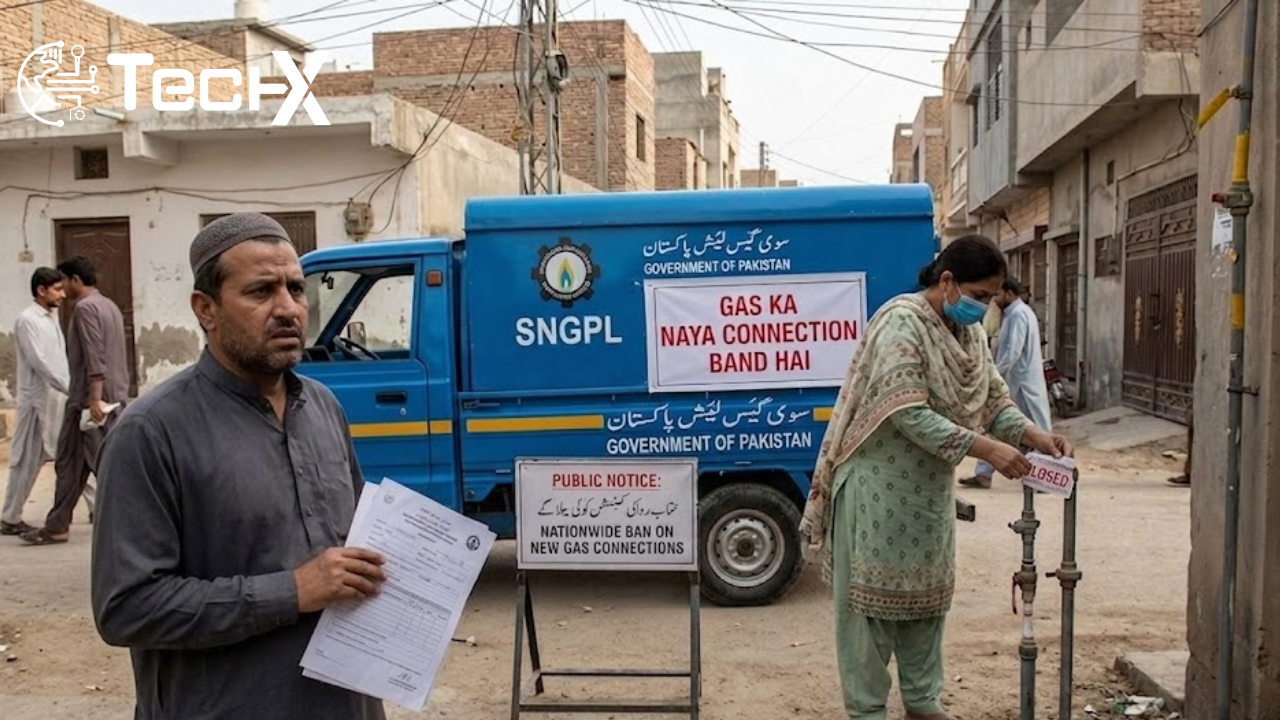
The Government of Pakistan, through the Ministry of Energy (Petroleum Division), has implemented a policy that effectively restricts the issuance of new natural gas connections nationwide. This applies to both domestic households and commercial users. Although it is not always officially declared as a complete legal ban, in practice most new applications are no longer being approved, making it difficult for new consumers to access gas facilities.
Decline in Domestic Gas Reserves
One of the key reasons behind this policy is the continuous decline in Pakistan’s local natural gas reserves. Over the years, the country has relied heavily on its indigenous gas fields, but these resources are now depleting at a rapid pace. At the same time, population growth and increased usage have significantly raised the demand, creating a serious imbalance between supply and consumption.
Dependence on Expensive LNG Imports
To overcome the shortage, Pakistan imports Liquefied Natural Gas (LNG), but this solution comes with its own challenges. LNG is expensive and its price fluctuates in the international market, making it difficult for the government to ensure affordability and stability. This dependence increases the financial burden on the country and limits the ability to expand gas connections further.
Priority Given to Existing Consumers
Due to limited resources, the government has prioritized supplying gas to existing consumers rather than extending new connections. This means that households, businesses, and industries that already have gas connections are given preference, while new applicants often face delays or rejections. As a result, many new housing projects and commercial setups cannot rely on natural gas availability.
Shift Toward Alternative Energy Sources
In response to the crisis, the government is encouraging the use of alternative energy sources such as LPG, electricity, and renewable energy options. Electric appliances like induction stoves and electric geysers are becoming more common as substitutes for gas-based systems. This shift is part of a broader strategy to reduce dependence on natural gas and promote more sustainable energy solutions.
Conclusion and Future Outlook
In conclusion, the restriction on new gas connections is a strategic decision aimed at managing Pakistan’s limited energy resources more effectively. While it may cause inconvenience for new users, it highlights the importance of long-term planning and energy diversification. Moving forward, the adoption of alternative energy solutions will be essential for meeting the country’s growing energy demands.