

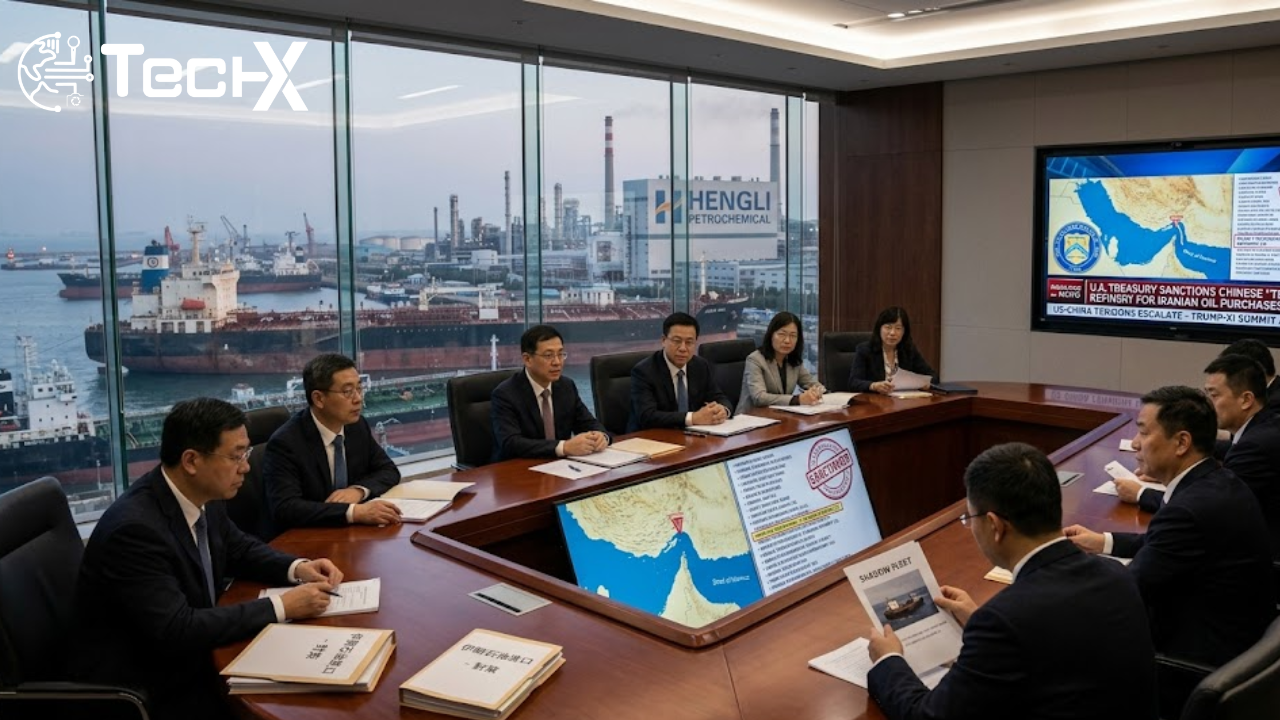
The United States has imposed new sanctions on a Chinese independent refinery, commonly referred to as a “teapot refinery,” over allegations that it purchased crude oil from Iran. The move is part of Washington’s ongoing enforcement of sanctions targeting Iran’s oil exports.
What Are Teapot Refineries?
“Teapot refineries” are small, privately owned oil refineries in China that operate independently of major state-owned energy companies. These facilities often rely on discounted crude oil imports to maintain profitability, making them active participants in global spot oil markets.
Reason Behind the Sanctions
According to U.S. policy, any entity involved in purchasing Iranian crude oil violates existing sanctions placed on Iran’s energy sector. The United States aims to restrict Iran’s oil revenue, which it considers a key source of funding for activities it opposes internationally.
Impact on Chinese Refineries
The sanctioned refinery may now face restrictions such as frozen assets, limited access to U.S. financial systems, and barriers to international trade. Such measures can significantly affect operations, especially for smaller independent refineries that rely on global supply chains.
Broader Geopolitical Implications
This development adds further tension to already complex relations between the United States and China. Energy trade, particularly involving sanctioned countries like Iran, remains a sensitive issue in global diplomacy and economic policy.
Conclusion
Overall, the sanctions highlight the strict enforcement of U.S. energy restrictions on Iran and their wider impact on global oil trade. The situation reflects how geopolitical decisions continue to influence international energy markets and refinery operations.