
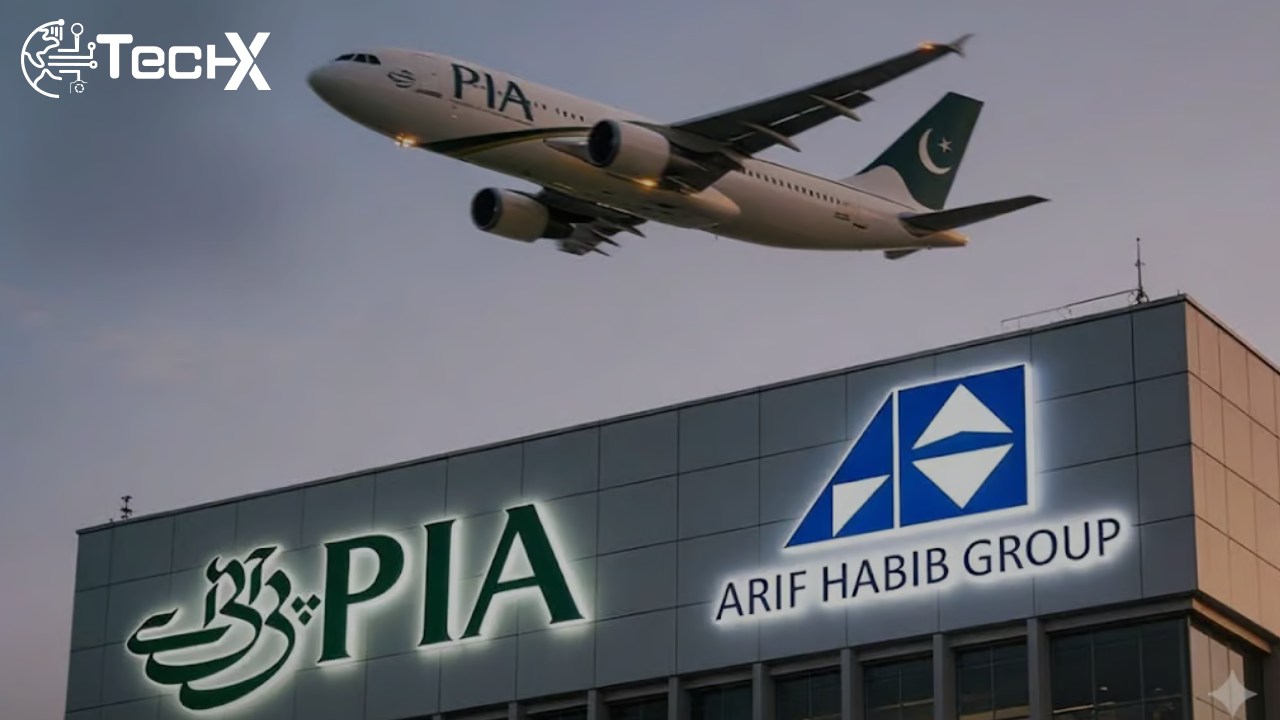
Pakistan has witnessed a defining economic milestone with the successful privatisation of Pakistan International Airlines Corporation Limited, ending nearly two decades of failed reform attempts. At a transparent and widely televised ceremony in Islamabad, the Arif Habib consortium secured the national airline with a winning bid of Rs135 billion, marking Pakistan’s first major privatisation since the early 2000s. This event is being viewed as a watershed moment for the country’s economy, its aviation sector, and the long-delayed reform of loss-making state-owned enterprises.
The sale of PIA represents more than a financial transaction. It reflects a shift in policy direction, renewed investor confidence, and a recognition that public-sector inefficiencies can no longer be sustained at the cost of taxpayers. For years, the airline symbolised the broader challenges facing Pakistan’s economy, including political interference, weak governance, and mounting losses. This privatisation offers a rare opportunity to restore PIA’s legacy through private investment and professional management.
Transparent Bidding Process Builds National Confidence
One of the most significant aspects of the PIA privatisation was the unprecedented level of transparency it brought. The entire bidding process was broadcast live on television and streamed across government social media platforms, allowing the public to witness every step.
Three pre-qualified bidders entered the race:
- Lucky Cement
- Airblue
- Arif Habib consortium
Representatives of each group publicly deposited sealed bids into a transparent box during the opening ceremony, reinforcing trust in the process.
When the bids were revealed, Airblue’s offer of Rs 26.5 billion fell far short of the government’s reference price of Rs 100 billion, prompting its immediate exit. Lucky Cement bid Rs 101.5 billion, just above the threshold, while the Arif Habib consortium led with a strong Rs 115 billion offer, positioning itself as the frontrunner from the outset.
Open Auction Intensifies Competition
Following the initial round, authorities announced the reference price and moved the auction into an open bidding round, allowing the two remaining bidders to increase their offers publicly. After a short consultation break, the second round began with a base bid of Rs 115 billion and a minimum increment of Rs 250 million.
The competition was brief but decisive. Lucky Cement raised its bid to Rs 134 billion, signalling strong interest and financial capacity. However, the Arif Habib consortium responded with a final bid of Rs135 billion, effectively ending the contest.
With that offer, Lucky Cement bowed out and congratulated the winning bidder, marking the successful conclusion of the auction and sealing the fate of Pakistan’s flag carrier under new ownership.
| Key Aspect | Details |
|---|---|
| Event | Privatisation of Pakistan International Airlines (PIA) |
| Winning Bidder | Arif Habib Consortium |
| Winning Bid Amount | Rs135 billion |
| Auction Location | Islamabad |
| Historic Significance | First major privatisation in Pakistan in nearly 20 years |
| Bidding Process | Transparent, competitive, and broadcast live nationwide |
| Initial Bidders | Lucky Cement, Airblue, Arif Habib Consortium |
| Airblue Bid | Rs26.5 billion (below reference price, exited early) |
| Lucky Cement Final Bid | Rs134 billion |
| Reference Price | Rs100 billion |
| Open Auction Base Price | Rs115 billion |
| Minimum Bid Increment | Rs250 million |
| Ownership Sold | 75% stake in PIA |
| Option for the Remaining Stake | 25% purchasable within 90 days |
| Premium on Remaining Stake | 12% per annum if exercised within one year |
| Current PIA Fleet Size | 18 aircraft |
| Planned Fleet Expansion | 38 aircraft initially, up to 65 long-term |
| Employment Impact | Job growth with priority for existing employees |
| Reinvestment Clause | 92.5% of proceeds reinvested into PIA |
| State Share of Proceeds | 7.5% allocated to the government |
| Annual Losses Before Sale | Rs50–100 billion per year |
| Liabilities Removed Pre-Sale | Rs33 billion |
| Holding Company Exposure | Rs650 billion with ~Rs30bn annual cost |
| Foreign Partnerships | Consortium open to foreign airlines and investors |
| Economic Impact | Reduced taxpayer burden and improved investor confidence |
| Government View | Declared a historic and transparent reform |
| Prime Minister’s Statement | “Pakistan is the ultimate winner” |
| Overall Outlook | Positive start with long-term reform challenges ahead |
Arif Habib’s Commitment to Reviving the National Airline
After securing the winning bid, Arif Habib emphasised the symbolic and strategic importance of PIA, describing it as a national institution with a proud history. He recalled the airline’s golden era, when it ranked among the world’s top carriers and served as a model for others in the region.
Arif Habib expressed confidence in the airline’s workforce, stating that PIA employees are skilled, experienced, and capable, but have long been constrained by a lack of investment and institutional support. He pledged to restore employee morale, ensure job stability, and unlock their potential through capital investment and operational reforms.
According to Habib, privatisation will promote investment across the economy, demonstrating that Pakistan is once again open for business under transparent and competitive frameworks.
Fleet Expansion and Employment Growth Plans
A cornerstone of the new ownership’s vision is fleet expansion, which is critical for PIA’s survival and growth. Habib announced plans to expand the fleet to 38 aircraft in the first phase, followed by a long-term goal of up to 65 aircraft, depending on market demand and operational performance.
This expansion is expected to create new employment opportunities, not only within PIA but also across allied sectors such as maintenance, catering, logistics, and ground services. Habib assured that existing employees would be prioritised, with opportunities for skill development and career progression as operations scale up.
He stressed that when adequate capital and modern systems are introduced, performance improvements will naturally follow, enabling PIA to compete regionally and internationally.
Foreign Partnerships and Investor Interest
Speaking later on a television programme, Habib revealed that the consortium is open to bringing in foreign airlines and international investors once the federal cabinet approves the transaction.
The consortium will have a 90-day negotiation window, during which it may explore strategic partnerships with global carriers. Such alliances could bring advanced operational expertise, improved service standards, and access to new international routes.
Habib explained that the consortium deliberately paid an entry premium, bidding Rs4 billion above the adviser’s valuation of Rs131 billion, acknowledging that acquiring an operational airline requires confidence and long-term commitment.
Ownership Structure and Future Options
While the consortium initially sought 100% ownership, the government structured the transaction around the sale of 75% of PIA, with an option to purchase the remaining 25% within 90 days.
If exercised, the remaining stake can be acquired within one year at a 12% annual premium. Habib said the structure allows the consortium time to assess the airline’s actual value while ensuring immediate capital injection.
This model balances private control with transitional state oversight, reducing risk while encouraging responsible investment.
Economist Perspective on a Long-Awaited Reform
Economist Khaqan Najeeb described the privatisation as a “sought-after microeconomic reform” that Pakistan could no longer afford to delay. He noted that previous attempts failed despite parking Rs650 billion in a holding company, highlighting the scale of the challenge.
This time, success came only after removing Rs33 billion in liabilities, offering tax incentives, and restructuring obligations to make the airline attractive to investors. While these measures involved concessions, Najeeb said they were necessary to break the cycle of losses.
Reinvestment Over Revenue Generation
A key feature of the deal is that 92.5% of the proceeds from the sale will be reinvested into PIA, while only 7.5% will go to the state. This reflects the airline’s urgent need for capital rather than immediate fiscal gain.
PIA currently operates only 18 aircraft and carries approximately four million passengers annually, figures far below what is required to achieve economies of scale. Experts agree that meaningful recovery will need at least 50 aircraft, expanded routes, and improved service quality.
Reducing the Burden on Taxpayers
For years, PIA was losing between Rs50 billion and Rs100 billion annually, draining public finances. Privatisation offers a path to stop these losses and redirect taxpayer funds toward social and developmental priorities.
However, Najeeb cautioned that Pakistan still pays around Rs30 billion annually on the Rs650 billion parked in the holding company, underscoring the need for broader fiscal reforms alongside privatisation.
Government Declares a Historic Achievement
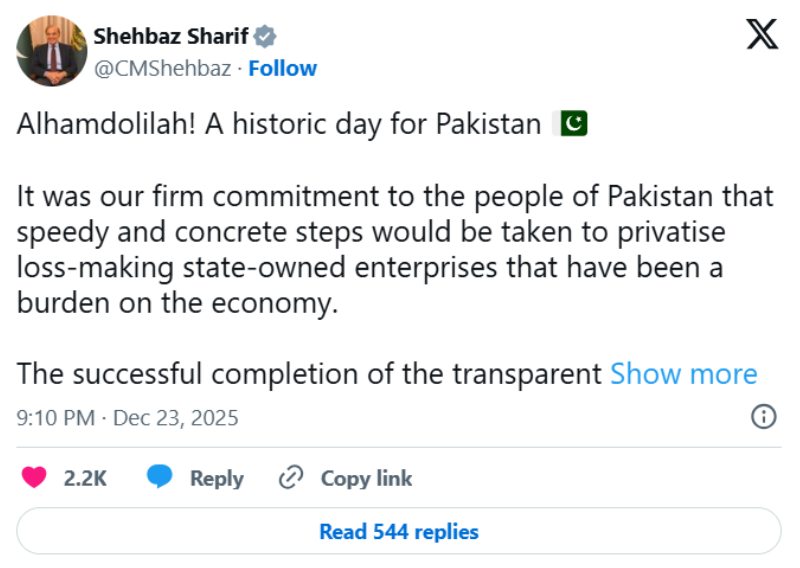
Prime Minister Shehbaz Sharif hailed the privatisation as a “historic day for Pakistan”, praising the transparent and competitive process. He reiterated the government’s commitment to privatising loss-making state-owned enterprises to strengthen the economy.
Interior Minister Mohsin Naqvi echoed this sentiment, stating, “Pakistan has won today,” and expressed optimism that citizens would once again take pride in flying with PIA.
The Ministry of Privatisation also congratulated the winning consortium, emphasising that the objective was not just to sell the airline, but to restore it to its former glory.
Finance Minister Sees Broader Economic Impact
Finance Minister Muhammad Aurangzeb highlighted that all bidders were Pakistani firms, calling it a decisive vote of confidence in the national economy. He said the successful sale would encourage both domestic and foreign investors to explore opportunities in Pakistan.
Aurangzeb stressed that privatisation would help stop financial bleeding, modernise institutions, and integrate Pakistan more effectively into the global economic community.
International Confidence Boosted by Regulatory Improvements
Defence Minister Khawaja Asif pointed out that the lifting of European and UK bans on PIA flights significantly improved investor confidence. He contrasted past bids as low as Rs10 billion with today’s Rs135 billion, calling it proof of renewed trust in Pakistan’s aviation regulator.
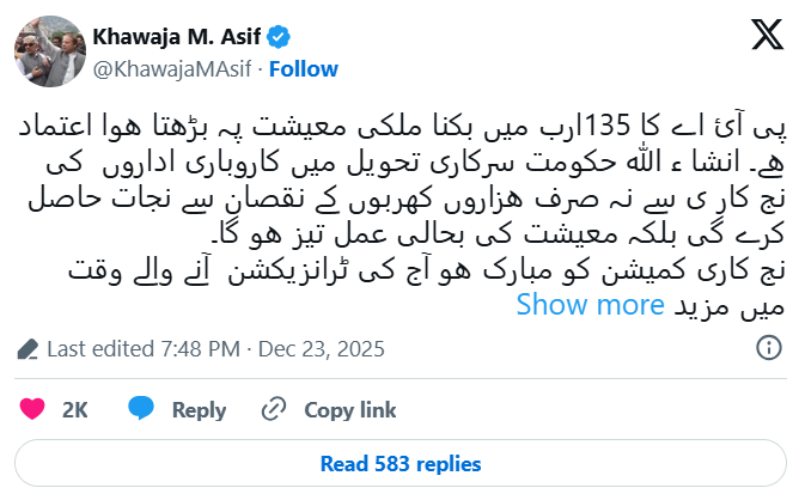
He credited regulatory reforms and compliance improvements for making the airline attractive again.
A New Beginning for Pakistan’s Aviation Sector
The privatisation of PIA is not an endpoint but the start of a long transformation process. Operational efficiency, policy stability, regulatory clarity, and disciplined investment will determine whether this historic transaction delivers lasting success.
PIA holds valuable landing rights, trained manpower, and brand recognition that, if properly managed, can once again make it a competitive international carrier.
For the first time in many years, the future of Pakistan’s national airline appears guided by possibility rather than uncertainty.
Conclusion
The successful privatisation of Pakistan International Airlines represents a rare moment of alignment between policy intent, investor confidence, and public interest. It reflects a willingness to learn from past failures and embrace reform grounded in transparency and accountability.
If managed wisely, this transition can revive a once-proud institution, reduce fiscal pressure on the state, and send a powerful signal that Pakistan is ready for serious economic reform.
The runway ahead is long, but for the first time in decades, PIA appears ready to take flight once again.