
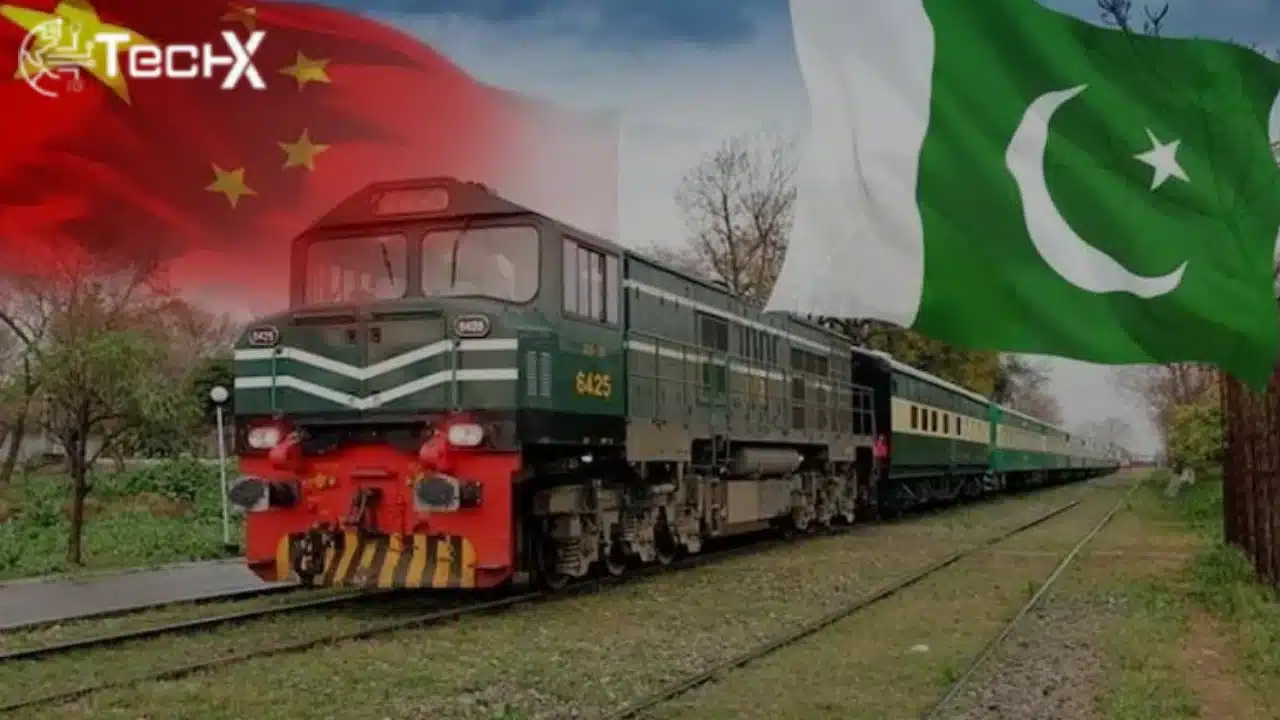
Pakistan and China have finalized an agreement to form a financing consortium worth $7 billion for the Mainline-1 (ML-1) railway project. The deal, announced by Planning and Development Minister Ahsan Iqbal, will revamp the 1,700-kilometer Karachi-Peshawar line. This crucial development was unveiled after Prime Minister Shehbaz Sharif’s recent visit to China, marking a major step in Pakistan’s infrastructure modernization under the China-Pakistan Economic Corridor (CPEC).
Key Financing Partners Confirmed
Minister Iqbal highlighted that the consortium would include significant global financiers. These include the Asian Development Bank (ADB), the Asian Infrastructure Investment Bank (AIIB), China, and Pakistan. Collectively, these institutions will pool resources for the ambitious railway upgrade. The multi-stakeholder involvement reflects growing international confidence in CPEC projects and Pakistan’s economic stability, ensuring stronger investment inflows while reducing dependency on a single financial source for long-term sustainability.
Comprehensive Four-Year Action Plan
Alongside the financing announcement, Pakistan and China agreed on a comprehensive four-year action plan for CPEC’s second phase, covering 2025 to 2029. The plan will focus on deeper cooperation across multiple sectors, including infrastructure, energy, industry, and agriculture. According to Minister Iqbal, this roadmap demonstrates a shared vision for enhancing economic connectivity while strengthening bilateral ties, ensuring continuity and accelerated progress for projects already launched under the corridor initiative.
Focus on Strategic Partnership Expansion
Minister Iqbal stressed that the action plan represents a significant advancement in bilateral relations. The document seeks to build a “China-Pakistan community with a shared future,” promoting stronger political trust and enhanced cooperation in diverse fields. This move also highlights Pakistan’s efforts to deepen its strategic partnership with China amid shifting global dynamics. The agreement reflects both nations’ commitment to securing long-term regional stability through joint development initiatives.
Also Read: Pakistan and US Sign MoU on Critical Minerals Exploration
Assurance of Multiple Infrastructure Projects
The minister confirmed that China has assured financing not only for ML-1 but also for the crucial Karakoram Highway. Both projects are considered lifelines for regional connectivity, particularly enhancing trade and transit across Pakistan’s north-south corridor. These commitments underline Beijing’s determination to continue investing heavily in Pakistan’s infrastructure, positioning the country as a central transit hub under China’s Belt and Road Initiative, while also improving domestic logistics and transportation efficiency.
Negotiations with Financiers Underway
According to Minister Iqbal, negotiations with financing partners are expected to conclude within a month. The involvement of institutions like ADB and AIIB will bring more transparency and technical oversight, ensuring adherence to international standards. Such a framework is expected to accelerate implementation and minimize delays. Pakistan hopes that closing financing arrangements swiftly will allow construction activities to begin soon, giving much-needed momentum to delayed development projects under CPEC.
Political Setbacks and Delayed Progress
Minister Iqbal criticized the previous administration for halting progress on key projects, including ML-1 and the Sukkur-Hyderabad Motorway. He claimed that both projects could have been completed by now had political instability not disrupted momentum in 2018. Referring to governance interruptions, he accused the PTI-led government of derailing the process, causing delays that significantly slowed Pakistan’s infrastructure progress, ultimately burdening the economy and increasing the costs of project completion.
Agriculture and Industrial Development Priority
The action plan emphasizes agriculture modernization and industrial development as primary areas of focus for the next phase. Both nations aim to leverage advanced technology for crop improvement, irrigation efficiency, and food security. Additionally, industrial parks and special economic zones will be prioritized, generating employment and attracting third-party participation. These initiatives are expected to enhance productivity, diversify exports, and reduce Pakistan’s dependency on imported agricultural and industrial goods.
People-to-People and Security Cooperation
Beyond economic aspects, the plan also highlights strengthening people-to-people connections and improving security cooperation. Educational exchanges, cultural initiatives, and tourism promotion will be encouraged to build deeper mutual understanding. On the security front, collaboration will be enhanced to protect CPEC projects and ensure regional peace. Such comprehensive cooperation reflects the vision of both nations to maintain a trusted, long-term partnership rooted in mutual respect and shared prosperity.
Upcoming Joint Cooperation Council Meeting
The next significant milestone will be the Joint Cooperation Council (JCC) meeting, scheduled for September 26 in Beijing. At this meeting, further details regarding the financing, implementation timeline, and sectoral cooperation under the action plan will be finalized. Minister Iqbal described this as a crucial step to institutionalize commitments and set a clear roadmap. The meeting is expected to cement long-term cooperation under CPEC’s evolving framework.
A Solid Step Towards a Shared Future
Minister Iqbal termed the agreement and action plan as a “solid development” born out of leadership-level engagements. He reiterated that both Pakistan and China are committed to deepening their partnership, calling them “time-tested, friendly countries.” The ML-1 project and other associated initiatives symbolize more than infrastructure; they embody a vision of shared prosperity, regional integration, and enduring friendship that continues to strengthen despite external challenges and shifting geopolitics.