

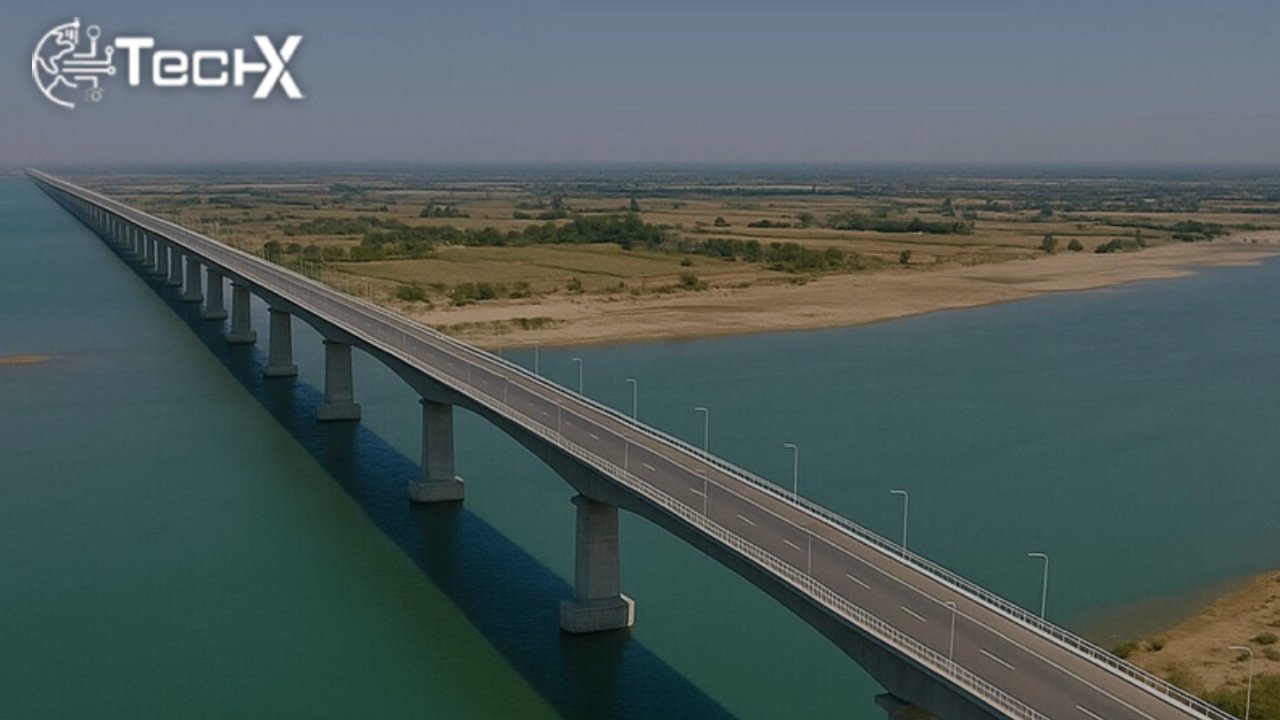
Pakistan is constructing the Ghotki-Kandhkot Bridge, which will become South Asia’s longest river bridge, spanning 12.5 kilometers over the Indus River. Located in Sindh province, the project is set for completion by 2028 with an estimated cost of Rs30.5 billion. This infrastructure milestone aims to enhance regional connectivity and drive economic growth across multiple provinces.
Government’s Emphasis on the Project
Syed Qasim Naveed Qamar, Special Assistant to Sindh’s Chief Minister, highlighted the bridge’s importance during a meeting with business leaders. He confirmed that construction has been underway for two years and is advancing swiftly toward the 2028 deadline. The government views this project as a transformative initiative to improve transportation and trade in the region.
Strategic Location and Benefits
The bridge is strategically positioned at the junction of Sindh, Punjab, and Balochistan. It will drastically cut travel time across the Indus from 2.5 hours to just 15 minutes. Additionally, it will enhance security in the katcha (riverine) areas, which have long posed law and order challenges due to limited accessibility.
Also Read: Deadline Announced for Rawalpindi Ring Road Completion
Economic and Industrial Impact
Qamar emphasized the bridge’s role in reducing the development gap between Ghotki and Kandhkot. While Ghotki has seen industrial growth, Kandhkot has lagged. The bridge is expected to spur economic activity, create jobs, and uplift local livelihoods by improving access to markets and resources.
Broader Infrastructure Development Plans
Alongside the bridge, the Sindh government presented infrastructure and social sector projects worth over Rs616 billion. These initiatives aim to attract private investment through public-private partnerships (PPPs). The focus is on sustainable development, including roads, healthcare, and education facilities.
Business Community’s Involvement
Key business leaders, including MNA Mirza Ikhtiar Baig, KCCI’s Zubair Motiwala, and industrialist Arif Habib, attended the meeting. Their participation underscores private sector interest in Pakistan’s infrastructure growth. Collaborative efforts are expected to accelerate project execution and maximize economic benefits.
Conclusion
The Ghotki-Kandhkot Bridge is poised to be a landmark achievement for Pakistan and South Asia. By improving connectivity, security, and economic prospects, it will transform regional dynamics. With strong government commitment and private sector collaboration, this project marks a significant step toward Pakistan’s infrastructural and economic advancement.