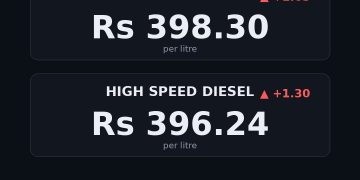

In a surprising turn of events, the federal government has announced to increases petrol price by Rs.1.35 per liter, setting the new price at Rs248.38 per liter starting November 1. This adjustment follows a significant rise in the price of high-speed diesel, now priced at Rs255.14 per liter an increase of Rs3.85. Concurrently, there is a decrease in the prices of kerosene and light diesel oil. This price revision has come unexpectedly and is set to impact various sectors of the economy.
Impact on Household Budgets
The increase in petrol and diesel prices is expected to heavily impact the budgets of middle and lower-middle-class families. As fuel is a foundational element of transportation and logistics, any price change directly influences the cost of commuting and goods transportation. Families already coping with financial constraints may find this adjustment particularly challenging, as it increases the cost of daily transport and essential services.
Also Read: Petrol Prices to Decrease by Rs. 10 from September 16
Effect on Transportation and Food Prices
Given that diesel powers the majority of freight and public transport vehicles, the rise in its price is particularly significant. It translates directly into increased costs for transporting goods across the country, including food products. As transporters pass on these additional costs to consumers, the general populace can expect a noticeable rise in food prices and other basic commodities, further stretching household budgets.
Consumer Reaction and Economic Sentiments
The government’s decision to hike fuel prices has not been well-received among the general public. Many were hoping for price stabilization to help manage the already high cost of living. The increase has sparked concerns about further financial strain, with many consumers expressing dissatisfaction and worry over the continuous upward trend in prices. This sentiment is powerful among those who rely heavily on daily fuel consumption for their livelihoods and day-to-day activities.
Business Implications and Price Pass-Through
Businesses, especially those in logistics, transport, and goods manufacturing, are likely to feel the pinch of increased operational costs. With diesel being essential for heavy goods vehicles, the rise in its price means higher operational costs for these businesses. In turn, these businesses may have no choice but to pass these increased costs onto consumers, leading to a general rise in market prices and potentially slowing down economic activity as consumer spending power diminishes.
Government’s Role and Challenges Ahead
This situation presents a significant challenge for the government, which must manage the repercussions of fuel price increases while addressing the broader issue of inflation. Effective communication and strategic planning are required to mitigate public discontent and economic instability. The government needs to justify these hikes with transparent reasoning, possibly pointing to international crude oil prices or fiscal necessities, to regain public trust.
Public Transport as an Alternative
Enhancing public transportation systems could serve as a sustainable solution to mitigate the impact of rising fuel costs. By improving the efficiency, coverage, and affordability of public transport, the government can reduce the overall demand for private vehicle use, hence decreasing the demand for petrol and diesel. This would not only help in managing fuel consumption but also contribute to environmental conservation by reducing the carbon footprint associated with heavy vehicular use.
Encouraging Energy Diversification
The government could also use this opportunity to accelerate energy diversification programs. Promoting electric vehicles and hybrid technologies through subsidies or tax incentives can encourage consumers and businesses to transition away from traditional fuel sources. This shift would not only help in reducing dependency on imported oil but also align with global sustainability goals. Furthermore, investments in renewable energy sources for electricity production can indirectly reduce the demand for fossil fuels in the long run.
Addressing Inflation Concerns
With inflation already a pressing concern, the government needs to integrate its fuel price policy with broader economic strategies. This could include tightening monetary policy to control inflation or increasing support for sectors most affected by fuel price increases, such as agriculture and transport. Additionally, a clear and transparent approach in communicating the reasons behind fuel price adjustments can help in managing public expectations and maintaining economic stability.
Conclusion: Increases Petrol Price by Rs.1.35 Per Liter
The recent increase in petrol and diesel prices is more than a financial statistic; it represents a substantial burden on the average citizen and poses a challenge to economic stability. As the government navigates this delicate situation, the focus should be on implementing supportive measures for the most affected populations and ensuring that steps are taken to stabilize the economy without disproportionately impacting the lower and middle-income brackets. The path forward must balance fiscal responsibility with social empathy to maintain economic and societal stability.