
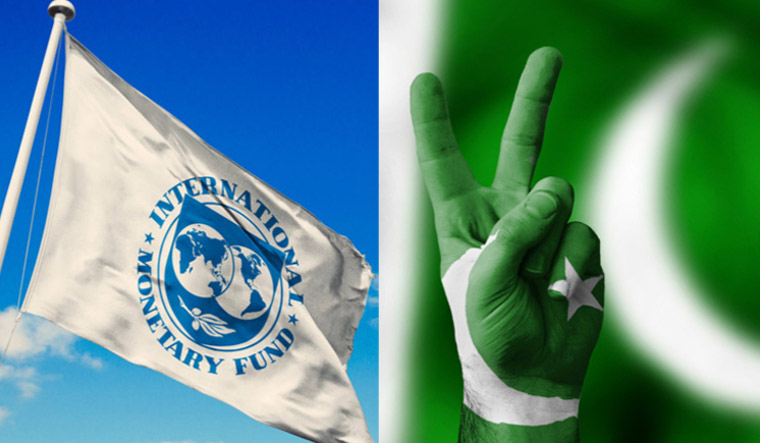
According to a person familiar with the situation, the International Monetary Fund (IMF) will take its crucial Executive Board vote on Pakistan’s $3 billion bailout program today.
On June 30, Islamabad and the IMF signed a standby agreement for a short-term loan, under which the country will receive $3 billion over nine months, pending IMF board approval.
Tahir Abbas, the Head of Research at Arif Habib Limited (AHL), said the following to a private news channel, “I am hopeful that [IMF’s board] will discuss and approve the loan.”
“Once the board approval is granted, Pakistan will receive $1.1 billion within three to four days,” Abbas added.
Positive Achievements That Why Pakistan Will Get IMF $3 Billion Loan
Since then, Pakistan’s external funding climate has improved according to Fitch Ratings Inc. this week’s notch-upgrading of the cash-strapped nation to CCC long-term foreign currency issuer status.
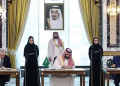
Finance Minister Ishaq Dar announced on Tuesday that Saudi Arabia has also transferred $2 billion into the State Bank of Pakistan’s (SBP) account, which is a significant development to calm the nation’s financial unrest.
Analysts claimed that Pakistan’s economic crisis may have escalated into a debt default in the absence of the bailout due to the country’s sky-high inflation and insufficient foreign exchange reserves for a month of restricted imports.
The country’s better external liquidity and funding conditions as a result of the SLA with the IMF were underlined in Fitch’s statement, which also cautioned that the budget deficit remained large.
With the IMF agreement in place, Pakistan can now access more outside funding.
According to sources in the Finance Division, Pakistan secured $3.5 billion in bilateral financing from China, $2 billion from Saudi Arabia, and $1 billion from the United Arab Emirates for the plan it submitted to the lender.
Pakistan hopes to obtain $3 billion from the IMF, $500 million from the World Bank, and $500 million from the Asian Development Bank on the multilateral front.
Local governments, including $1 billion in bonds and $3.6 billion to multilateral creditors, are anticipating $25 billion in gross new external funding in FY24, compared to $15 billion in public debt maturities.
To read our blog on “IMF Board to meet on July 12 to ratify $1.1B for Pakistan,” click here.