

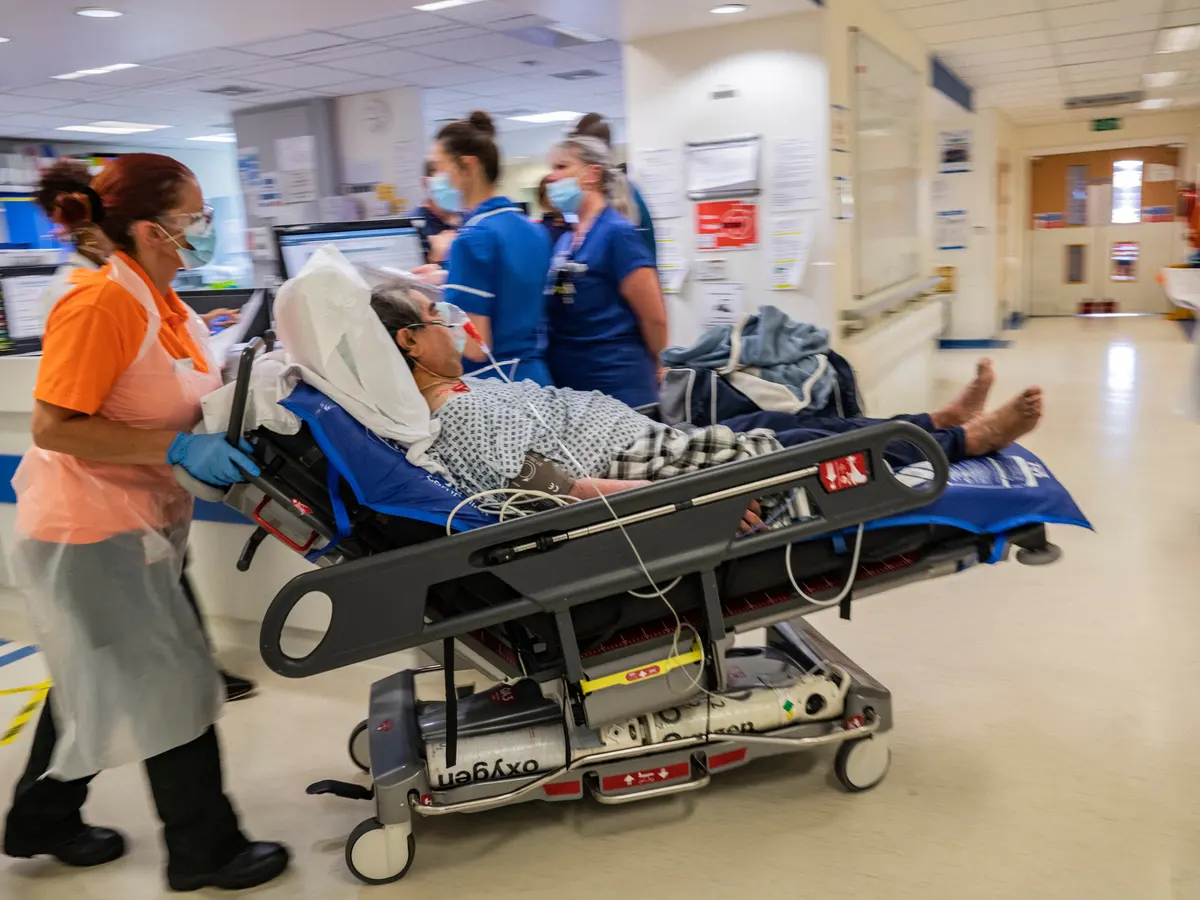
Health inequities were increasing and public services were “depleted” when the coronavirus epidemic hit the UK, according to testimony presented during the Covid inquiry.
Two experts agree that the nation’s health has been deteriorating for the past decade due to austerity measures taken in preparation for the year 2020.
As part of the public hearings investigating the United Kingdom’s readiness for a pandemic, a report written by Professors Sir Michael Marmot and Clare Bambra was submitted. Disadvantaged areas and people of colour were hit harder than others.
Their research argued that more effort should have been made to mitigate the harm that Covid caused to already-vulnerable populations. The number of individuals waiting for treatment in the NHS is twice as high as it was in 2009, which was before the pandemic, according to testimony given during the committee.
The rising number of open positions in the medical field was putting “great pressure” on the currently employed workforce. And life expectancy was already falling across the UK. It had been rising consistently up until 2010, but then it levelled out, with the biggest drops occurring in the most economically disadvantaged populations.
What is Covid-19 Inquiry in UK
- What matters is processing the past in order to grow from it.
- There will be no verdicts of guilt or innocence.
- Governments are under no obligation to implement any suggestions provided.
Sir Michael told the inquiry that funding for social care and public health had decreased prior to the pandemic, particularly in the most deprived areas of UK. The inquiry has no formal deadline but is scheduled to hold public hearings until 2026.
People from low-income communities, members of minority groups, and members of other marginalised groups were particularly hard hit. “In short, the UK entered the pandemic with its public services depleted, health improvements stalled, health inequalities increased, and health among the poorest people in a state of decline,” stated Sir Michael.
According to experts, the swine flu epidemic served as a warning, revealing which populations could be hit worst by a pandemic. However, Professor Bambra noted that prior government pandemic planning papers did “little reflection” on which populations were at most danger.
The extent to which vulnerable populations were taken into account during pandemic preparedness was also a question put to Katharine Hammond, a former director of the civil contingencies secretariat in the Cabinet Office.
“I don’t think we did a piece of work to look at the totality of socio-economic disadvantage,” she said before the panel. Statistics suggest that members of ethnic minorities were disproportionately affected by Covid-19 deaths.
Sir Michael stressed the importance of health-focused planning and reducing health disparities. He said, “if you look at the evidence from previous pandemics, including the current one that we’re considering, that the impact of the pandemic is very much influenced by pre-existing inequalities in society, including inequalities in health,” as his general view.
“You’ve got to plan for better health and narrow health inequalities, and that will protect you in the pandemic,” he added, adding that it wasn’t enough to simply know “whether there was a report somewhere in Government about planning for a pandemic.”
To read our article about “‘Solar Trees’ be soon in UK for charging electric vehicles” click here.