
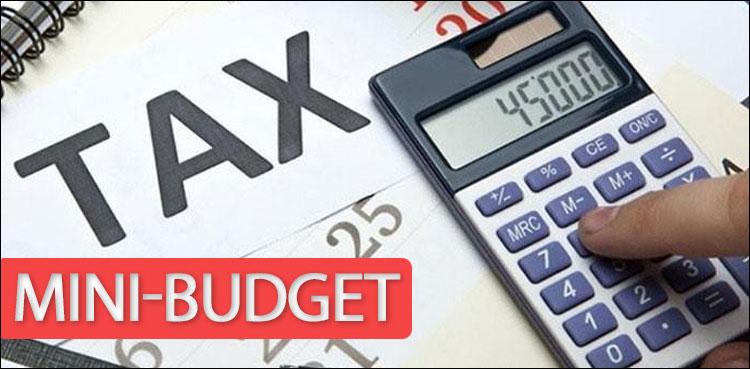
A Senate panel approved the Rs. 170 billion mini budget on Thursday by a vote of 3-2, but they also suggested that the government cut the projected federal excise duty (FED) rates on juices in half to satisfy sector worries.
A proposal to allow the Federal Board of Revenue (FBR) to raise taxes through notifications without first getting Parliament’s consent was also condemned by the Senate Standing Committee on Finance.
Senator Saleem Mandviwalla of the Pakistan Peoples Party (PPP) presided over the senate conference and acknowledged that the supplementary budget bill “would only burden the taxpayers,” recommending that the government take steps to include non-taxpayers in the FBR’s purview.
Only the chairman and three other committee members were present during the senate session. Senator Mohsin Aziz of the Pakistan Tehreek-i-Insaaf (PTI) opposed the mini-budget with certain adjustments, but the committee nonetheless accepted the bill with a 3-2 vote.
Senate Reservations on Rs. 170 Billion Mini Budget
To get NA approval for the budget being submitted as part of the agreement with the International Monetary Fund (IMF), Finance Minister Ishaq Dar had presented the Finance Bill to the NA a day earlier.
The government’s claim that these actions had a budgetary impact of just Rs. 170 billion was disputed by Senator Aziz, who asserted that the true annual impact was in excess of Rs. 510 billion.
The general sales tax (GST), which was increased from 17% to 18% by the Finance (Supplementary) Bill 2023, which was introduced in the House on February 15, 2023, also increased the federal excise duty on tobacco, sugary goods, airline tickets, wedding venues, and cement.
Via an administrative decision from the federal cabinet, the government has already implemented the GST rate rise. But as of late, it has suggested giving the FBR comparable authority.
PML-N Saadia Abbasi, a senator, voted against the motion that would have allowed the FBR to raise the sales tax rates covered under the third schedule of the Sales Tax Act.
According to FBR Chairman Asim Ahmad who was also present in the senate, the government recommended the modification to give the FBR the authority to raise taxes on goods with a retail price because the FBR had not previously been given the authority to do so.
But giving away such authority would be like chopping off the legislators’ hands and putting the country’s future in the hands of bureaucrats who are determined to buy fancy cars despite the economic downturn.
Senator Mandviwalla said that “The Aviation Ministry has expressed reservations about levying a 20% tax on business class and first class tickets or Rs50,000, whichever is higher.”
The proposed levy, according to the aviation ministry, is unworkable because ticket prices are not constant and change periodically.
Senator Mandviwalla then recommended that a specific sum should be set aside for each destination rather than imposing a 20% tax.
Senator Aziz argued that, rather than raising import duties, luxury goods should simply be outlawed. “An increase in taxes will only encourage smuggling of these items,” he said.
Dr. Aisha Ghaus Pasha, Minister of State for Finance, stated that although the government desired to forbid the entry of luxury goods, it was unable to do so due to World Trade Organization (WTO) regulations.
“As far as the smuggling of these luxury items is concerned, the FBR, in collaboration with Frontier Corps and other agencies, is trying to curb smuggling along the western border,” said Pasha.
Nonetheless, the FBR is not mandated to guard the international frontiers.
Further objecting to the government’s imposition in the senate session that the 10% Federal Excise Duty (FED) on sweet fruit juices and squashes, representatives from Murree Brewery and Shezan Enterprises said the government’s sudden hike was unreasonable.
The FBR chairman commented that “sugary drinks are injurious to health and owing to the World Health Organization (WHO) recommendations in this regard, the government has increased the FED on carbonated water from 13% to 20%.”
The FED on fruit juices should be reduced from 10% to 5%, under the committee’s recommendation.
The FBR chairman stated that people must pay a 10% tax upfront to use banquet facilities during a discussion on the proposed tax on events and gatherings.
According to Senator Mandviwalla in the senate session, the majority of banquet halls in the nation are not even registered with the FBR, and the tax administration should work to have the marriage halls registered in order to close the apparent loophole that allows for tax avoidance.
To read our blog on “Rs. 170 bn taxes in mini budget will hike more inflation,” click here.