
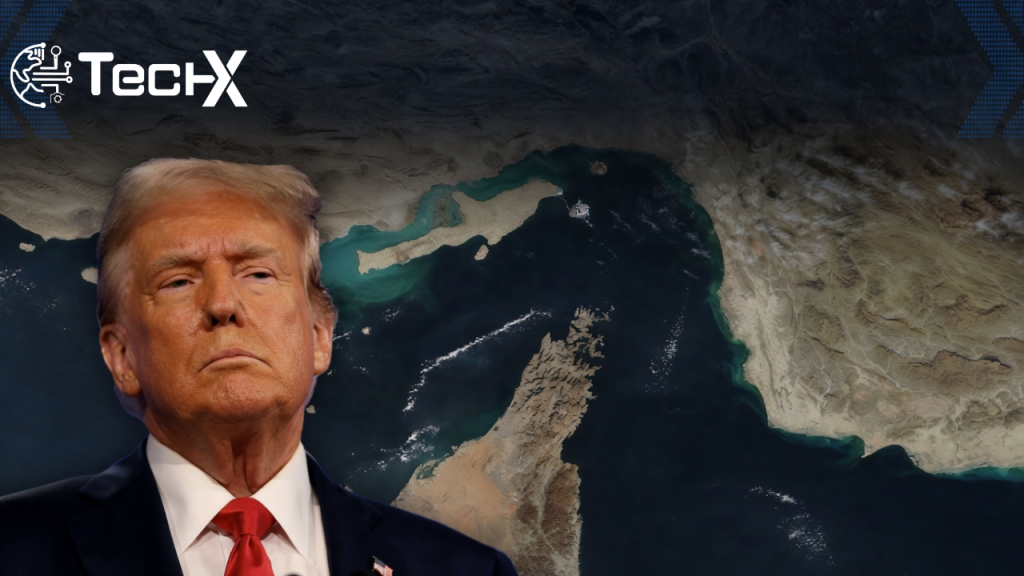
Iran’s central military command has officially announced that the Strait of Hormuz has “reverted to its previous state” of strict military control as of Saturday, April 18, 2026. This sudden reversal comes less than 24 hours after a brief opening, signaling a major collapse in the diplomatic “goodwill” phase. The Iranian military’s operational command, Khatam Al-Anbiya, stated that the waterway is once again under the direct and “strict management” of the armed forces, effectively ending the period of free passage for commercial vessels.
Escalation over Operation Economic Fury
The primary catalyst for this closure is the ongoing U.S. naval blockade of Iranian ports. While Iran initially opened the Strait as part of a 10-day ceasefire deal mediated in Islamabad, President Donald Trump clarified on Friday that the American blockade would remain in “full force” until a 100% complete transaction regarding Iran’s nuclear program is reached. In response, Iran has reclaimed its control over the Strait, using it as a counter-lever to the U.S. economic pressure.
Key U.S. Violations Cited by Iran
The Iranian military spokesperson has justified the re-closure by citing several “repeated violations” by the United States. According to Tehran, the U.S. has failed to honor the spirit of the ceasefire through the following actions:
-
Refusal to Lift the Naval Blockade: Despite Iran opening the Strait, the U.S. continued “Operation Economic Fury,” preventing ships from entering or leaving Iranian ports.
-
Acts of “Maritime Piracy”: Iran has officially labeled the U.S. interception of vessels bound for Iran as “piracy and banditry.”
-
Breach of Reciprocal Agreements: Tehran claims the U.S. violated the “period of silence” by maintaining aggressive naval postures in the Arabian Sea.
-
Nuclear Blackmail: Iran cited President Trump’s public demands for Iran’s enriched uranium stockpile as a violation of fair negotiation protocols.
-
Violation of Free Navigation: Iran argues that the U.S. blockade itself is a violation of international maritime law, justifying Iran’s reciprocal restrictions on the Strait.
Impact on Global Shipping and Energy Markets
The announcement has triggered immediate chaos in international waters. Maritime tracking data shows dozens of tankers and cargo ships performing U-turns in the Gulf of Oman to avoid entering the now-restricted zone. Shipping insurance rates are expected to skyrocket, and global oil prices which had briefly dipped on Friday are surging back toward the $100 per barrel mark. Experts warn that a prolonged closure could lead to the most significant energy supply disruption in decades.
The Fragile Future of the Islamabad Peace Talks
This development puts the upcoming high-stakes negotiations in Islamabad under extreme pressure. With the 10-day ceasefire nearing its end and the military “field” dictating terms over social media promises, mediators are racing to prevent a return to full-scale kinetic warfare. The Iranian Parliament Speaker, Mohammad Bagher Ghalibaf, has warned that the Strait will not remain open as long as the blockade continues, leaving the fate of global trade hanging on Monday potential diplomatic breakthrough.