
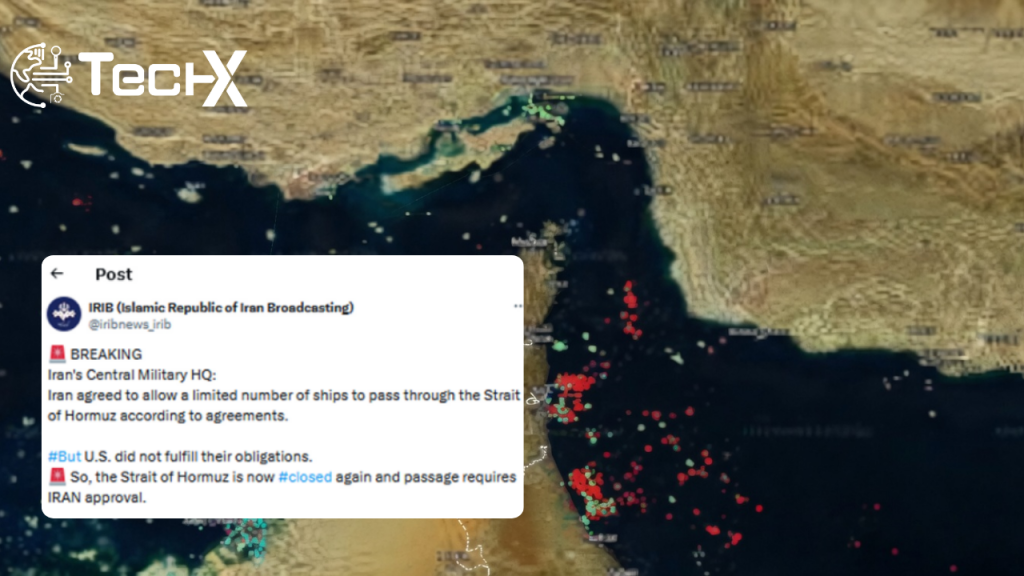
In a dramatic and sudden turn of events, Iran’s central military command has announced that the Strait of Hormuz has “reverted to its previous state” of strict military control on Saturday, April 18, 2026. This announcement comes less than 24 hours after both Iranian diplomats and U.S. President Donald Trump had signaled a complete reopening of the waterway for commercial traffic, highlighting the extreme volatility of the current peace process.
The Reason Behind the Reversal
The Iranian military stated that the decision to reimpose restrictions was a direct response to the continued U.S. naval blockade. Tehran argues that while they opened the Strait as a gesture of goodwill following the 10-day ceasefire in Lebanon, the United States failed to reciprocate by lifting its “Operation Economic Fury” blockade on Iranian ports. The Iranian command clarified that until the U.S. restores “complete freedom of navigation” for vessels traveling to and from Iran, the Strait will remain under their “strict management.”
Chaos in the Shipping Lanes
The sudden reversal has caused immediate panic in the maritime industry. Early on Saturday, several international oil tankers that had begun their transit following Friday’s “all-clear” were seen performing U-turns or anchoring in the Sea of Oman. Reports indicate that Greek, Indian, and Chinese vessels, which had hoped to capitalize on the brief opening, are now retreating to avoid being caught in a potential military crossfire or facing interception by the IRGC Navy.
Escalating Rhetoric from Both Sides
The diplomatic atmosphere has soured quickly following this move. President Trump, speaking at an event in Arizona, claimed that a broader peace deal was “very close” and that the U.S. would soon take possession of Iran’s enriched uranium. However, Iranian Parliament Speaker Mohammad B. Ghalibaf and military leaders have fiercely pushed back, calling Trump’s claims about surrendering uranium “lies” and insisting that no material will leave the country under the current conditions of “maritime piracy” by the U.S. Navy.
The Islamabad Talks Under Pressure
This setback puts immense pressure on the potential second round of negotiations scheduled for Monday in Islamabad. Mediators in Pakistan now face the daunting task of salvaging a framework that appears to be falling apart on the battlefield. With the 10-day ceasefire set to expire soon, there is a growing fear that the “Islamabad Process” may collapse if a definitive agreement on the naval blockade and the nuclear stockpile isn’t reached within the next 48 hours.
Global Energy Markets on Edge
Global markets, which had celebrated Friday’s drop in oil prices to $83 per barrel, are now bracing for a sharp rebound. The Strait of Hormuz carries roughly 20% of the world’s daily oil and liquefied natural gas (LNG), and the reimposition of “strict management” signals that the energy crisis is far from over. Analysts warn that if the waterway remains a tool for political leverage, the world could see the highest monthly increase in energy costs in history, potentially surpassing the shocks felt during the 1970s.