
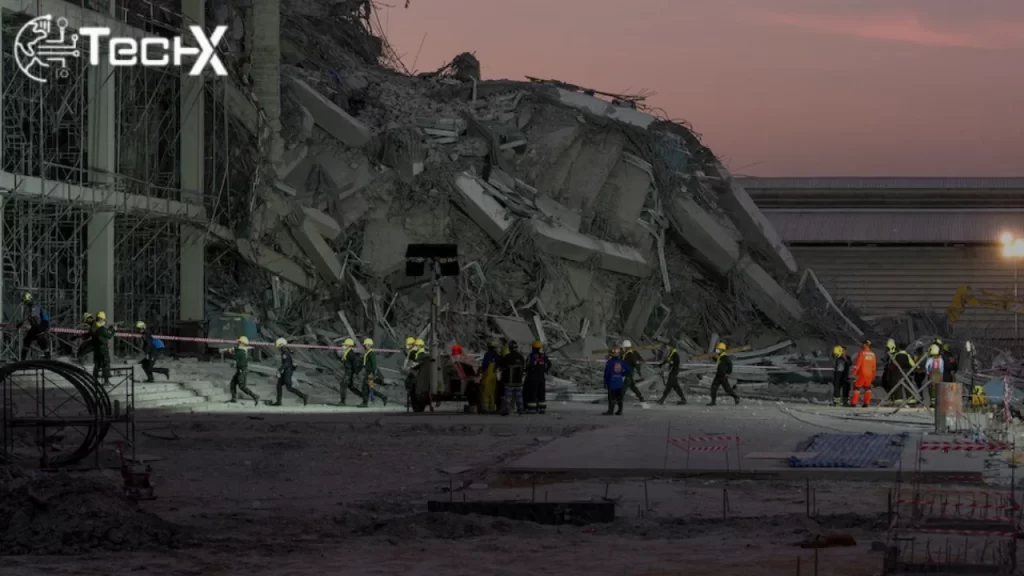
A devastating 7.7 magnitude earthquake struck Myanmar near Mandalay, its second-largest city, at midday Friday. The quake caused widespread destruction, with aftershocks, including a 6.4 magnitude tremor, further destabilizing the region. Authorities warn the death toll, already at 144 in Myanmar and 10 in Thailand, is expected to rise as rescue efforts continue in affected urban and rural areas.
Extensive Damage and Rising Casualties
Buildings collapsed in multiple cities, including Mandalay’s largest monastery and parts of Naypyidaw’s civil servant housing. Thailand reported fatalities from a collapsed high-rise in Bangkok, with 101 people missing. The U.S. Geological Survey estimates fatalities could exceed 1,000. Rescue teams face challenges accessing remote areas, particularly in Myanmar, where infrastructure damage complicates relief efforts.
Government and International Response
Myanmar’s military leader, Senior Gen. Min Aung Hlaing, confirmed 730 injuries and appealed for blood donations. The U.N. allocated $5 million for relief, while President Donald Trump pledged U.S. assistance. However, concerns persist over reduced foreign aid budgets hindering effective disaster response. Humanitarian groups fear weeks may pass before the full devastation is understood.
Infrastructure Collapses Across Myanmar
Critical infrastructure, including bridges and a dam, failed in the quake. A key highway bridge between Mandalay and Yangon collapsed, disrupting transport. Videos showed monks filming the Ma Soe Yane monastery’s sudden collapse. A burst dam in Mandalay worsened flooding in lowland areas, compounding the crisis in a nation already grappling with civil war and displacement.
Bangkok High-Rise Collapse
In Thailand, a 33-story building under construction near Chatuchak market crumbled, trapping workers. Eyewitness videos captured panic as dust engulfed the area. Sirens blared as rescuers rushed to the scene, pulling injured survivors from the wreckage. Deputy Prime Minister Suriya Juangroongruangkit called the incident a “great tragedy,” highlighting rare seismic activity in Bangkok.
Also Read: Iran and U.S. Tension to Showdown: The Nuclear Weapon Threat
Eyewitness Accounts of Chaos
Residents and tourists described terrifying moments as buildings swayed. Voranoot Thirawat, a Bangkok lawyer, fled her office after noticing swinging lights and creaking structures. Scottish tourist Fraser Morton recalled mall evacuations amid screams, while England’s Paul Vincent saw high-rises swaying and rooftop pools spilling water. The shallow quake depth intensified destruction.
Regional Impact: China Reports Injuries
The tremor was felt in China’s Yunnan and Sichuan provinces, causing damage in Ruili near the Myanmar border. Mangshi residents reported violent shaking, forcing people to the ground. Chinese media confirmed injuries, though full assessments are pending. The disaster’s ripple effects underscore the vulnerability of Southeast Asia’s earthquake-prone zones.
Humanitarian Crisis Deepens
With 3 million displaced by Myanmar’s civil war, the quake exacerbates an existing crisis. Julie Mehigan of Christian Aid noted many were already struggling before the disaster. Conflict zones hinder aid access, leaving millions at risk. The international community faces urgent calls for coordinated relief to prevent further suffering in the aftermath of this catastrophic event.
Rescue Efforts Hampered by Ongoing Conflict
Myanmar’s civil war has severely complicated rescue operations, with many affected areas under militia control or too dangerous to access. Aid groups struggle to deliver supplies as roads are damaged and bridges collapsed. The military government’s restrictions on information further delay assessments. The U.N. warns that millions, already displaced by war, now face homelessness and food shortages due to the quake.
Hospitals Overwhelmed as Injured Flood In
Hospitals in Mandalay and Naypyidaw are overwhelmed, with doctors treating patients in corridors due to damaged wards. The capital’s main hospital suffered structural damage, forcing emergency services to operate outside. Blood supplies are critically low, and medical teams face shortages of equipment and medicine. In Bangkok, hospitals near the collapsed high-rise set up triage areas, prioritizing the most severely injured victims.
Also Read: Heathrow Airport Power Outage Causes Global Travel Chaos
Fear of Aftershocks Keeps Survivors Outdoors
Thousands in Myanmar and Thailand spent the night in open spaces, fearing aftershocks could bring down more buildings. Makeshift camps have sprung up in parks and stadiums, with limited access to food and clean water. In Yangon, residents refused to return to cracked apartment buildings, opting to sleep on sidewalks despite heavy monsoon rains. Authorities urge caution but lack safe shelters for all displaced families.
International Aid Begins to Arrive
Several countries, including China, India, and Japan, have pledged emergency aid, with planes carrying medical teams and supplies en route. The U.S. has mobilized disaster response teams, though concerns remain over funding cuts affecting long-term recovery. Local charities and religious groups are distributing food and blankets, but aid distribution remains uneven, with rural areas receiving little assistance compared to cities.
Structural Failures Raise Questions About Building Safety
The collapse of modern structures in Bangkok and Mandalay has raised concerns about construction standards. Engineers suspect poor materials and rushed approvals contributed to the disasters. In Myanmar, many buildings lacked earthquake-resistant designs, while Bangkok’s high-rise collapse suggests possible negligence. Governments vow investigations, but survivors demand accountability as they mourn lost loved ones.
Economic Impact Could Be Severe
The quake has disrupted trade routes, damaged factories, and halted construction projects, dealing a blow to Myanmar and Thailand’s economies. Myanmar, already impoverished, faces billions in reconstruction costs. Tourism in Bangkok may suffer as travelers reconsider visits to a region now associated with disaster. Analysts warn recovery could take years, worsening poverty in affected communities.
Psychological Trauma Lingers for Survivors
Beyond physical damage, survivors grapple with deep emotional scars. Parents search for missing children, while workers mourn colleagues buried in rubble. Mental health professionals warn of long-term trauma, especially for those who experienced building collapses firsthand. Community support networks are forming, but counseling services remain scarce in Myanmar’s conflict zones.
Climate Change and Earthquake Risks in Southeast Asia
Scientists note that while earthquakes are natural, urban sprawl and weak infrastructure amplify their impact. Rapid, unregulated construction in cities like Bangkok and Mandalay increases vulnerability. Climate change may also indirectly heighten risks, as shifting weather patterns stress geological faults. Governments face calls for stricter building codes and disaster preparedness programs to prevent future catastrophes.
A Long Road to Recovery Ahead
Rebuilding will require massive international support, but political instability in Myanmar may delay aid distribution. Thailand’s stronger infrastructure allows faster recovery, but Myanmar’s crisis could deepen without urgent intervention. Survivors plead for help, fearing they will be forgotten as global attention fades. For now, rescue teams keep digging through rubble, hoping for miracles amid the devastation.