
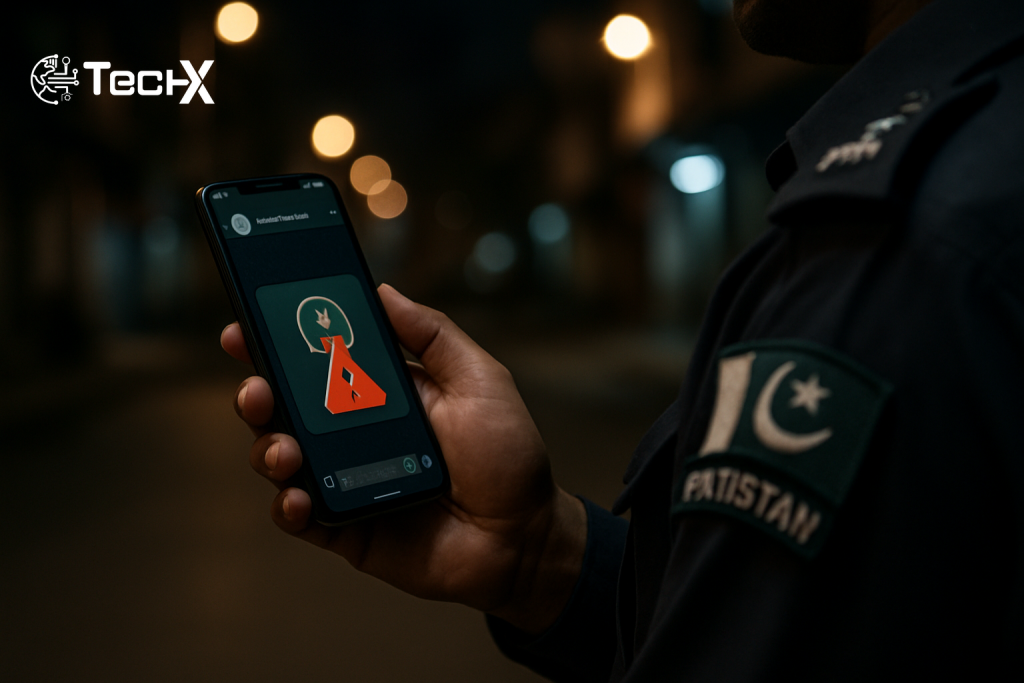
WhatsApp hacking in Karachi has moved far beyond ordinary fraud. When a private citizen loses their WhatsApp account, the damage is bad. When a senior official loses theirs, the consequences can be far more dangerous. Criminals can pose as that official, send fake orders to subordinates, spread false public alerts, or extract sensitive information from colleagues who have no reason to doubt the message is real.
This is not a theoretical risk. It is happening right now, and the numbers are alarming.
WhatsApp Hacking in Karachi Is Part of a Much Bigger Problem
Cybercrime incidents in Pakistan, including WhatsApp hacking and digital financial fraud, have surged by 35% so far in 2025, according to officials from the National Cyber Crime Investigation Agency (NCCIA). Karachi is at the centre of it. In Karachi alone, over 29,000 cybercrime complaints have been received so far in 2025, mostly related to financial scams, harassment, and data theft.
The raw numbers tell only part of the story. According to the Federal Investigation Agency’s 2024 Annual Administration Report, over 73,000 cybercrime complaints were filed across Pakistan, though only 1,604 cases were formally registered. That huge gap between complaints filed and cases registered means most victims get little or no resolution.
The FIA has revealed that more than 1,400 WhatsApp accounts were hacked across the country in complaints received by the Cyber Crime Wing, with 1,426 complaints recorded since July 1, and that number does not include users whose complaints have not yet been registered.
How Attackers Hijack a WhatsApp Account
The method is simple, which is exactly why it works so well. A bad actor tries to register your phone number on WhatsApp on a new device. WhatsApp sends a six-digit verification code to your number via SMS. The attacker then contacts you, often posing as a friend, a family member, or even a WhatsApp support agent, and tricks you into sharing that code.
Once you share the code, your account is theirs. From that point, they have access to your chat history, your contact list, and, most dangerously, the trust your contacts have placed in your name and number.
For a private citizen, this can mean financial fraud. For a senior official, a police officer, a government administrator, a public health authority, it can mean something much worse. Government officials have been targeted in these attacks, with hackers posing as senior bureaucrats to extract confidential information using malware.
A separate incident already showed how dangerous fake official alerts can be. A fabricated security warning doing the rounds in Karachi falsely claimed the Government of Sindh had declared a high-level security alert, listing public places including Dolmen Mall, Empress Market, Jinnah International Airport and all schools and colleges as high-risk locations to be avoided. The Sindh Home Department issued a statement confirming the alert was fake, stating that no official correspondence bearing that reference number had been released by the department or any law enforcement agency under its control. The alert spread via WhatsApp and caused public panic before authorities could respond.
Why Officials Are High-Value Targets
WhatsApp is the primary communication platform for the overwhelming majority of Pakistani internet users for personal conversations, business dealings, family coordination, and financial discussions. The value of access to a Pakistani WhatsApp account, from an attacker’s perspective, has never been higher.
An official’s account is worth even more to a criminal. Contacts trust messages from that number. Subordinates may follow instructions without questioning them. Sensitive operations, locations, or plans could be exposed. And the impersonation can go on for hours before anyone realises something is wrong.
The increase in attacks stems largely from the country’s lack of digital literacy, which leaves citizens vulnerable to sharing one-time passwords (OTPs) and personal data with hackers. This problem cuts across all levels of society. Experts have noted that digital fraud affects individuals across all age groups, not just younger, tech-savvy users.
This is also a broader trend. Pakistan’s digital defenses are already under scrutiny from international cyber agencies, and homegrown account-takeover attacks are adding pressure from inside.
What Pakistan’s Authorities Are Doing
The Computer Emergency Response Team (CERT) has issued an advisory following an increase in cyber attacks on WhatsApp accounts in Pakistan. The advisory suggests users should use strong passwords, avoid clicking on unknown links, lock their WhatsApp account through biometrics, and avoid using WhatsApp on public Wi-Fi.
The Pakistan Telecommunication Authority (PTA) actively monitors suspicious digital activity and works closely with telecom operators to block and trace numbers linked to fraud, and urges the public to report incidents through the PTA Complaint Management System and the FIA’s Cyber Crime Reporting Portal.
The NCCIA has reportedly recovered millions of rupees in stolen funds this year, though most cases remain difficult to resolve because many hacking operations are based outside the country.
Despite better frameworks on paper, the gap between policy and practice remains wide. Pakistan improved its position in the International Telecommunication Union’s Global Cybersecurity Index, ranking among the top 46 countries in 2024 from 79th in 2021, yet the country continues to struggle with widespread digital illiteracy. Officials say this disconnect explains why cyber incidents continue to rise despite better security frameworks.
The One Setting That Can Stop Most Attacks
There is a free, built-in protection that stops the most common form of WhatsApp hacking. It is called two-step verification. Two-step verification adds a second layer of protection on top of the standard SMS code. When enabled, accessing your WhatsApp account requires two things: the six-digit code sent via SMS, and a separate PIN that only you know.
Even if an attacker gets hold of your SIM card through SIM swapping, a technique increasingly reported in Pakistan, or intercepts your SMS verification code through other means, they still cannot access your account without the PIN.
Two-step verification has been available on WhatsApp for years. The fact that account hijacking remains so prevalent in Pakistan is not a technology failure; it is an awareness failure. Most users simply do not know the feature exists or assume that because they have not been targeted yet, they do not need it.
To enable it, open WhatsApp, go to Settings, then Account, then Two-Step Verification, and tap Enable. You will set a six-digit PIN. It takes under two minutes. Two-step verification is free, already built into the app, and requires no updates or additional downloads. The only thing standing between most Pakistani WhatsApp users and this protection is two minutes and the decision to use it.
For officials who handle sensitive communications, this single step is no longer optional. It is a basic professional duty. You can read more about how to enable it on the official WhatsApp two-step verification support page.
Frequently Asked Questions
How does WhatsApp hacking in Karachi usually happen?
In most cases, a criminal tries to register your number on a new device. WhatsApp sends you a verification code by SMS. The criminal then calls or messages you pretending to be someone you trust, asks for the code, and once you share it, your account is taken over. Never share your WhatsApp OTP with anyone, for any reason.
Are senior officials specifically targeted?
Yes. Government officials have been targeted in Pakistan, with hackers using compromised accounts or fake accounts to impersonate senior figures and extract sensitive information from colleagues. An official’s account carries more authority and trust, which makes it more valuable to an attacker.
What should I do if my WhatsApp is hacked?
First, try to log back in using your own SIM. WhatsApp will send a new verification code to your number, which should lock the attacker out. If that fails, email support@whatsapp.com with your details and explain your account was taken over. You should also report the incident to the FIA Cyber Crime Wing by calling their helpline at 9911.
Is two-step verification really enough protection?
It stops the most common attack, the OTP trick. It will not protect you against every threat, such as malware installed on your phone. But enabling two-step verification removes the easiest route into your account and is a strong first line of defense that every user, especially officials and public figures, should have active.