
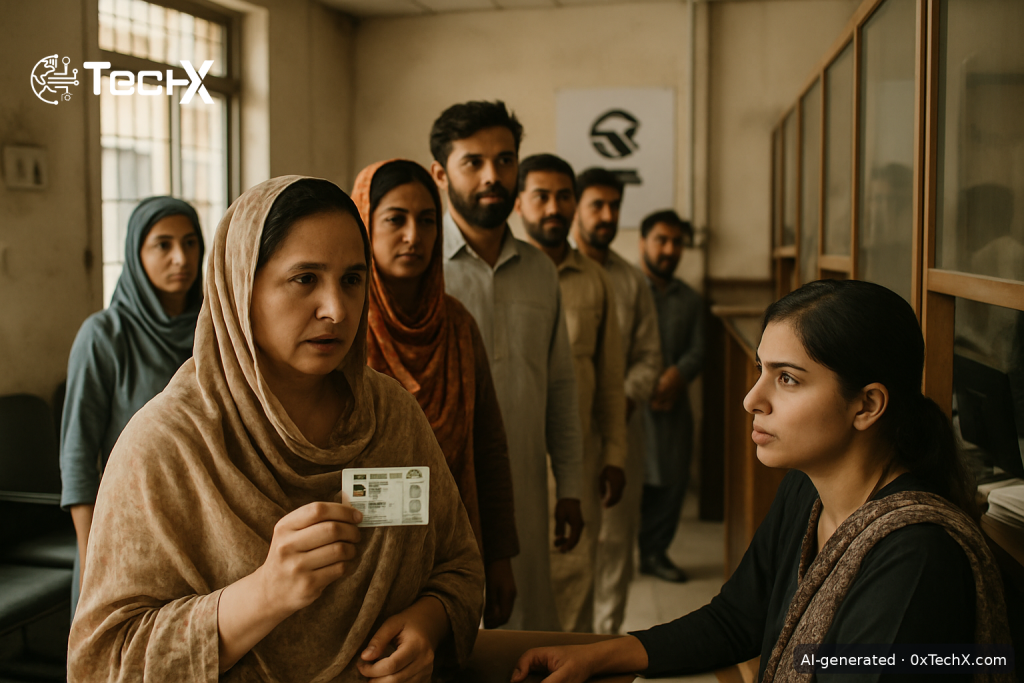
Unbanked Pakistan has landed in an uncomfortable global spotlight. The World Bank’s Global Findex 2025 report, released in July 2025, names Pakistan among just eight nations where the majority of adults still have no bank account, a ranking that puts real pressure on the State Bank of Pakistan’s plan to bring 75% of adults into the formal financial system by 2028.
What the Global Findex 2025 Actually Found
As of 2024, around 1.3 billion adults globally still lack access to financial accounts. That number sounds abstract until you see where those people live. More than half of the world’s unbanked adults, some 650 million people, are concentrated in just eight countries: Bangladesh, China, Egypt, India, Indonesia, Mexico, Nigeria, and Pakistan.
Being on a list with India and China may seem harmless, but context matters. India now has financial account ownership of 89% in 2024, up sharply from 77.5% in 2021. Indonesia sits at 56%. Only about a quarter of Pakistan’s adult population holds any kind of bank account, which is why the country keeps appearing on this list even as its neighbours move ahead.
The Global Findex Database is the world’s leading demand-side survey on how adults access and use financial services, so its findings carry weight with policymakers and investors alike. The 2025 edition surveyed approximately 145,000 adults across 141 economies during 2024.
Why Unbanked Pakistan’s Numbers Look Contradictory
Here is where the story gets complicated. SBP’s own data, and reporting linked to the Cashless Pakistan initiative, suggests financial inclusion has risen to 69%, with a narrowing gender gap attributed to targeted interventions. Yet the World Bank’s independent survey still places Pakistan among the worst-performing nations. Why the gap?
The answer lies in what gets counted. The SBP’s 64%-to-69% figures include mobile wallet holders and branchless banking users, while the World Bank’s methodology applies its own demand-side test, asking people directly whether they actively use an account. Many accounts in Pakistan are opened but never used. The financial sector faces two critical structural gaps: digital literacy and financial literacy, and less than 40% of those with financial access are actually financially literate, leading to underuse of accounts.
Consumer trust in financial institutions is low, with only 10% of unbanked adults trusting these institutions, while 85% depend on family and friends for financial support. An account that exists on paper but is never touched does not translate into real financial inclusion.
The Gender Problem Inside the Unbanked Pakistan Crisis
The headline figure hides an even starker divide along gender lines. According to the Karandaaz Financial Inclusion Survey, only 35% of adults have some kind of digital financial account, with a sharp gender gap: 14% for women versus 56% for men.
Of the total unbanked population globally, women make up 55%, and 52% of people without bank accounts come from the poorest 40% of households. In Pakistan, those two pressures, being a woman and being poor, frequently combine, leaving tens of millions of women with no practical way to save, borrow, or receive payments safely.
The barriers are not only technical. Offering a mobile phone or financial infrastructure alone cannot address women’s financial exclusion without also addressing the ability to make decisions and take actions on one’s own behalf. Social norms, limited mobility, and lack of ID documents all play a role that an app or a QR code cannot fix by itself.
SBP’s Plan to Close the Gap
The State Bank of Pakistan is not ignoring the problem. The headline targets for the National Financial Inclusion Strategy (NFIS) 2024-28 are to improve financial inclusion to 75% and reduce the gender gap to 25% by 2028. That is an 11-percentage-point jump from wherever the true baseline sits today, in under four years.
The main tool driving this push is Raast, SBP’s instant payment system. Raast has grown roughly 162 times since 2022, crossing 1.28 billion transactions in 2025, a genuine success story in moving money digitally. Active digital payment merchants grew from 500,000 to over 2 million, a fourfold expansion supported largely by the Raast QR Code initiative.
Other tools in the SBP toolkit include the Asaan Mobile Account, which lets people open accounts using a basic phone without needing internet, and the Asaan Digital Account for smartphone users. As of December 2023, 31 million adult women held at least one bank account, up from 13 million in 2018, reducing the gender gap from 47% to 34%. That is real movement, but the World Bank report shows it has not been enough to exit the global bottom eight.
What Needs to Change, and What This Means for Ordinary Pakistanis
The most common reason people give for not having an account is a lack of money. Other barriers include high fees, distance to financial institutions, and lack of necessary documentation. These are not problems that digital infrastructure alone solves.
What does this mean in practice? A vegetable seller in Lahore who has no bank account cannot receive government subsidies digitally, cannot build a credit history, and cannot safely save small amounts without risk of loss or theft. Of those globally without accounts, around 900 million own a mobile phone, and more than half have smartphones, meaning the device is there, but the trust and habit are not.
The Global Findex report highlights that real-time digital payment systems, such as India’s UPI and Brazil’s PIX, have helped close gaps at scale. Pakistan’s Raast is built on the same idea, but the country needs far more people to open accounts and actually use them, not just hold them on paper.
Pakistan’s fintech sector has been growing fast, with hundreds of startups and rising investment, but fintech growth at the top of the pyramid does not automatically pull in the unbanked at the bottom. The SBP’s NFIS 2024-28 recognises this, noting that expanding digital financial services to underbanked segments remains a challenge partly because of a deep cultural preference for cash.
The clock is ticking. With 2028 less than three years away, Pakistan needs to add roughly one new banked adult for every five currently outside the system, every single year, just to hit the 75% target. The Global Findex 2025 is a clear signal that the current pace is not quite fast enough.
Frequently Asked Questions
Why is unbanked Pakistan still on the World Bank’s worst list?
Pakistan is on the list because the World Bank’s demand-side survey found that fewer than half of adults actively use a formal financial account. While SBP reports progress through its own metrics, including mobile wallets, the World Bank counts only those who actually use their accounts, and many Pakistani accounts sit inactive.
Which eight countries does the Global Findex 2025 flag for having the most unbanked adults?
The eight economies are Bangladesh, China, Egypt, India, Indonesia, Mexico, Nigeria, and Pakistan, together home to more than 650 million of the world’s unbanked adults.
What is SBP’s target and how far is Pakistan from reaching it?
The State Bank of Pakistan has set a target to increase financial inclusion from 64% in 2023 to 75% by 2028, and to cut the gender gap from 34% to 25% over the same period. Whether the World Bank’s independent measure agrees with SBP’s self-reported figure remains the key question.
What is Raast and why does it matter for financial inclusion?
Raast is Pakistan’s national instant payment system, run by the SBP. It allows free, real-time money transfers between bank accounts and mobile wallets. Raast crossed 1.28 billion transactions in 2025, showing strong adoption, but the bigger challenge is getting unbanked adults to open accounts in the first place before they can use it.