
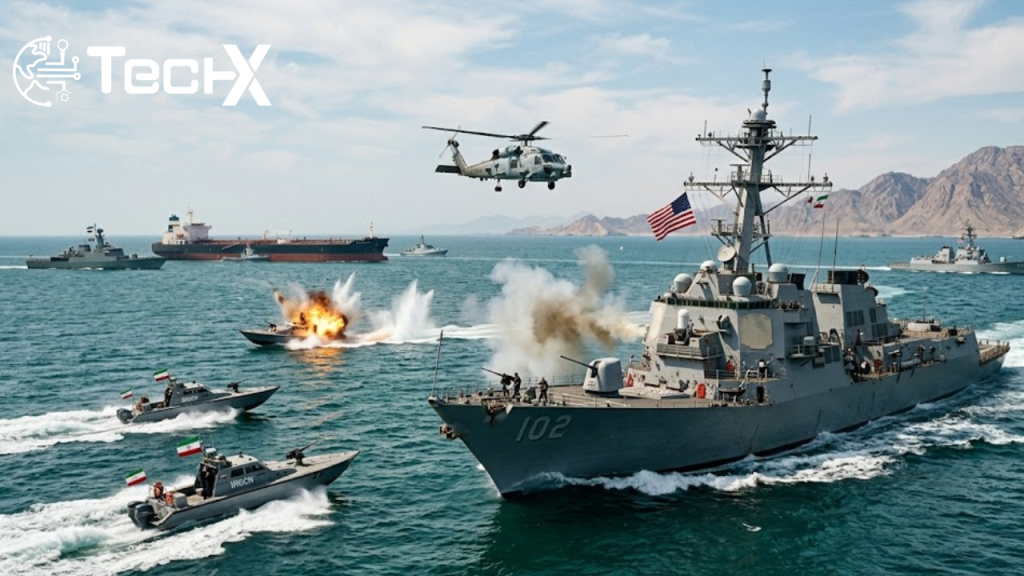
Recent developments show rising tensions between the United States and Iran in the Gulf region, particularly around the Strait of Hormuz, one of the world’s most important maritime trade routes. Reports indicate increased military activity from both sides, including naval movements and defensive operations, as each country seeks to secure its strategic interests in the area.
Strategic Importance of the Strait of Hormuz
The Strait of Hormuz is a narrow but highly significant waterway through which a large percentage of global oil shipments pass daily. Because of its importance to international energy supply, any disruption in this region can have immediate global economic consequences, including rising fuel prices and shipping delays.
Military Presence and Operations
The United States has maintained a strong naval presence in the Gulf for years to ensure the security of international shipping lanes. In response, Iran has also increased its maritime and military activities in the region, stating that it is defending its territorial waters and regional interests. This buildup has led to frequent close encounters between naval forces.
Reports of Attacks and Interceptions
In recent tensions, there have been reports of missile interceptions, drone activity, and confrontations involving naval vessels. While both sides have exchanged accusations, confirmed large-scale direct conflict has not been officially declared. However, the frequency of such incidents has raised concerns about accidental escalation.
Global Reaction and Concerns
International markets and governments are closely monitoring the situation due to its potential impact on global energy stability. Any disruption in Gulf waters can affect oil supply chains worldwide, making this a matter of global concern rather than a regional issue alone.
Conclusion
Overall, the situation between the United States and Iran in the Gulf remains highly sensitive and unstable. While diplomatic efforts continue, ongoing military activity and strategic positioning by both sides keep the region at risk of further escalation.