
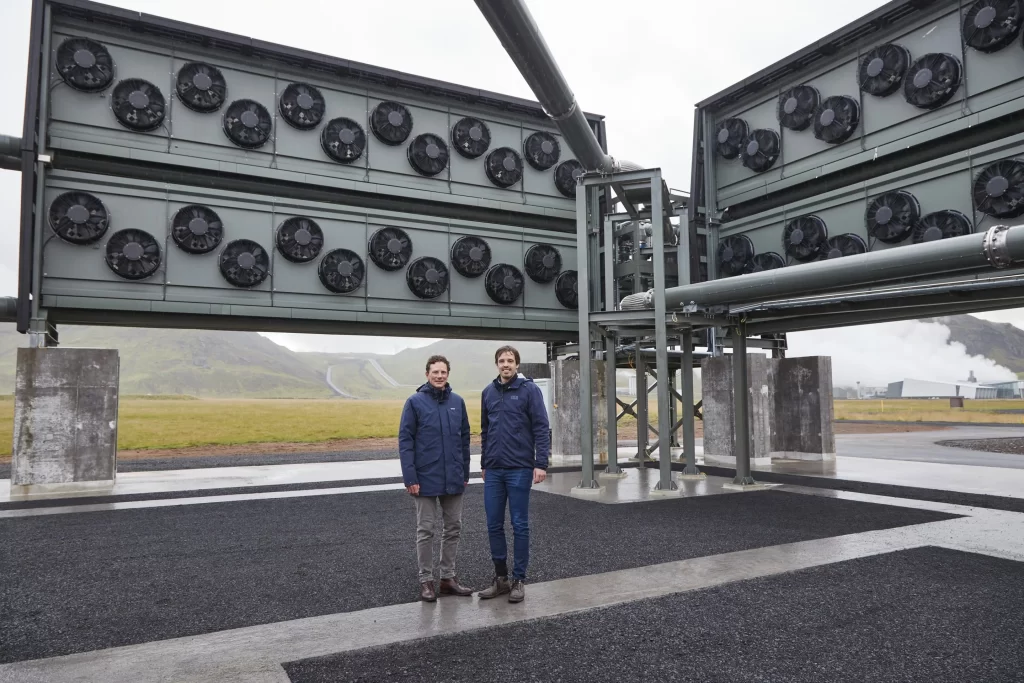
The US Energy Department announced on Thursday that it will invest $3.5 billion in four large-scale projects throughout the country to remove carbon dioxide from the air, a nascent technology that the Biden administration believes is required to attain a goal of net-zero emissions by mid-century.
The government announced that it would support the $3.5 billion program established by the 2021 Bipartisan Infrastructure Law, which would develop four regional direct air capture hubs to accelerate the implementation of the technology and carbon dioxide transportation and storage infrastructure.
Last month, the UN’s Intergovernmental Panel on Climate Change released a report stating that “carbon dioxide removal” technologies will be required to meet global climate change goals, ranging from planting trees that absorb carbon to costly technologies that suck carbon dioxide directly from the air.
“The UN’s latest climate report made clear that removing legacy carbon pollution from the air through direct air capture and safely storing it is an essential weapon in our fight against the climate crisis,” said Energy Secretary Jennifer Granholm.
In recent months, carbon removal technology has received a lot of attention and funding. Three big direct air capture projects are now in development in North America and Europe, however, they are only sucking up little volumes of CO2 from the air at the moment.
Google, Shopify, Meta, and Stripe formed a $1 billion fund earlier this year to buy carbon reduction credits over the next decade as a method to encourage the rapid adoption of the technology.
Last year, billionaire entrepreneur Elon Musk awarded $100 million in prize money to inventors who developed innovative carbon removal technology.
Carbon removal will need to be deployed at the Gigaton scale by midcentury, according to the DOE, which means it will need to be able to sequester the equivalent of emissions from about 250 million vehicles driven in a year.
To read our blog on “Apple successfully propel suppliers to use more renewable energy,” click here.